How can we all help prevent wildfires?

 PA Media
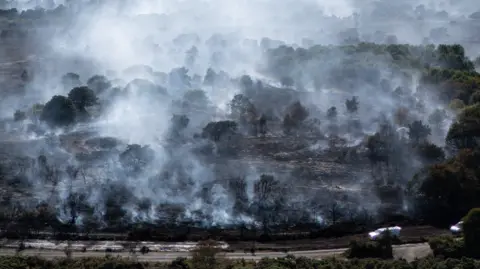
More than two weeks after a devastating wildfire whipped through two Suffolk coastal nature reserves, similar fires broke out elsewhere in England and Wales.
Tinder-dry conditions caused by weeks and weeks with little rain have resulted in the ideal conditions for flames to take hold.
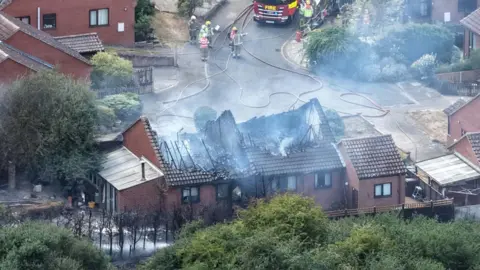
Not only have much-loved landscapes and rare habitats been damaged, but homes and businesses were put at risk, and the emergency services were put under strain.
On Friday evening, the government sent alerts to millions of mobile phones warning against setting light to anything that could spark a wildfire, including barbecues, firepits and fireworks.
So, what can we all do to help prevent their spread?
How many wildfires have taken place this year?
Firefighters have responded to 966 wildfires across England and Wales this year, including 185 in the first 10 days of August alone, according to the National Fire Chiefs Council.
This exceeds the number recorded over the same period in both 2022 (748) and 2025 (848), previously two of the busiest years for wildfire activity on record, the council said.
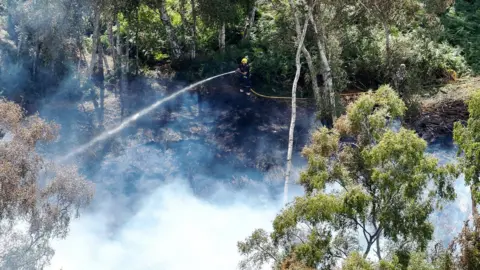
The figure for 2026 included a blaze at a 660-acre (270 hectares) peatland nature reserve at Holme Fen, near Peterborough, and a wildfire at Kenninghall, near Diss, Norfolk, which spread to nearby homes, causing serious damage.
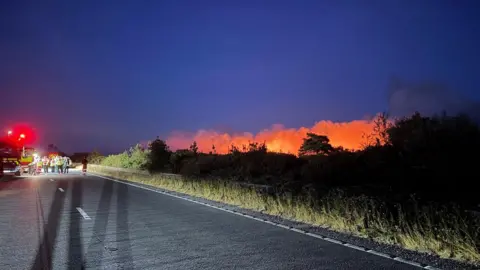
Firefighters were also tackling an "unpredictable" fire affecting an area the size of about 230 football pitches in the New Forest, Hampshire, which started on Sunday.
 Cambridgeshire Fire and Rescue Service
What conditions are needed?
Of course, dry weather does not, on its own, cause wildfires - there needs to be a source of ignition too, such as a spark from a barbecue or a discarded cigarette.
It is too early to say what caused the blaze that started at RSPB Minsmere on the Suffolk coast and destroyed neighbouring Dunwich Heath. It began on 29 July, and a major incident was declared.
However, dry conditions remove moisture from vegetation, making it more able to burn and act as fuel for blazes to take hold and spread.
The conditions the UK is experiencing so far this summer, in its fifth heatwave of the year, mirror the warnings given by climate scientists that human-induced climate change would lead to more frequent and intense heatwaves, as well as potential summer droughts.
 Lee Watson
What can the public do to help?
Suffolk's chief fire officer Jon Lacey has urged the public to "remain vigilant" and avoid having barbecues, bonfires or throwing cigarettes on the ground.
The fire service advice includes:
- Avoid lighting barbecues and campfires near vegetation such as grass, heathland or woodland - only use them in designated safe areas
- Leave no trace - take all litter home or dispose of it in bins provided
- Ensure cigarettes and smoking materials are fully extinguished and disposed of responsibly
- Douse disposable barbecues with water, allow them to cool completely, then dispose of them in household (black) bins - never in public bins
On Friday, disposal barbecues were temporarily banned from sale over fears they pose a "significant risk to the public" as drought and heatwave conditions continues to grip the UK.
Hampshire & Isle of Wight Fire & Rescue Service urged people to "pack a picnic instead of a barbecue".
 PA Media
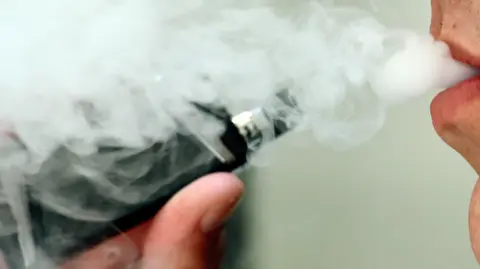
People also need to think about the safe disposal of vapes.
Sam Kench, Suffolk's Wildlife Wise delivery manager, said: "As the weather gets warmer, we want people to enjoy spending time outdoors, but we are asking visitors not to bring sources of fire to our wildlife sites.
"While many people are aware that cigarettes are a common cause of outdoor fires, fewer realise they also contribute to plastic pollution, posing a dual risk to wildlife.
"Similarly, disposable vapes - which are becoming increasingly common - can ignite if exposed to extreme temperatures."
He urged users to take them to dedicated recycling points.
What about barbeques at home?
 Barnaby Perkins/BBC
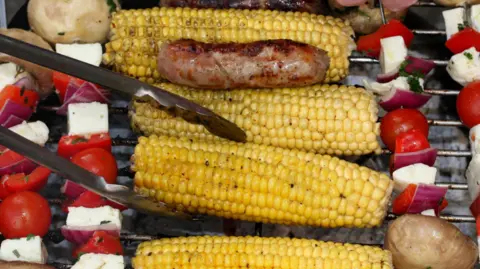
Plenty of families want to enjoy garden gatherings around a barbecue.
Essex Fire and Rescue Service has issued advice on how to do so safely.
- Always place barbecues on a non-flammable and even surface
- Make sure it is well away from houses, sheds and fences or anything else that could catch fire
- Follow the safety instructions
- Never put hot ashes straight into a dustbin or wheelie bin - they could melt the plastic and cause a fire
- After cooking, turn the gas supply off first, and then the barbecue control. This will stop any gas from leaking
What should farmers do if a wildfire starts?
 Essex County Fire & Rescue Service
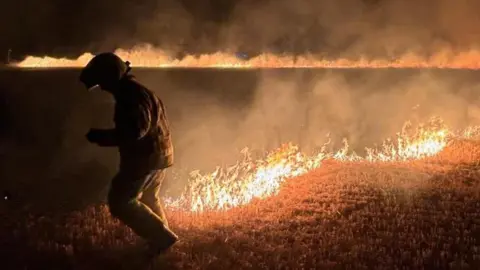
"One of our biggest risks during these spells of hot weather is fires on rural farmland," said Cambridgeshire Fire and Rescue group commander James Balls.
"Farm fires can result in the loss of machinery, livestock, stores of hay and straw, and the destruction of buildings; a serious fire on a farm can affect the financial stability of even the most well-run business."
The fire service's advice for farmers included:
- Download the What3words app to give a precise location to emergency services
- Ensure your farm is clearly signposted and make sure you keep all access routes clear in case emergency vehicles need to access the site
- Make sure everyone on the farm knows the fire plan
- Keep any firefighting equipment easily accessible and ensure everyone knows where it's stored
- Make sure you have an animal evacuation plan for your livestock in the event of a fire
'Waiting for rain'
 New Forest Police
At their height, the fires at Holme Fen, Dunwich Heath and in the New Forest have been supported by crews from other parts of the country.
Cambridgeshire Fire and Rescue's area commander, Wayne Swales, said: "We're one service in isolation - if you look at the wildfires going on across the country, all services are pulling on those same resources, which makes it even tougher."
"Summer is usually the busiest time of year for us, but the summer season hasn't been the standard two weeks in July. We've been like this since June, so we are, like everyone, waiting for rain."
Do you have a story suggestion for Suffolk? Contact us below.
Follow Suffolk news on BBC Sounds, Facebook, Instagram and X.