Humanitarian honoured 100 years after funeral

 Story of Emily/Zita Filmz
A century after the state funeral of Cornish humanitarian Emily Hobhouse, thousands of people gathered in South Africa to recreate the ceremony.
More than 2,000 people attended the Emily100 commemoration in Bloemfontein, where Hobhouse's ashes were interred following her death in London in 1926.
Although she spent her childhood in Cornwall, she was laid to rest in South Africa, a country where she campaigned against the suffering of women and children in British concentration camps during the Anglo-Boer War between 1899 and 1902.
Hobhouse grew up in the village of St Ive, near Liskeard, where her father was a vicar and the first Archdeacon of Bodmin.
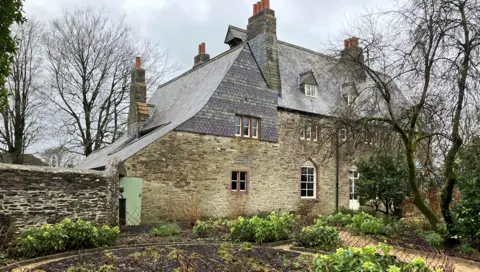
Her childhood home, The Rectory, has since been restored as part of The Story of Emily museum, which tells the story of her campaign to reveal conditions inside the camps.
The re-enactment recreated the funeral procession of 31 October 1926, with more than 650 people dressed in period costume, while 206 girls from local schools carried palm leaves as funeral mourners had done.
The procession travelled along Monument Road to the National Women's Monument, where Hobhouse's ashes are housed.
At the ceremony, participants recreated the original funeral programme, including prayers, hymns, a reading from Ecclesiastes, wreath-laying and the symbolic placing of ashes.
Follow BBC Cornwall on X, Facebook and Instagram. Send your story ideas to spotlight@bbc.co.uk.