Killer who will not say where wife's body is to stay in prison

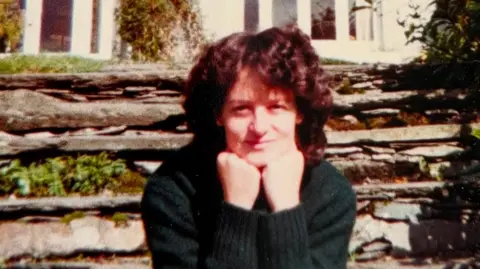 Family photo
A man who killed his wife and refuses to reveal where her body is cannot be freed from prison, after the High Court overturned the Parole Board's decision to release him.
Glyn Razzell, 66, was jailed for life in 2003 after being convicted of murdering his estranged wife Linda, who disappeared in Swindon the year before. He has never disclosed what he did with her body.
The Parole Board decided in April that Razzell could be released as his imprisonment was "no longer necessary" to protect the public.
It is the first time the Secretary of State for Justice's power to refer the decision to the High Court has been used to overturn a Parole Board ruling.
Announcing her decision earlier, judge Mrs Justice Cheema-Grubb said: "I am not persuaded that the risk has diminished to such a level that offender management is capable of keeping the public safe if the defendant is released."
She referred to a history of intimate partner violence and coercive control, noting that there were references recorded of Linda's "fear".
Judge Cheema-Grubb said Razzell "has a propensity to violence against women and that without some recognition of that aspect of his personality he remains a danger to women who come within his milieu".
His continued denial of the murder showed he is "not a man who will lightly admit when things start to go wrong in his life", she added.
She also said he could not be relied on to comply with licence requirements "especially when to do so might endanger his idea of himself as a victim".
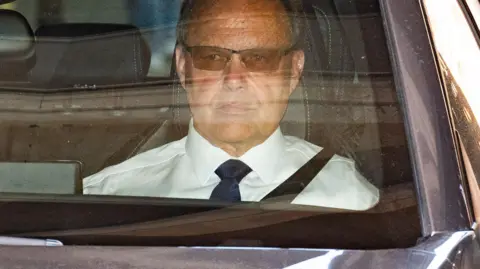 PA
PACat, Linda and Razzell's daughter, said her father's decision not to reveal the location of her mother's body meant there was "no peace" for the family.
Speaking after Cheema-Grubb's ruling was made, Cat said Razzell was continuing to harm her family and was "actively choosing to be controlling and abusive from within prison".
She previously told the BBC her father should not be released until he admits what he did and reveals where the mum-of-four's body is.
Razzell was jailed for 16 years after being convicted of Linda's murder by a jury. He had applied for parole three times before his request was approved by the Parole Board in April.
When his application was refused in 2021, he became the first prisoner to be denied parole under Helen's Law.
The law requires the Parole Board to take a killer's refusal to disclose where their victim's body is into consideration.
Linda, who was 41 when she vanished, was last seen parking her car in Alvescot Road while on her way to work at Swindon College in March 2002.
Razzell, a former insurance investment manager from Crewkerne in Somerset, made appeals in the news for her return but was later arrested and charged with her murder.
Linda, originally from Llanybydder in Wales, had been in the midst of divorce proceedings and had visited a bank with a court order to freeze her husband's bank accounts the week before she vanished.
Detectives found traces of blood in the boot of a car Razzell had used.
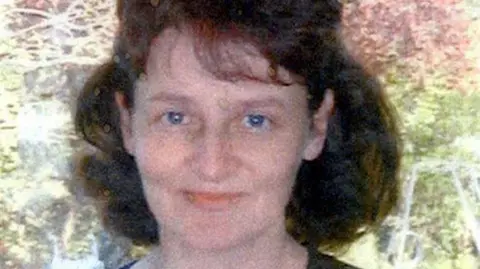 Wiltshire Police
When the Parole Board approved Razzell's release on licence in April, it said in a statement the "panel was satisfied that imprisonment was no longer necessary for the protection of the public".
The Ministry of Justice (MoJ) referred the decision to the High Court - a move the agency can do if it believes a prisoner's release would undermine public confidence in the parole system.
During a two-day hearing at the High Court earlier this week, barristers for the MoJ said the Parole Board had failed to assess Razzell's risk properly and called for the decision to be reversed.
Linda's relatives also urged the court to block his release.
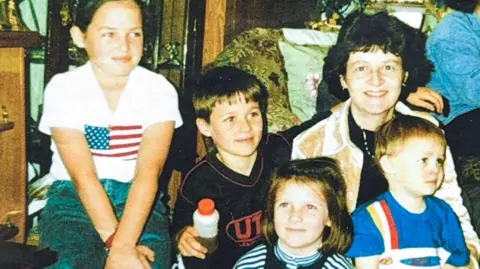 Family photo
Her cousin, Julie Westmore, said she would not "feel safe" and expressed fear that "all hope of ever finding [her] remains will be lost" if Razzell was released.
Greg Worrall, Linda's partner at the time of her death, said in a statement that Razzell "knows the pain this is causing [her] family and children".
"We need an end to this ongoing agony," he added.
Cat and her siblings said they had no wish for their father to die behind bars, but they wanted him to admit what he did.
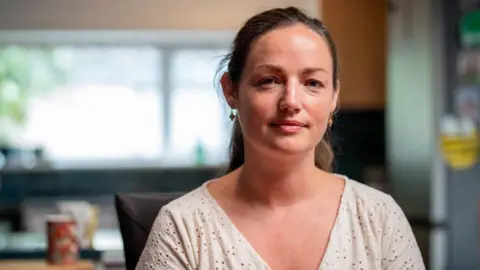
"It's a real relief for me and my family that the right call has been made.
"We didn't feel enough had been done in terms of risk management and reduction, so we're really glad that view is shared and has been recognised by the High Court today," she added.
"I think for my family we can feel relieved that there is no immediate threat to our personal safety, but I would also extend that, given my father's history of coercive control and intimate partner violence, to other women in the community."
She said her father's refusal to reveal where her mother's body was denies her the chance to properly say goodbye.
"It's an indignity that compounds the pain of knowing your mother was murdered and without certainty about what happened, it's very difficult to come to terms with it and to get closure," she said.
Cat said the need to overturn the Parole Board's decision meant it was "hard not to have serious questions about the extent to which the justice system is currently protecting victims".
"I hope that [my mother] would be proud that we've shown some the courage she also showed in trying to get justice," she said.
"It's so unbelievably sad that she had to die in the way that she did, but I hope that at least we've got her some justice."
Follow BBC Wiltshire on Facebook, X and Instagram. Send your story ideas to us on email or via WhatsApp on 0800 313 4630.