Glyn Razzell - what next for jailed killer?

 PA Media
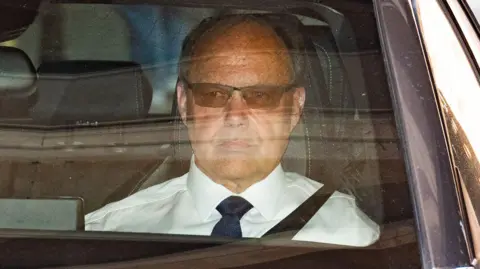
When a High Court judge quashed the Parole Board's decision to release murderer Glyn Razzell last week, it was the latest chapter in a long-running legal saga.
Razzell was sentenced to life in prison in 2003, to serve a minimum term of 16 years, for murdering his estranged wife Linda.
She vanished on her way to work in Swindon and Razzell has never revealed what he did with her body.
So what are the next possible developments in a case which has occupied many hours of court time over the past 23 years?
When did the murder happen?
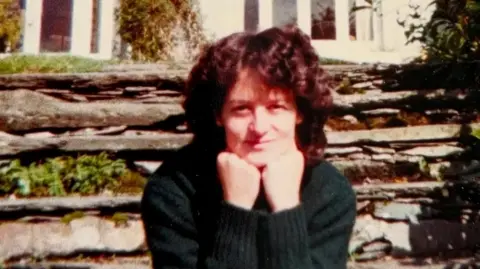
Linda Razzell vanished in March 2002. She had left her home at 08:45 BST with her children and fiance Greg Worrall.
She had dropped Worrall off in Highworth and her children at school and was last seen parking her car in Alvescot Road in Swindon. She was never seen again and her body has never been recovered.
Linda, 41, and Razzell had been in the middle of divorce proceedings at the time of her disappearance. She had visited a local bank with a court order to freeze Razzell's bank accounts a week before she went missing.
He took part in media appeals for his wife's safe return before being arrested and charged with her murder.
What happened at trial?
 Family handout
Razzell, who has always denied killing his wife, was convicted of her murder after a jury at Bristol Crown Court returned a unanimous verdict in November 2003.
Drops of his wife's blood were found in the boot of a car he had access to.
At trial, he was questioned about CCTV footage from the day of Linda's disappearance which showed him in different clothes to the ones he told police he had been wearing.
Razzell, from Crewkerne in Somerset, said "it was just a mistake" and denied attempting to mislead police.
He told the jury he had been for a walk and went to see his solicitor before later meeting his girlfriend on the day Linda vanished.
As Razzell was sentenced to life in prison, Judge Justice Pitchers told him he had "deprived four young children, who you should have loved and protected, of their mother".
Multiple parole applications
Razzell was first eligible to apply for parole in 2019 but even before that tried to have his conviction overturned.
In 2005, he claimed DNA evidence against him was unreliable, but this appeal was dismissed.
It was the beginning of a lengthy legal process where he was denied parole three times.
The second time, in 2021, saw him become the first person to be refused under Helen's law - legislation which makes it harder for killers to get parole if they refuse to reveal where their victim's bodies are.
Razzell was allowed to remain in an open prison, however, where he had moved in 2017.
In April, the Parole Board approved his request for release, stating his imprisonment was "no longer necessary" to protect the public.
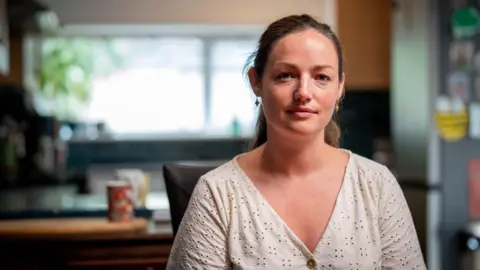
The decision drew criticism from Linda's relatives, including her daughter Cat, who told the BBC there was "no peace" due to her father's refusal to disclose what he did with her mother's body.
High Court ruling
On Friday, four months after the Parole Board's ruling, the High Court overturned the decision to release Razzell.
Judge Mrs Justice Cheema-Grubb said she was "not persuaded that the risk has diminished to such a level that offender management is capable of keeping the public safe if the defendant is released".
It was the first time that the High Court had overturned a Parole Board ruling after a referral from the Secretary of State for Justice.
Following the decision, Cat said her father was "actively choosing to be controlling and abusive from within prison".
The High Court also heard how in May 2000, Razzell allegedly banged Linda's head into a mirror and on the following day threw her backwards and kicked her, fracturing her rib.
She reported the incidents to police and Razzell stood trial for them in 2002. A jury acquitted him but he went on to kill his estranged wife weeks later.
The Parole Board this year examined the events in 2000 and found that, on the balance of probabilities, the allegations were true.
In quashing Razzell's parole, Mrs Justice Cheema-Grubb noted Razzell "has done no effective work which admits his propensity to be violent in intimate relationships".
What now?
Glyn Razzell will return to HMP Hollesley Bay in Suffolk, an open prison where he has been for the last nine years.
In that time, he has spent about 1,200 days on temporary release. He has employment outside of prison and when he is allowed out in the community, and has access to a flat he purchased in Ipswich.
The BBC has asked when he can apply for parole again, but it is likely to be in either 2027 or 2028 according to the rules that govern the parole process.
In her judgement, Mrs Justice Cheema-Grubb said any future parole application would be helped if Razzell could demonstrate a better understanding of "his own warning signs, triggers and patterns of thinking" when it came to relationships.
The judge also said any future parole board has to consider the impact of Helen's Law, adding Razzell needed to show he had acknowledged the "risk implications" associated with "the established pattern of controlling and violent behaviour towards Linda".
Cat said she hoped the judge's comments would make her father finally reveal where her mother's remains are.
"He knows I have no wish for him to be punished unnecessarily. He has some information he could give to us, tell us where our mother is, give her some dignity and give us some closure," she said.
"The [High Court] decision that's been made means if he does that, he is now getting something out of it.
"My message is - please consider that for your family and for yourself and because it's the right thing to do."