Claims glass degree move costs were inflated

 BBC
BBCA university has been accused of overinflating the costs required to save a region's only degree-level glass course.
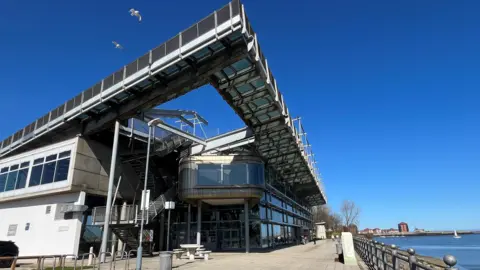
Earlier this year the University of Sunderland ended its 44-year-old glass and ceramics programme following the closure of the National Glass Centre (NGC) where the courses had been based.
The BBC has obtained a report commissioned by the university on how much it would cost to move the programme following the NGC's closure.
People connected to the university said costs quoted in the report - totalling about £9.4m - had been overinflated. The university declined to comment on the accusations and said it had not been financially viable to save the courses.
The NGC was marked for closure in 2023. In March 2024 the university confirmed its glass and ceramics programme would also end alongside the centre's closure.
But a few months earlier, in October 2023, the university had agreed it would continue the courses in one of its other buildings if the transfer could be achieved for £2m or less, according to minutes of a governors' meeting.
As part of this decision, the university commissioned a report into the costs involved in such a move.
 Helen Gordon
One individual who saw this evaluation process up close, and who asked to remain anonymous, said there was "no appetite" from the university to continue the courses.
"It wasn't going to happen," they said, adding that they believed the university wanted to focus its efforts on science and medicine.
"If they'd been honest about that it would have been better," they said.
They said university staff had taken part in the process in good faith and tried to find ways to make the move as cheap as possible. They said it was unlikely the transfer could have been achieved for £2m but that they believed it would not have cost more than £5m.
The individual said estimates, such as the £50,000 required to move "loose furniture" and the £1.2m included as contingency, were exaggerated.
"The university just saw the bottom line," they said. "The glass world will continue but it will continue without Sunderland and I think the North East is the poorer for it."
 Dr Laura Johnston
Former University of Wolverhampton glass lecturer Max Stewart said the University of Sunderland's glass programme had been the UK's best.
But Stewart said he had predicted the demise of the course alongside other glass programmes including the one in Wolverhampton, the closure of which was announced in 2022.
"Universities do not want to invest the money," he said.
"Accountants don't want an expensive course, they're much rather interested in putting kids in front of computers because it's cheap."
'Glass can make money'
A former Sunderland student and current glassmaker, who also wished to remain anonymous, said the loss of the degree programme was part of a move which meant glassmaking in the UK would become less professional and more amateur.
She said universities were moving away from the arts because they believed students wanted degrees that were more jobs-orientated but said this ignored the fact people could make money in glassmaking.
"There's loads of avenues," she said. "There's a plethora of people doing craft fairs and everything else and making a good living out of it."
She said Sunderland had led the way for glass training around the world and the university could have "built a reputation" by remaining one of the few places in the UK where people could pursue cutting-edge research in the field via PhDs.
The University of Sunderland said 17 people applied to its glass programme for the 2024-25 academic year.
It said the student numbers involved and the estimated cost of saving the course had resulted in university governors deciding it was "not financially viable" to save it.
A spokesperson said it had allowed all students to finish their studies when it announced the ending of the programme in 2024.
There are now just four universities providing dedicated glassmaking degrees in the UK - in London, Plymouth, Swansea and Farnham.
Follow BBC Sunderland on X, Facebook, Nextdoor and Instagram and listen on BBC Sounds.