Staff sickness a major factor behind critical incident, says NHS Grampian boss

 BBC
BBCStaff sickness was a major factor behind the critical incident declared by NHS Grampian last month, its chief executive has said.
A board-level critical incident had been declared on Saturday 26 September, when A&Es at both Aberdeen Royal Infirmary (ARI) and Dr Gray's in Elgin struggled to cope with demand.
That was stood down on the Monday, and remained in place at hospital level at Dr Gray's until the next day.
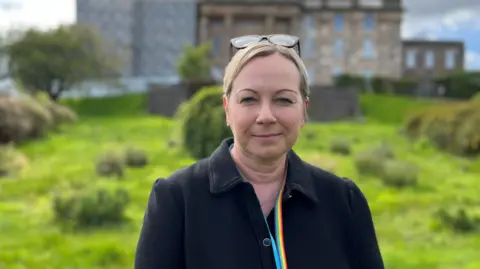
NHS Grampian chief executive Laura Skaife-Knight told BBC Scotland News that staff sickness had been a "challenge", and ensuring patient safety was the reason for declaring the critical incident.
It was the first critical incident declared by the board since December 2024.
The Scottish government defines the status as any localised disruption which results in a board "losing its ability to deliver critical services, or, where patients and staff may be at risk of harm".
The last critical incident declared in Scotland was due to an IT fault at NHS Highland in June 2025.
Skaife-Knight said the critical incident was "not a decision we took lightly".
She said the weekend in question had seen a struggle for beds and that the pressure had been building for about a week, especially at Dr Gray's.
"We had really solid plans going into the weekend, including planning for the public holiday, and then Saturday became a bit of a tipping point where the system suddenly became gridlocked," she explained.

Skaife-Knight said staff time off for the public holiday was not a reason for what happened.
"Saturday was a challenge including for staff sickness across both sites," she said.
"And just to be really clear we called the critical incident because of concerns ultimately over patient safety. That was absolutely our priority."
She said any lessons to be learned would be taken on board.
Asked if she thought another critical incident was inevitable during the winter period, she replied: "We'll do everything we can to avoid that.
"My top priority is making sure we deliver safe patient care that was the single biggest reason we took the decision to call the critical incident a couple of weeks ago.
"We will learn from that, we've got a full debrief exercise coming up in the next couple of weeks, and we will implement that work and learning as we go into winter as part of our winter plan."

During the interview, Skaife-Knight was also asked about a man who admitted pretending to be a medical student for several weeks and accessing Aberdeen hospital wards and files.
Stephen Simpson, 22, wore medical scrubs and NHS branded clothing at Aberdeen Royal Infirmary (ARI), as well as having a stethoscope.
At Aberdeen Sheriff Court, Simpson admitted fraud, between 9 December 2023 and 26 January 2024. Sentence was deferred until later this month for reports.
NHS Grampian said at the time that hospitals were large, and all staff had a role to play in maintaining security.
Skaife-Knight said: "I can understand the concern that causes from our local community from a public perspective.
"Clearly there's lessons that we need to reflect on and tighten up on from an organisational perspective."