Hidden museum gallery to reopen after 83 years

 The Trustees of the Natural History Museum London
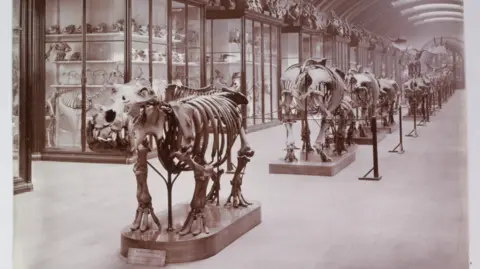
A gallery that has remained closed to the public since World War Two is to reopen at London's Natural History Museum next month.
The gallery, which has remained hidden from view since 1943, will reopen from 16 September, featuring 50 objects which show our evolving relationship with the natural world.
The exhibition, named Nature and Us, is part of a transformation project called NHM150, which aims to open a new or revamped showcase every year until the museum's 150th anniversary in 2031.
Dr Doug Gurr, director of the NHM, said: "For the first time in over 80 years, visitors will be able to step into this beautiful historic space and explore our changing relationship with the natural world."
 The Trustees of the Natural History Museum London
The museum describes the display as "experimental" during the initial 18-month period, with visitors invited to share their views on what they would like to see in the permanent gallery, which is due to open in 2029.
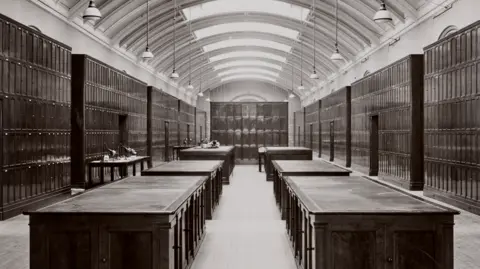
The exhibition is located on the second floor of the museum's main Waterhouse Building.
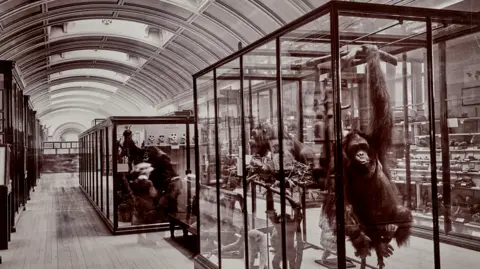
It was originally used as an osteology and mammals gallery.
However, after the museum's original herbarium was damaged during World War Two, the space was repurposed to house the botanical collections and closed to the public.
 The Trustees of the Natural History Museum London
Among the key specimens on display is a miniature model of a Crystal Palace dinosaur, alongside other objects that show how early scientists and artists understood the prehistoric world.
Other items include a Victorian skeleton of a monk seal named Jenny, highlighting how wild animals were once exploited for entertainment, as well as a replica jaw of one of Britain's earliest known domesticated dogs, dating back about 14,300 years.
The Natural History Museum in South Kensington is free to visit and open seven days a week.
Listen to the best of BBC Radio London on Sounds and follow BBC London on Facebook, X and Instagram. Send your story ideas to hello.bbclondon@bbc.co.uk