Pollution port boss calls for nurdle regulations

 BBC
BBCThe boss of the port at the centre of a huge plastic pollution crisis has now joined calls for extra safety measures to be introduced.
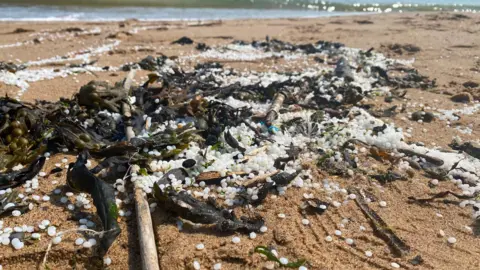
An estimated one billion plastic balls, known as nurdles, entered the North Sea and have since washed up on north-east England's beaches after a collision between two vessels at the Port of Tyne in July.
CEO Matt Beeton said the company, along with other local organisations, was asking the International Maritime Organisation (IMO) to consider enforcing safer transportation methods, something environmental groups have long promoted.
The IMO claimed it was developing a mandatory code of transportation for nurdles and had made recommendations over several years.
These started in response to a spillage in Sri Lanka in 2021 that resulted in tonnes of nurdles being released into the Indian Ocean from a ship that caught fire and sank, the IMO said.
It said they included recommendations for packaging, declaration and stowage, as well as guidance to support "effective responses" when spills occurred.
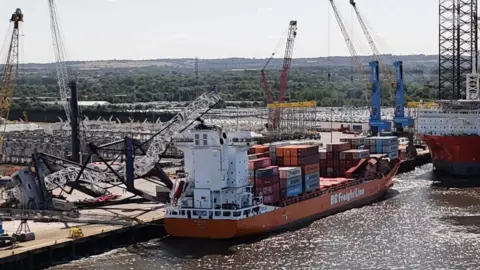
In the latest spill on 19 July, a wind turbine installation vessel called the Wind Orca collided with the container ship BG Orange which was berthed at the Port of Tyne.
A gantry crane on the quayside collapsed and ended up lying across the ship.
Two containers on the BG Orange were full of nurdles - pre-production plastic pellets, about the size of a lentil, which are used as the raw material to manufacture nearly all everyday plastic goods.
These tiny pieces of plastic spilled into the water and eventually washed up on beaches, with volunteers leading attempts to clear them in the hope of minimising the damage to wildlife.
Six weeks on, Beeton has suggested a change to the categorisation of nurdles, which are currently deemed non-toxic despite them posing a threat to birds and criticised as an "environmental disaster".
He said the non-toxic classification meant the port was not made aware that a ship was even carrying them or that they had been spilled until the day after the crash.
He further suggested nurdles could be transported in better containers and more secure locations on ships.
 Fidra
FidraBeeton also responded to criticism that the port had taken too long to respond to the spill, including from North Tyneside mayor Karen Clark.
The collision occurred at 13:00 BST on 19 July, with a boom deployed to stop the nurdles drifting further afield only being deployed three days later.
He said the site was inaccessible for the first day of the spill because it was treated as a crime scene, but claimed it would not have been safe to deploy the boom until a crane which had collapsed into the water was salvaged.
He added he did not know the exact extent of the clean-up because the nurdles had to be separated from other waste before being weighed.
 Thomas Ord
Nurdles have now been spotted on beaches in North Yorkshire and Teesside, more than 30 miles (48km) south of the crash site, with environmental charity Fidra saying the plastic balls are mobile and could wash up on stretches of coast for years.
Volunteers have been out in force since the spillage to clean up nurdles from beaches, working alongside environmental charity Fidra.
Sunderland City Council said it had seen a reduction in the number of nurdles on its shores since the initial spillage, but its clean-up efforts were still ongoing.
Redcar and Cleveland Borough Council and Durham County Council officers confirmed nurdles had been found on their beaches.
Before the latest spill in the North East, millions of nurdles washed up across the east of England from a ship collision in March last year.