Urban beekeeper creating a buzz around city centre

 Johnny Reed
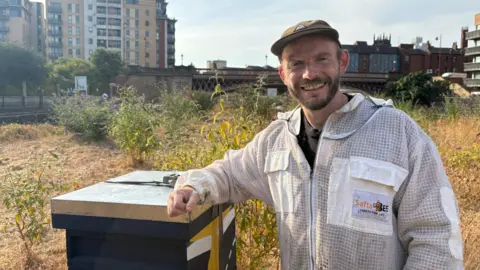
An urban beekeeper from Leeds is installing beehives in parts of the city centre to help boost the pollinator population.
In 2024, the Yorkshire Dales Millennium Trust found numbers of some bee species dropped by 50% to their lowest ever levels and despite a small bounce in numbers, they remain fragile.
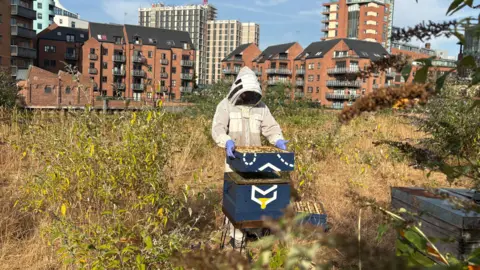
Tom Szpitter, 40, is hoping to bring numbers back to a healthy level by installing hives on office rooftops, airports, power stations and city canals.
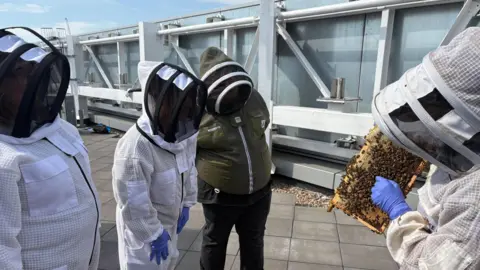
He also offers workshops for office staff to teach them how to become a beekeeper themselves and any honey that is gathered from the hives is gifted to the offices.
"I like to put bees everywhere and introduce them to people," says Tom, who founded his company Band of Bees in 2022.
"In a countryside setting, the crop flowers and then it's gone, but in a city, you've got an abundance of things that flower throughout the year.
"We don't have any pesticides like in the countryside, so the bees do really well in the city."
 Johnny Reed
The hives can be found at Leeds Bradford Airport, Enfinium Power Station in Castleford and at Leeds Dock, with the most recent one being installed on the rooftop of City Square House.
"They travel up to three miles in all directions pollinating the world around them and being this high up removes obstructions from their flight paths.
"The staff here have been really keen to learn about the hives and are always happy to get stuck in."
Jolanta Woolston works for Allianz at City Square House and has taken part in one of Tom's workshops.
"It's a good reminder to find out how important bees are," she says.
"This is my first time seeing the beehives and I can't think of a better way of spending my lunch break."
Daniel Warren works at the same office and says he had never heard about urban beekeeping until meeting Tom.
"You wouldn't think bees thrive in areas like this, but clearly they do and the honey they make is delicious."
 Johnny Reed
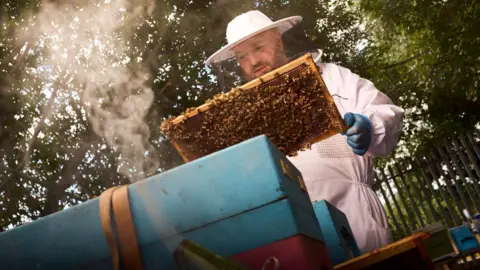
David Wagstaff, who owns More Bees Please in South Yorkshire, says he got into keeping bees as he had heard honey helped with hay fever.
"It kind of took off from there. I got more bee hives and everyone wanted honey," he explains.
He previously worked with the police and says as his interest in bees took off, he was able to go part time.
"Then Covid hit and sales went through the roof. Everyone was buying local and natural products. It just went mad from there."
He quit his job and now runs the business full time and says there has been a "massive increase" in urban beekeeping.
"You set a bee hive in the middle of a town centre or a housing estate and the bees do really well," he says.
"You stick them in the countryside and they starve. It is just a lack of forage and stuff for them."
 Ross Jarman Photography
He highlights the loss of wildflower meadows and hedgerows as one issue hurting bees in the countryside.
"Bees are now just doing better in urban areas," he says.
Dave says he believes that is due to people, businesses and council's planting flowers and creating more green spaces.
Dr Andrew Impey from the Bumblebee Conservation Trust says: "The decline of bumblebee numbers is a real problem.
"Over the last 20 years, even our common bumblebee species are declining, and the recent heatwaves cause concerns too.
"They are resilient, but we need to do what we can to help bring numbers back up."
Listen to highlights from West Yorkshire on BBC Sounds, catch up with the latest episode of Look North.