On patrol with fire marshals in dry countryside

 BBC
BBCPeople have been urged to avoid starting fires in national parks and moorland due to the dry conditions.
Marshals at Dartmoor National Park in Devon have been on patrol advising people about the risks while firebreaks have also been built to help stop flames spreading.
Deputy head ranger Ella Briens said fires were not allowed in the park as wildfires at this time of year could have a big impact on the surroundings.
Cornwall Fire and Rescue Service said people should not to use disposable barbecues while bonfires, campfires and fireworks should all be avoided.
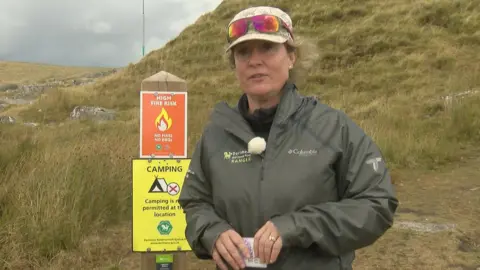
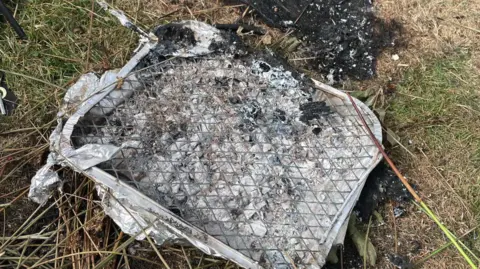
Briens said the team on Dartmoor had to move people in tents in areas closed to camping and found the remains of barbecues which had scorched the parched grass around them.
She added other fire hazards include discarded bottles.
"We just don't want glass lying around, it's going to be a source of ignition if the sun shines through that," Briens said.
In May 2025, a large wildfire on Dartmoor destroyed about 1,230 acres (5 sq km) of land.
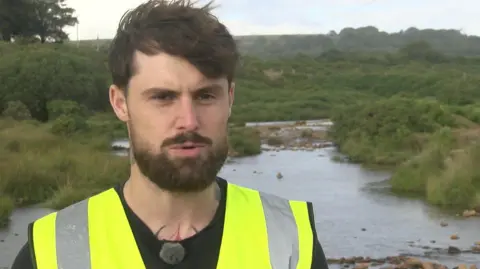
Ranger Luke Engel, speaking to the BBC after spotting another discarded barbecue and abandoned tent at Cadover Bridge, said: "All it takes sometimes is a bit of wood, a spark just spreading to another bit, and when the ground's really dry it can spread anywhere."
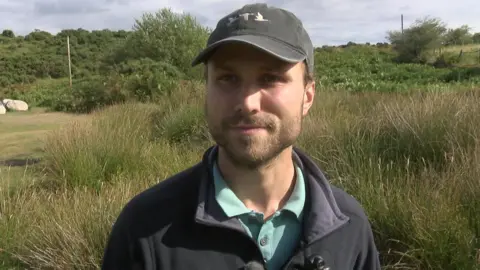
Dartmoor fire marshal Lewis Edwards said people sometimes needed "a gentle nudge in the right direction" to make sure they are being safe and using the right areas for camping.
He said because of the heatwaves, marshals had to "step in and really clamp down on people having open fires, disposable barbecues and things like that".
Visitors were more aware of the risk, he said, with the extra signage on the moor and the alert sent by the government to mobile phones.
"We just need to keep promoting it," he added.
The Dartmoor team's warnings came after Devon's assistant chief fire officer Darren Mclatchey said most wildfire incidents were directly impacted by humans from "careless disposal, accidental and deliberate fires".
Fire service officials in Devon and Cornwall said crews had dealt with hundreds of fires in the open during the summer.
Mclatchey said the government's temporary ban on the sale of disposable barbecues "does help" and added they "aren't necessarily a dangerous item" if they were disposed of "carefully and considerately".
He said the service was planning for the pressures of coping with climate change.
"We absolutely recognise that there's a long-term if not permanent change in climate," he said.
"Part of our planning and preparation is to look at how we will respond to wide-scale incidents, how we prepare for it and how we invest into it."
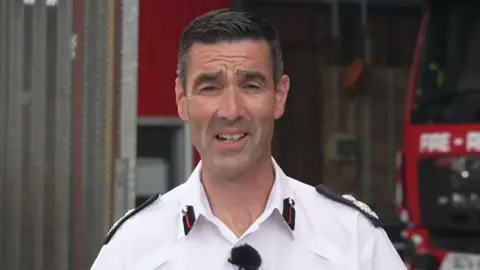
Mclatchey added: "We have the resources that we need, we will plan for the future as best as possible.
"But I think ultimately it's going to be very difficult for anybody to plan to know exactly what the future will hold we just have to respond to it and plan to it as best we can."
He said they were looking at the risks and "invest into the right area so we're able to respond appropriately".
The service was planning its response to El Niño which could bring powerful winds and "what that might look at for our region".
'Exceptionally dry' conditions
Cornwall Fire and Rescue Service said crews had received a "high volume" of 999 calls since Friday and would be unable to attend reports of neighbours using barbecues, fire pits or bonfires in private gardens unless there was an immediate threat to life, property or the environment.
Firefighters said it would discourage people from doing open burning as the conditions meant even small fires could "spread rapidly and become difficult to control".
"With Cornwall currently in official drought conditions and a hosepipe ban in force, Cornwall Fire Service is also urging residents, landowners and visitors to avoid carrying out any controlled burns," a fire service spokesperson said.
"Ground and vegetation conditions across the county remain exceptionally dry, significantly increasing the likelihood of fire spread.
"Without immediate and effective means of extinguishment, a controlled burn can quickly escalate, endangering people, property, wildlife and the natural environment."
Follow BBC Devon on X, Facebook and Instagram. Send your story ideas to spotlight@bbc.co.uk.