Vets see surge in calls about vaccines as third bluetongue case confirmed

 Getty Images
Vets are reporting a surge in demand for vaccinations after the first cases of the potentially fatal bluetongue virus were reported in Scotland.
The first case was found in a lamb in Dumfries and Galloway on Saturday, then two sheep at a neighbouring farm were found to have the virus on Wednesday.
It has now been confirmed that a sheep on a third farm in the same area has also tested positive for the disease.
John Hamilton, of Ark Vets in Lockerbie, said the practice had been receiving 100 calls a day from livestock owners inquiring about vaccines this week.
He said they had 20,000 doses of the vaccine in stock at the start of the week but "that disappeared over 48 hours".
The vet said they were now working to establish a further supply of the vaccine and, like other practices, they were operating a waiting list.
Bluetongue is transmitted by insects like midges and experts believe an infected plume has brought the virus to Scotland from outbreaks in Northern Ireland, the Republic of Ireland, Isle of Man or the north of England.
Hamilton said that last year they had a good take-up of the vaccine among livestock owners and there were no clinical cases of the virus.
But vaccine uptake was poorer this year and "it may be caught a few places out".
NFU Scotland said it was aware that vaccine availability was a concern for some people who own livestock.
It added: "The Scottish government is engaging with vaccine manufacturers over potential additional supplies, and NFU Scotland is working to establish the level of demand from livestock keepers across the country.
"Where producers want to vaccinate, it is important that every effort is made to ensure sufficient vaccine is available."
The farmers' organisation said about 100 animals in the area around the affected holdings had been tested for the virus.
"The situation remains fluid, and it is likely to be another week or so before we have a clearer picture of whether the disease is circulating," it added.
"Initial indications suggest incidence remains low, but continued surveillance and testing will be important."
 Getty Images
Scotland's chief veterinary officer, Sheila Voas, said the latest case of bluetongue serotype 3 (BTV3) was found in a sheep less 2km (1.2 miles) from the existing cases.
All four animals which have tested positive for the virus have been euthanised on welfare grounds.
Voas said restrictions had been put on the farms and other susceptible animals are being tested.
She said the recent cases had seen a "sudden and significant increase in demand for vaccine".
The chief vet added: "The Scottish government, the UK government, representatives from the Welsh government and the Northern Ireland Executive, and key industry stakeholders met with all three vaccine manufacturers yesterday to discuss current supply issues.
"This engagement forms part of ongoing efforts to work directly with manufacturers to address demand and ensure timely access to vaccine.
"Manufacturers are responding quickly, with more vaccine being brought in from continental Europe and additional supplies now in production. As a result, vaccine stocks will be restored as soon as possible."
The virus is spread by insects and is generally found in cattle, sheep and goats.
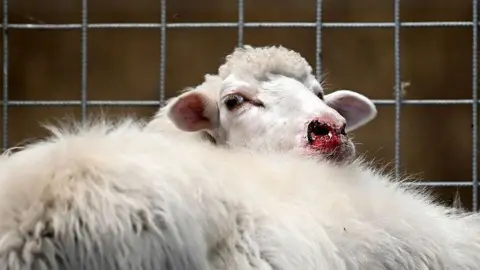
Signs of BTV3 include nasal discharge, redness and swelling of the lips, nose and muzzle, lameness or reluctance to stand, a decrease in milk production and diarrhoea in cattle.
It does not affect people or food safety but it causes a high rate of death in infected sheep and fertility problems in infected cattle.
There has been 373 cases of BTV-3 in the UK in the 2026/27 season, most of them in the south-west of England.
BTV3 is a notifiable disease that must be reported to the Animal and Plant Agency in Scotland.
A recent spike in cases in the south-west of England has been blamed on the hot and humid weather.
The Animal and Plant Agency has said the conditions were favourable for midge populations which carry the virus between animals.