What have Reform achieved in Wakefield in their first three months?

 Gemma Dillon
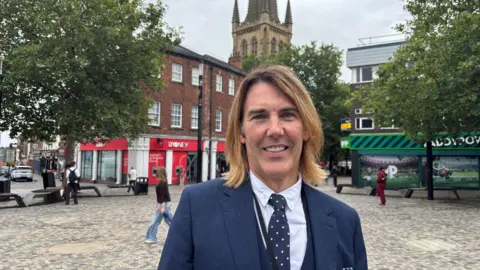
Karl Johnson has had a whirlwind three months.
Before May, he was a businessman who would drive around his home city of Wakefield wishing the potholes could be fixed.
After standing for Reform UK in the local elections, the keen musician found himself the leader of Wakefield Council after his party won 58 of the 63 seats on offer and ended decades of Labour majority rule.
It hasn't all been plain sailing - already two councillors, Steve Lewis and Rhys Carr, have left Reform to sit as independents, and a third, Nick Farmer, has been suspended by the party.
It is now 100 days since the Annual General Meeting when the party were sworn in - but are they delivering the change they promised and that people voted for?
I spent an afternoon in Wakefield city centre with Johnson to find out.
As the ballots were counted on 8 May, Reform in Wakefield didn't have a leader or a deputy.
Johnson was elected to lead the group within days, and 10 days later was leader of the council.
The former rock singer's flowing hair makes him a recognisable figure, and on a walkabout in the city centre, people constantly stop him to chat, thanking him for responding to their emails and talking about the difference they believe Reform are making.
He does have some political experience, having previously served as a Conservative councillor, and says he wants to make Wakefield a better place for all.
"I used to drive through the streets and think we should be doing this, we should be doing that - fixing potholes, improving the roads, stuff that matters to people."
His interest in highways was backed up at May's first council meeting, when Johnson told members he would double the budget for road markings by "repurposing Net Zero funding".
He also promised to "undeclare" the city's climate emergency.
Johnson points out the new markings and road surfaces around us, claiming to have found the money from "waste" under the last administration, enabling him to increase the budget from £41,000 to £82,000.
"People deserve a smart city centre, and not only have we done the surfaces and the white lines, we've washed all the paving down, we're getting rid of the graffiti, we're listening to local businesses."
Road markings across the district will now be reviewed.
Wakefield Council initially declared a climate emergency seven years ago, with a goal of becoming carbon neutral by 2030.
Johnson tabled a motion to axe the declaration in June, despite having backed it as a Conservative councillor in 2019.
"I'd actually say it's a very popular policy that we have got and we've been applauded for it.
"We're saving hundreds of thousands of pounds in this district to be able to then put back into things that residents and local people actually need."
Green Party councillor Kate Dodd, who opposed the motion, disagrees.
"To suggest this is not an emergency and not something that urgently needs to be tackled is frankly irresponsible."
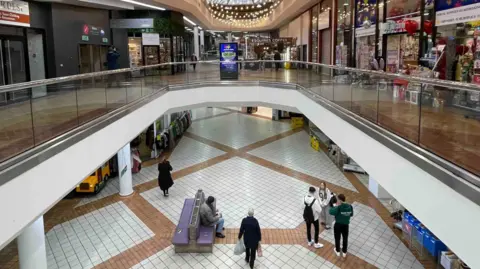
In the run-up to the local elections one of the big issues was the regeneration of Wakefield city centre and the future of The Ridings Shopping Centre.
In February, the Labour-led authority agreed to buy the centre so they could demolish it. Four nearby tower blocks would also be knocked down.
At the time, Labour's deputy leader Jack Hemmingway said the government was providing £17.9m towards redeveloping the area, describing it as "a once in a generation opportunity to transform the city centre".
The move was to prove controversial with businesses in The Ridings and residents of the tower blocks opposed to the plan.
Ahead of the election, the Reform group hadn't reached a "settled view" as to what they thought should happen to the site.
Since May, the authority has said it will carry out further consultations on the proposals with residents.
Johnson says: "Why would you buy a shopping centre a week before an election? We've been left it and we're going to deliver big style because it shouldn't have happened in the lead-up to an election.
"It's only fair that the public of Wakefield get their voice heard on what they want to see in their own city centre.
"We need to make sure it makes financial sense and it's deliverable. We need to make sure that the next 40 years are a success.
"I do have ideas, but are my ideas any stronger than residents'? I'm a resident here, and I put forward what I think in the consultation."
The consultation is due back in the next few weeks and the council hopes to share the results in the autumn.
Council tax
One of Reform's flagship policies nationally is to keep council tax rises to a minimum.
Leader Nigel Farage has pledged his party will "start to cut excessive expenditure" so it can raise council tax by less than other parties.
Reform in Wakefield have yet to set out their first budget and Johnson says he wants to make no promises, adding he needs to make sure "services are not cut" first.
"I would like to see council tax lower, but I don't want to be the politician that gives the lie that we're going to cut it by this; it will be lower if we can make things work without cutting services."
With this comment, Johnson has summed up the challenges for Wakefield - can Reform give the public what they want without making compromises? Time will tell.
Listen to highlights from West Yorkshire on BBC Sounds, catch up with the latest episode of Look North.