Farmers suffer 'hardest summer in generations'

 BBC
BBCFarmers in Derbyshire are counting the cost of the UK's hottest summer on record, with one dubbing it the "hardest summer in generations".
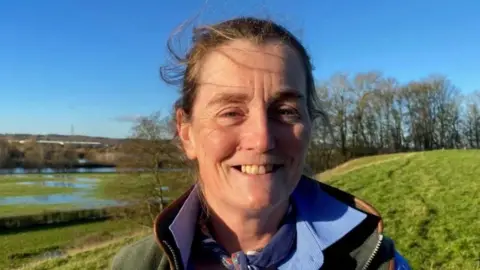
Amy Wheelton, from Walton-on-Trent, said there were "real issues" including rising fuel bills and fertiliser costs.
Wheelton, who is also a Derbyshire Independents county councillor, said a "margin squeeze" was contributing to farmers "stopping growing crops and retiring".
"I watched my really good crop of winter beans die in the first heatwave, all my grassland has been burnt off," she said, adding that juvenile hedgerows and trees she planted last year have died.
Another farmer and Derbyshire National Farmers' Union (NFU) chair, David Handford, said it had been "a very testing 12 months" for farmers.
The High Peak dairy farmer added: "This has been the hardest summer for our farmers and growers in a generation across Derbyshire and beyond.
"No sector has escaped. Confidence is fragile, cash flow is at crisis point and investment has suffered."
Wheelton said she believed the government was "not listening" to farmers.
She said: "The NFU estimates about £370m of value lost from this year's wheat crop, a shortfall of 196,300 tonnes of dry matter, with replacement winter feed costing an additional £34m.
"Then add in higher fertiliser and fuel bills to the margin squeeze, there are real issues in farming, with a government not listening and appearing to be uninterested in food security or rural areas. Many farmers are stopping growing crops and retiring out of farming, the numbers are frightening."
The Department for Food and Rural Affairs (Defra) said it was "determined to rebuild trust across rural communities".
"This is backed with real action, including helping farmers through this exceptionally dry summer, investing billions in sustainable farming and food production and supporting housing developments that meet rural need," a spokesperson added.
 Getty Images
A report into the 2026 harvest, published by the Agriculture and Horticulture Development Board, highlighted "very disappointing yields" which were "highly variable".
Spring 2026 was the warmest on record for both England and Wales, with England seeing just 65% of its average rainfall.
The board said a number of factors including soil type and its ability to retain moisture, the drilling date, use of organic fertilisers and previous cropping history had contributed to differences in yields.
It added: "As a result, farm performance has varied significantly, with some growers achieving yields close to, or even above, their long-term average, while many have seen substantial reductions."
 Supplied
The Royal Agricultural Benevolent Institution (RABI) set up a £2m fund to support farmers affected by the UK's hottest summer on record and drought conditions across much of England and Wales.
Up to £400,000 is available during the Midlands phase of the scheme, which begins on Monday.
Eligible farm owners and tenant farmers can apply for grants up to £2,000 towards "personal and household living costs", but not for farm, business or other trading expenses.
Handford said the announcement from the RABI was "welcome".
"They do a tremendous job providing expert mental health and wellbeing support, as well as financial, emotional and practical help to farmers and those in rural communities," he added.
Listen to BBC Radio Derby on Sounds and follow BBC Derby on Facebook, on X, or on Instagram. Send your story ideas to eastmidsnews@bbc.co.uk or via WhatsApp on 0808 100 2210.