AI trial aims to detect depression in new mothers

 SUPPLIED
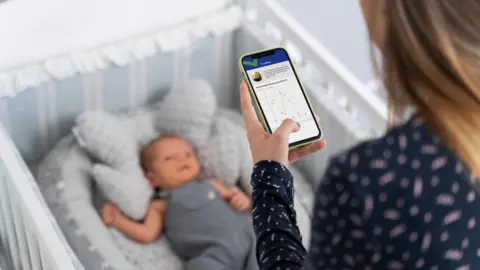
A medical study is testing whether Artificial Intelligence (AI) could be used to detect depression in pregnant women or those who have recently given birth.
Researchers from the University of Nottingham and Nottinghamshire Healthcare NHS Foundation Trust have worked with AI firm Blueskeye to develop an app that tracks participants' mood and behaviour.
The app works by asking users to complete tasks while software analyses their facial expressions, speech and automatic movements.
After finishing the task, the technology flags if patients are getting above a certain depression score. Researchers hope it will help women speak to their GP about mood changes during and after pregnancy.
The study, which started in 2024, is now in its final stages and researchers are aiming to finish in October.
A report by the University of Oxford last year found that in the UK, 39% of maternal deaths between six weeks and one year after pregnancy are suicides.
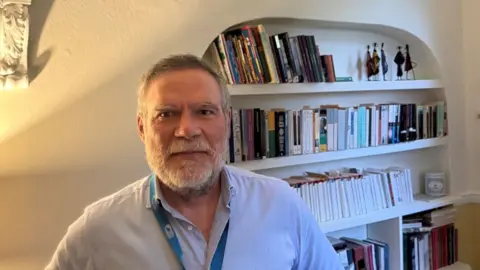
Dr Neil Nixon, one of the leading researchers on the project, said: "One thing we should remember is that suicide remains a really important cause of mortality in women in the post-natal period.
"Being able to identify clinical problems early on, at a point where we can intervene for those women, could really make a big difference."
The tasks vary from reading a few paragraphs of a novel to journalling their mood.
Nixon said that so far, about a third of women who have been through the study have been flagged for depression.
"The worry is that women don't realise their mood is changing. This software could change that," he said.
 SUPPLIED
Lizzie, a mum from Long Eaton who took part in the trial, has two children and used the app when her youngest child was seven months.
She said people underestimate how hard it can be once you leave the hospital.
"You are so obsessed with the pregnancy, and you have so much support through the birth... and then you are just at home.
"That's when it really can be tricky.
"It's not all rainbows and butterflies. It's a really difficult time mentally for you, your identity and your mental health."
Sally Bunkman. from the charity PANDAS, which helps women suffering with perinatal mental illness, added: "People that use our services are often dismissed when they see a healthcare professional - they are told it's just the 'baby blues'.
"This technology has lots of potential and could empower women to talk more openly about their feelings to a doctor.
"But, women need to get support from an actual human - we don't want women being supported by an AI. We need human to human support. That is crucial."
Nixon said the technology will not be used to diagnose conditions, but instead support clinicians in their work.
He added: "We hope this will help women check in with their feelings at a time that is so important in their lives."
If you have been affected by any of the issues raised in this article, support is available via the BBC Action Line
Listen to BBC Radio Nottingham on Sounds and follow BBC Nottingham on Facebook, on X, or on Instagram. Send your story ideas to eastmidsnews@bbc.co.uk or via WhatsApp on 0808 100 2210.