Cider farms report 'lighter' apple crops in heat

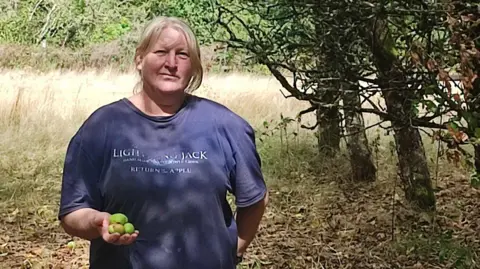 Sampford Courtenay Cider
Cider producers across the South West have said the hot, dry weather has meant their apples have been smaller and their crops "exceptionally lighter".
Alison McIlwraith, cider farm owner in Okehampton, said her business expected to produce 10% of the cider this year that they made last, after the dry summer following a wet spring had impacted the crop.
She said the trees looked "autumnal already" but reassured customers there would still be "plenty of cider" for the rest of the season after a successful crop last year.
Lorraine O'Connor, director of a cider farm in Redruth, said their apples had already started dropping from the trees resulting a smaller yield compared to last year.
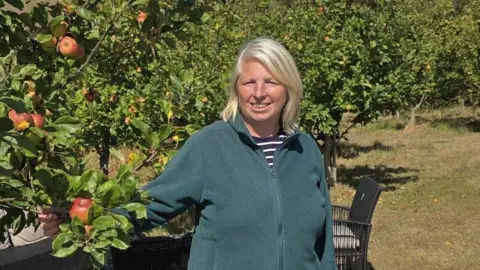 Cuckoo Valley Cider
Drought was declared for more than half of England by the Environment Agency at the end of July.
McIlwraith, who owns Sampford Courtenay Cider, said: "We were expecting a lighter crop this year because that's just the nature of apple trees and apple growing, you tend to have good year then a lighter year.
"It has been exceptionally light... because it's hunt the apple out there I'm afraid."
Cuckoo Valley Cider director O'Connor said their 7.5 acre cider farm had 2,000 planted apple trees, and they aimed to plant 2,000 more in the next five years.
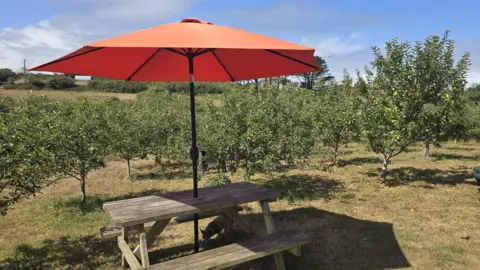 Cuckoo Valley Cider
The Met Office reported this summer was on course to be the UK's hottest since records began.
O'Connor said with the persistent hot and dry weather, they were concerned because "a lot of leaves were turning yellow as if it was autumn", but with the recent rainfall she noted nature was "turning green again".
"We've had quite a lot of apples drop so there's less yield than normal but there's still a lot of apples there.
"We're hoping to get at least 10 to 12 tonnes of apples this year still."
She said the farm had its own spring so water filtered through apple trees.
O'Connor said "our cider is 100% apple cider" and "there will definitely be less volume of cider for the following year" but they "should still have plenty going forward".
McIlwraith said due to having an "extra-large crop" last year, she was "not that worried" because like other cider makers, they had gathered the crop whilst it was there.
"We found every container possible last year to fill so there will still be plenty of cider for the rest of the season."
She said the leaves on trees were beginning to turn early and the apples that had already dropped did not have any value because if they were harvested, there would be no juice.
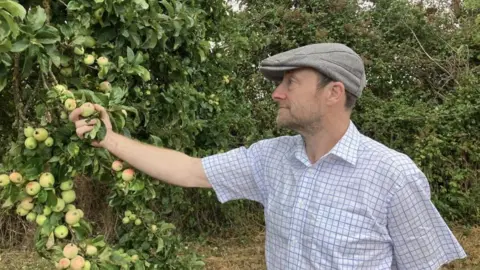
Cider maker Barney Butterfield, owner at Sandford Orchards Devon, said the "heat is causing desiccation" and they were cautious about what impact the hot weather would have.
He said: "If you're lucky to have old trees, they are amazing survivors and designed to deal with drought, whereas short-lived crops, whether it's grain or grass, struggle."
He said the roots of old trees were "deep down" meaning they were able to pull up moisture from the ground that had been percolating into it the entire year.
He said one of his older trees did not do well in 2025, but had done this year.
"Apple trees are habitually biannual... you can have a really massive bumper year which is usually followed by a very low year... and those can exaggerate and stretch.
"Oddly, because the climatic conditions, that's not a bad thing because the trees aren't trying to sustain a very heavy crop so we're not going to lose a large crop from the trees this year.
"Trees are a really important part of climate survivability and sustainability."