People with stomas challenge myths about active lives

 BBC
BBCFor many people the prospect of living with a stoma can seem daunting.
Concerns about appearance, relationships, travel and exercise are common, while misconceptions persist about everything from odour to whether a stoma limits an active lifestyle.
But people across the West of England are challenging those assumptions and showing that surgery does not have to stop them doing the things they love.
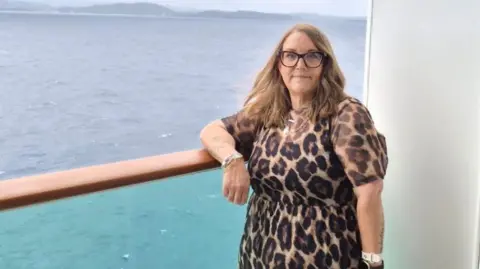
Emma Robbins, 54, an NHS service assistant from Somerset, said her stoma had given her a new lease of life. After years of living with diverticulitis, she became so ill that she feared for her future.
"I had to say goodbye to my family," she said.
Now, she enjoys activities she once thought impossible, including Zumba, aqua aerobics and going to the gym.
One challenge, however, has been coping with recent hot weather.
"It's been really difficult," she said.
"The heat creates more output into the stoma, which means we need to think about getting more salt, electrolytes and fluids back into us.
"We can become dehydrated very quickly."
 Handout
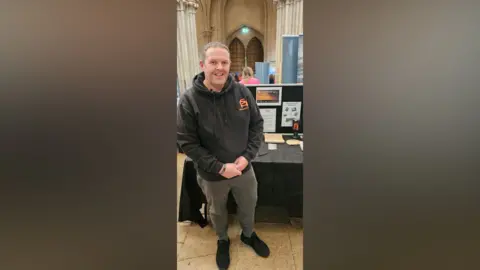
Shane Green, 55, founder of the Somerset-based charity Stoma Heroes, said having one had never held him back.
"Having a stoma doesn't mean you need to stop living your life," he said.
From swimming and travelling abroad to forming relationships, Green believes it is often fear, rather than the stoma itself, that limits people.
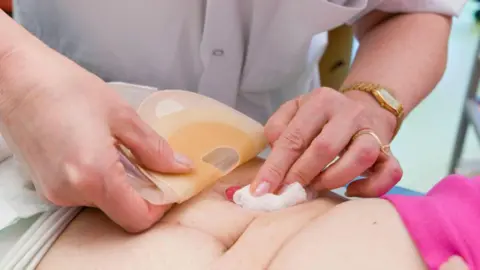
A stoma is a surgically created opening in the abdomen that allows waste to leave the body and be collected in a bag. More than 200,000 people in the UK live with one.
They can be needed for a variety of reasons, including bowel cancer, Crohn's disease, ulcerative colitis and other conditions affecting the bowel or bladder.
Green needed emergency surgery in 2017 after suffering a perforated bowel caused by undiagnosed diverticulitis.
He said he knew little about stomas before the operation and initially went into denial.
"I sort of lost myself from my chest downwards. I just didn't want to know."
For some patients, adjusting to life after the operation can bring concerns about their appearance, whether other people will notice their stoma and how it could affect exercise, holidays, work and relationships.
A survey published by the British Journal of Nursing found that 62% of people with stomas avoided physical and social activities.
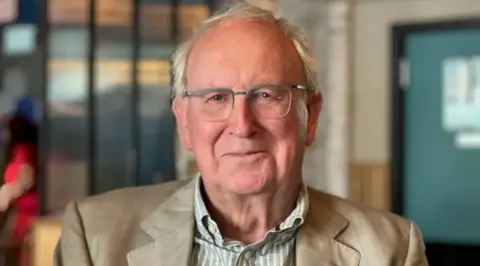
Tony Beckingsale, from Bristol, received a stoma following treatment for bowel cancer. Travelling abroad was one of his biggest concerns.
"I didn't know whether the bag was going to expand, contract or burst," he said of his first flight to Canada.
He later discovered flying caused no problems.
It's carrying out the practicalities which proves to yourself if it will work."
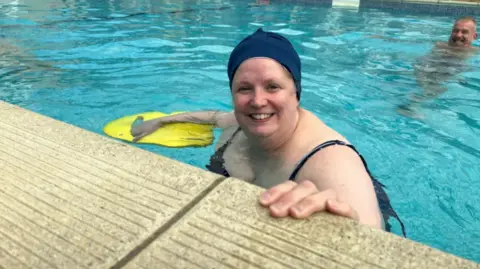
Claire has lived with a stoma for more than 10 years following surgery related to Crohn's disease.
She said: "I fell in love with my stoma from the get-go because I was like, 'You've saved my life, you've given me my life back.'"
This condition can cause inflammation in the digestive system. NHS England says 21% of people with the disease will have bowel resection surgery within five years of diagnosis, which could lead to a person needing a stoma.
Claire recently started swimming at the Royal United Hospital (RUH) in Bath and said returning to the pool came with its own anxieties.
"There's always that worry about getting in the pool and thinking, 'What if my bag leaks? How embarrassing would that be?'"
But she said: "Your anticipation of things is almost always worse.
"If you face your fears and give it a go, it's always a supportive environment."
 Ben Coombes
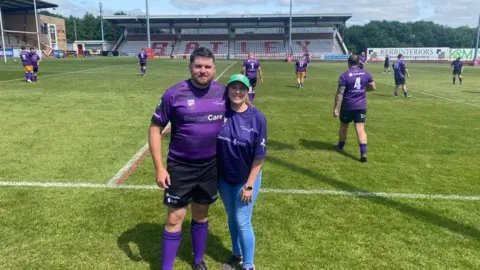
For Wiltshire resident Ben Coombes, 37, life with a stoma has been transformative.
Sport had always been a major part of his life while living with ulcerative colitis, a long-term condition that causes inflammation and ulcers in the large intestine and rectum.
According to the Crohn's and Colitis charity, around 300,000 live with the condition in the UK.
At the age of 30, he suffered a severe flare-up that did not respond to treatment.
"This time things just weren't working," he said.
"I wasn't settling down and I was being pumped full of all sorts of drugs and treatments."
Doctors told him emergency surgery was needed, resulting in him having a stoma.
 Getty Images
He feared his rugby and cricket days were over but now plays both sports and represents Team Colostomy UK.
The team organises rugby fixtures around the country and allows players to choose between full-contact and touch rugby.
"At first I lost all my confidence. I was scared of getting hit in the stomach."
A standard stoma belt did not provide enough protection, so his wife Daisy researched ways to create additional padding.
After contacting rugby equipment manufacturers, the pair developed a homemade foam shield.
"I've never looked back since," he said.
He is now confident enough to occasionally play without it.
Those interviewed shared a common message: a stoma does not have to limit what a person can achieve.
They said the biggest barriers are often fear and misconceptions rather than the condition itself.
Follow BBC Bristol on Facebook, X and Instagram. Send your story ideas to us on email or via WhatsApp on 0800 313 4630.