How one man gets new laws passed - again and again

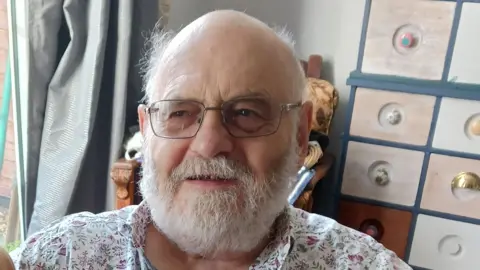 Ron Bailey
Ron Bailey has been called many things in his 40 years of political campaigning, not all of them printable.
"The UK's most successful parliamentary campaigner," by a former Friends of the Earth director.
"The most effective and relentless lobbyist that it has been my misfortune to encounter during the last two decades," according to ex-minister Sir Oliver Letwin.
"A bit of a pain in the arse at times," by Lib Dem peer (and friend) Lord Foster.
Over the years Bailey has worked for groups including the Green Party, the Community Rights Project and the Sustainable Energy Association.
In that time he estimates he has been involved in getting 16 bills into law and has had a hand in a further 25 law changes.
Surprising stats for someone who use to have a poster that read "Don't vote, it only encourages them".
In his younger days Bailey was less interested in parliamentary process, preferring direct action.
His folk-singer brother first awakened his interest in politics while being "asked to leave" grammar school for "messing about" deepened his dislike of authority.
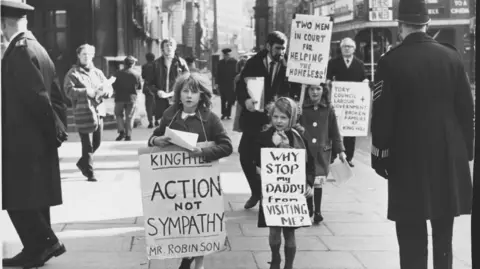
He cut his campaigning teeth in the 1960s, joining protests against harsh homelessness laws that split up families and getting involved in the squatting movement.
Activities included occupying hostels, moving homeless families into empty houses, and battling with bailiffs.
The campaigns were infused with the revolutionary spirit of the time but underpinned by Bailey's forensic understanding of the law.
He recalls spending hours in the British Library researching property laws going back to the 14th Century, so that when challenged he was armed with the facts.
 Getty Images
More than a decade later, Bailey began trying to change the law, rather than just reading about it. One of his early victories was a freedom of information campaign.
In 1983, the Greater London Council Grants Committee awarded one of his projects enough money to rent an office and employ staff.
Happy to bite the hand that feeds, Bailey used the cash to launch a campaign demanding that they make their meetings public.
Next, he pushed for a Local Government (Access to Information) Bill, which expanded the public's access to council meetings and documents.
To build support for the bill, Bailey and his team contacted hundreds of local groups sending them the "secret files" which detailed activities councils were getting up to behind closed doors.
One of Bailey's favourite examples, he recalls, was a council that voted for a motion supporting freedom of information - in private.
He knew the campaign was paying off when he overheard MPs in a parliamentary bar complaining about the flood of letters they were receiving on the subject.
"I don't call myself a lobbyist," Bailey says.
"I call myself a community mobiliser. That's what's crucial. You don't win these campaigns in Parliament, you win them outside Parliament."
The then Conservative government had a big majority and had opposed the bill, but in the face of public pressure, relented.
Bailey says he and his team were careful to allow ministers to "save face", altering the wording of their proposal so the government didn't look like it had climbed down.
 Getty Images
'Capitalists and anarchist nutters'
"Giving your opponent a way out" is one of his golden rules of campaigning - his full list can be found in his new book Institutionalised Deceit: Taking the Lid off Westminster Governance.
Another is to avoid party tribalism. Despite voting Green, Bailey has rarely been picky about who he works with.
In the 1980s, he teamed up with the Association for the Conservation of Energy, a body governed by directors and CEOs.
In a goodbye speech at the end of his time with them, Bailey said: "Perhaps we have both learnt something.
"I have learnt that not all capitalist bastards are capitalist bastards and you have learnt that not all anarchist nutters are anarchist nutters."
Another mantra is to always appear "ultra reasonable". In his book he writes: "Make it as difficult as possible for people to oppose you."
Among his success, he counts:
- the Home Energy Conservation Act, which put a duty on councils to set out how they were improving home energy efficiency
- the Private Hire Vehicles Act, which regulated minicabs
- the Road Traffic Reduction Act, which required local councils to produce traffic reduction plans
One of Bailey's key methods of getting laws passed is the private members' bills process - the parliamentary procedure which begins with the deputy speaker, wearing white gloves and picking small numbered balls out of a goldfish bowl.
The lucky MPs, whose numbers are drawn, get crucial parliamentary time to introduce their own bill.
As soon as the numbers were drawn, Bailey would move fast - immediately lobbying the seven MPs on the list, presenting them with bills, oven-ready for presentation.
He became a master of the tricky process of turning private members' bills into law.
That put him on a collision course with Conservative MP Eric Forth.
Forth was a dedicated parliamentarian and one of the most vehement opponents of the private members' bill process. He would regularly try to block bills by talking them out.
The Bromley and Chiselhurst MP argued that such bills represented the "dreams of this or that group and the proper aspirations of good minded-people" but were "not necessarily very well-thought through".
Forth was so prolific at "filibustering" backbenchers bills that the Friday sessions in the House of Commons, where the bills are debated, gained the nickname "Eric Forth's killing fields".
In his book, Bailey described Forth as "uncrackable" - but he was able to claim victories against the MP.
In an (ultimately successful) effort to save his Private Hire Vehicles Bill, Bailey organised an intense local campaign, which saw leaflets sent to every one of Forth's 50,000 constituents.
Bailey was also not above returning to the direct action tactics of his youth.
He once locked the Liberal Democrat chief whip in his office, in a bid to prevent him from being lobbied by rival campaigners.
Now in his 80s, Bailey is recovering from his sixth stroke, while insomnia and restless leg syndrome keep him up at night.
But his friend Lib Dem peer Lord Don Foster says he is "still at it".
"Still chasing, still writing parliamentary questions.
"Above everything, Ron Bailey has probably got more pieces of legislation through Parliament than the vast majority of cabinet ministers."