Wildlife park breaks stork breeding record

 Rebecca Louise
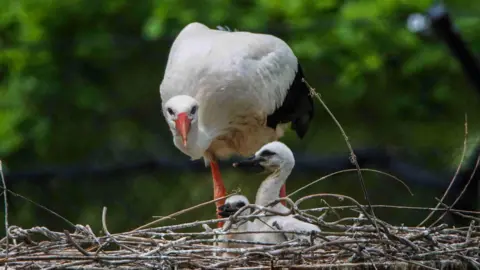
A wildlife park says it has had its most successful white stork breeding season ever after hatching and rearing 49 chicks for a rewilding programme.
The White Stork Project aims to re-establish a wild, breeding population of the birds with at least 50 breeding pairs across the south of England by 2030.
Cotswold Wildlife Park has so far bred 280 White Storks for the scheme.
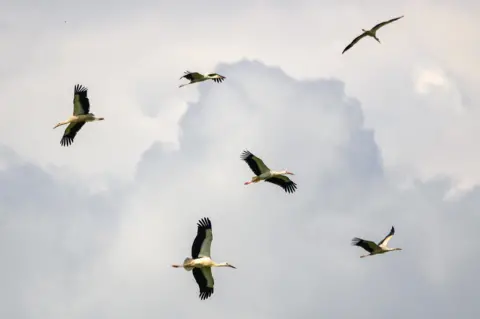
Curator and managing director Jamie Craig said: "When they are finally released and take to the air to soar the thermals, it's a sight that always inspires us for the future."
 Philip Joyce
The last breeding pair to be recorded in Britain before current conservation efforts was in 1416, with habitat loss, over-hunting, and industrialisation all thought to have contributed to their decline.
The park has partnered with the Roy Dennis Wildlife Foundation, Knepp Castle Estate and private landowners in Sussex on the project, which began in 2016.
 Cotswold Wildlife Park
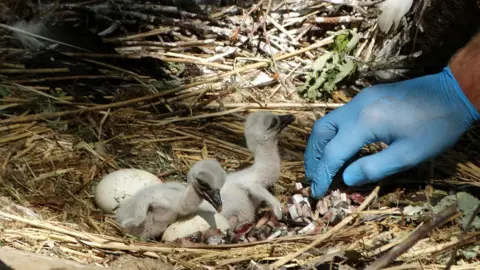
The number of chicks bred at the park has increased year on year, with this year's batch hatching in May.
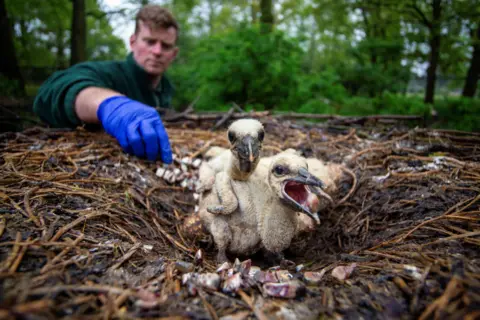
"After approximately 35 days, the chicks will hatch and the keepers then assume the role of fairy godmother to the chicks and the adults," Craig explained.
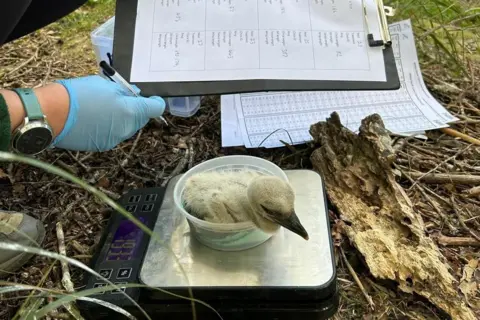
"Although the adults will bring a good supply of food to the nest for the young, the keepers also assist feed – visiting each nest daily with quantities of finely chopped feed items, usually fish and insects, to ensure that each chick's chance of survival is optimised, and the workload of the parents with large clutches is not too exhausting.
"The young birds grow rapidly and by around two months of age, the birds will fledge the nest and become independent."
 Cotswold Wildlife Park
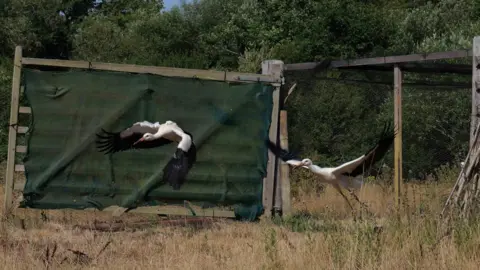
A two-week settling period follows to ensure all the birds are strong and healthy, before they are transferred to Knepp Castle in Sussex where they are released into the wild.
Craig said: "Watching our young storks hatch, grow at the park and then be transferred to Knepp is always a proud moment."
He said seeing them eventually take flight was the "pinnacle of what we do and something I never tire of".
 Tanya Forbes
This year the birds, which were previously fitted with GPS trackers, will carry either a satellite tracker or an electronic tracking tag.
Conservation officer Beth Peacock said it would help "build a much clearer picture of their movements, survival and behaviour after release, while making it possible to monitor more birds than ever before".
She added: "It is especially encouraging that two birds bred here have migrated, returned to Knepp and attempted to breed, showing just how important these releases are in helping restore White Storks to the landscape.
"It is a real privilege to be so closely involved in such an exciting project to bring this iconic bird back to our skies."
All the birds involved in the project have unique coloured rings on their legs, and their sightings can be reported online.
 ELEANOR SUTTON