What does the future hold for county's first wild beavers?

 Pensthorpe Natural Park
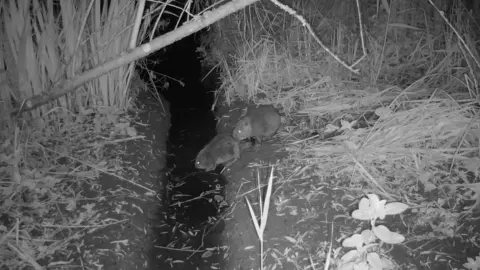
On Monday, Pensthorpe Natural Park announced that a pair of beaver babies, or kits, had been born in the wild in Norfolk for the first time in 500 years.
One of their parents was first spotted on the 700-acre conservation site near Fakenham in November 2025, with another adult beaver soon joining.
A few months later, the kits were born and have since been learning to play and feed in an undisclosed area of the site.
So how did the beavers come to be at Pensthorpe, and what does their future look like following concerns about their impact on land and waterways?
Beavers became extinct in Britain in the 16th Century due to overhunting f their pelts, meat and scent glands.
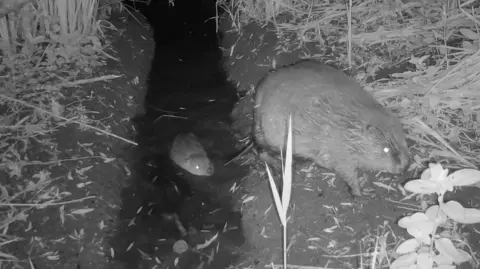
After Pensthorpe discovered a beaver on its land in November, a camera was set up in its lodge. This soon revealed two beavers living together before they were joined by two kits.
Now a couple of months old, the kits have been weaned as "they are definitely eating willow and various things in the water at the moment", said Ben Marshall, the managing director of Pensthorpe.
"At the moment the parents are teaching them how to slap their tails to ward off predators, so they're actually quite independent little beings already," said Marshall.
"Beaver kits actually live with their parents for around two years, so you wouldn't expect them to go off very far."
 Pensthorpe
How did they get here?
 Getty Images
About five miles (8km) upstream of the River Wensum from Pensthorpe is Sculthorpe Moor Nature Reserve, which reintroduced beavers in 2022, where they live in enclosures.
Pensthorpe does not believe their beavers were escapees, as Sculthorpe's animals are microchipped and its staff confirmed none were missing.
"I don't think they've come from there," said Marshall, "but to be honest, we really don't know [where].
"It's a really challenging one because it's almost looked too perfect from the outside, one beaver, two beavers, and now we've got babies."
He said the reserve's connected waterways meant the adult beavers could have been there for some time.
One possible theory is they were released by so-called beaver bombers, people who believe the animals should live in the wild and release them illegally into waterways.
Last year, Natural England began investigating where the Pensthorpe beavers came from but have not confirmed their origins.
The future for the beavers

Pensthorpe said it hoped its young beavers would go on to produce kits.
"The local area needs more beavers," said Marshall, adding the organisation had been fundraising to submit an expression of interest for a catchment-wide wild release programme.
Marshall said this would help mitigate any inbreeding issues, but accepted concerns about reintroduction.
"Beavers are such a sensitive topic, and so we're trying to do everything as best as we can to keep everyone engaged with the process, so that we don't cause any unnecessary risk or controversy," he said.
Why are beavers a worry?
 Pensthorpe Natural Park
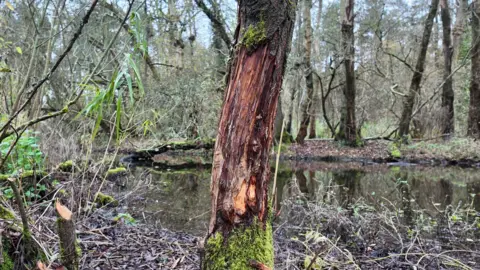
There are concerns over reintroducing beavers, particularly around their dams being built in inappropriate places and their ability to destroy trees.
Conservationists say dams can slow the flow of rivers and streams and create habitats where other creatures can thrive.
But the National Farmers Union has said previously that while beavers could provide certain benefits, they also cause flooded and waterlogged fields, feed on agricultural crops such as maize, as well as damage and fell young trees including cricket bat willow.
"Our beavers have not even built a dam, to be honest because they've got so much rich habitat," said Marshall.
He added some farmers had seen benefits because "where [beavers] actually created dams, they've still got water on their land during this extreme drought that we've had".
He said the future for beavers lay somewhere between the two opposing views.
"I think there's naturally fears about losing crops and arable land to flooding, blocking important waterways and will that affect the fishing industry, and there's so many key players and it's really challenging," he said.
Marshall said local farmers and landowners had been kept informed about plans for the Pensthorpe beavers, adding "we've had nothing but positivity".
He said the animals had opened up fen woodland at Pensthorpe by felling trees, creating benefits for wildlife.
"We've got birds and species that we've never had in those areas and wildflowers going through," he said.
Sustainable reintroduction
 Pensthorpe Natural Park
Since February last year, the government has allowed beavers to be reintroduced at specific locations in England under licensed programmes.
Matt Heard, Natural England's national delivery director, said: "We are working with Pensthorpe Nature Reserve, the Beaver Trust and other stakeholders to ensure the welfare of the animals and to develop a plan of action."
Natural England said it was aware of concerns from neighbouring landowners and others responsible for land and water management in the wider catchment area.
It said it wanted wild beaver "reintroductions to be sustainable and work for both nature and people", with a robust approach balancing nature restoration, infrastructure, farming and food production.
Do you have a story suggestion for Norfolk? Contact us below.
Follow Norfolk news on BBC Sounds, Facebook, Instagram and X.