'People don't expect disabled people to have sex'

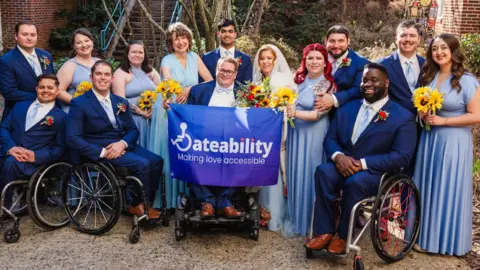 Tara Wilburn Photography
For anyone searching for romance these days, modern dating apps have revolutionised the way we go about finding a partner.
Whether it is Tinder, Hinge, Bumble or Grindr, there is something to cater for almost everyone - from casual liaisons to LGBTQ+ relationships.
However, some people with disabilities or chronic illnesses say mainstream dating apps can lead to discrimination.
In the words of Dean Chard, 29, from Bristol who has cerebral palsy: "People see my disability before they see me as a person."
In a dating landscape where judgements are made at a glimpse of a profile picture how do disabled people navigate this?
Thousands are now turning to platforms like Dateability - a dating app which its founders say is helping to break down the taboo of intimacy between people with disabilities.
It is one of a growing number aimed at disabled people, alongside services such as Hiki, Special Bridge and Dating4Disabled
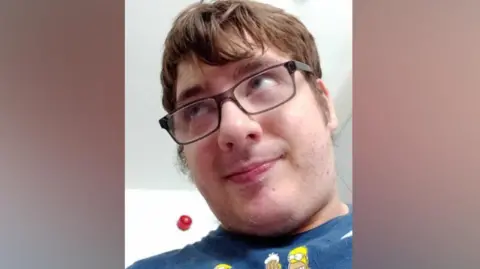 Dean Chard
For someone with a disability, even a first date can be intimidating. Chard said he turned to Dateability after becoming frustrated with other dating apps.
"I'd experienced people unmatching me after learning I have cerebral palsy; being ignored or feeling as though they judged me solely because of my disability," he said.
"It can be disheartening, but it has shown me the importance of finding platforms where honesty is encouraged," he added. "It's a huge relief not to feel pressured about when or how to tell someone about my disability."
Chard said he believed that outdated stereotypes suggesting disabled people do not want, or deserve, romantic relationships or intimacy were unhelpful.
"That's simply not true," he said. "Disabled people have the same hopes, dreams and desires for love as everyone else."
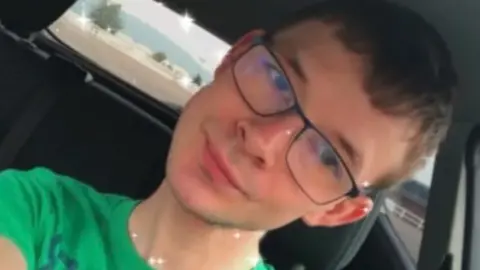 Daniel Peake
Daniel Peake, 26, from Cheltenham, was diagnosed with autism ten years ago and said he struggled with communication, eye contact and unfamiliar environments.
"For someone with my condition, [dating] is difficult due to hurdles to jump through.
"For me, it is preparation and planning, so I know every detail to understand what I am doing, where, when and how."
He has welcomed the Dateability app, saying it had enabled him to be honest and open about his disability.
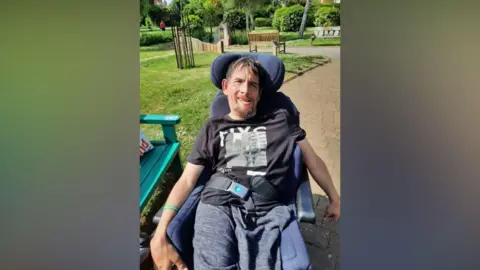 Tom Lewis
Tom Lewis, 43, from Taunton, Somerset, who has cerebral palsy, also said it had helped put users in touch with like-minded people.
"I like people like me," he said. "And I like using the [Dateability] app, which my carers help me to see.
"It also helps me as I'm gay," he added.
From dating app to marriage
The app has has recently seen its first wedding between two US-based users of the site, Colin and Kaci LeFon.
"This app allowed me to meet my best friend in the world," said Kaci.
"From the start none of the conversation was about our limits but what we can do together," she said.
Colin agreed that meeting his wife through the app "flipped the awkward health condition conversation to one of listening and understanding".
"This unlocked a deeper connection from the start. Our relationship blossomed around all of our conditions and allowed us to support each other along the way," he said.
Challenging stereotypes
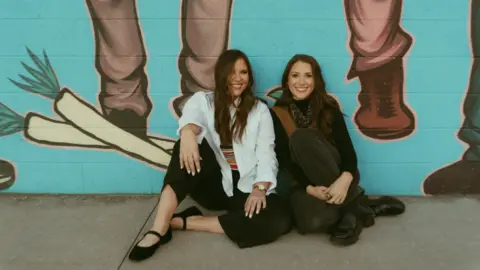
Dateability co-founder, Jacqueline Child, said people with disabilities and chronic illnesses often encountered ableism on other dating apps.
"'People don't expect disabled people to have sex," she said.
"We understand the unique circumstances that present when dating with a disability, which is why we created a safe and accepting space to create meaningful connections for people with physical, intellectual and psychiatric disabilities."
Jacqueline developed a chronic illness aged 14 and said she had experienced discrimination herself using mainstream dating apps.
"I would either be rejected straightaway, or people would say offensive things like, 'don't ever have biological children' or I would be told I was a burden, or that their families wouldn't approve of them dating a disabled person," she said.
 J Bradley
It was her sister, Alexa Child, who suggested starting a tailored dating app, which she believes is the beginning of a wider movement.
"We want disability and intimacy to become less taboo, if not taboo at all," said Alexa.
A spokesperson for Match Group, which owns mainstream apps such as Tinder and Hinge, said "significant" investment had been made in tools to stop abusive behaviour.
"We know that broader societal biases can surface in any social environment, including dating apps, and we continue to be committed to addressing it," they said.
Follow BBC Wiltshire on Facebook, X and Instagram. Send your story ideas to us on email or via WhatsApp on 0800 313 4630.