Why are some hosepipe bans still in place?

 EPA/Shutterstock
After the summer of record-breaking heat, rivers and reservoir levels have remained low, prompting water suppliers to take action to maintain supply.
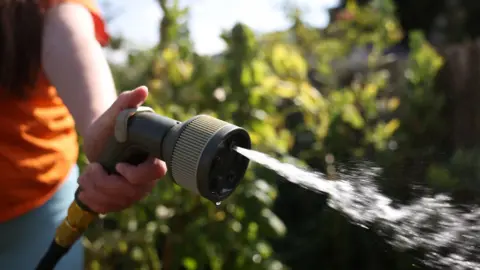
Millions of people across the West of England continue to live under hosepipe bans, restricting activities like watering gardens, cleaning cars and filling swimming and paddling pools.
However, recent rainfall meant Bristol Water was able to lift the ban for its customers in Bristol, parts of Somerset and a small area of Gloucestershire.
Wessex Water, South West Water, Severn Trent and Thames Water are yet to lift their bans, but have thanked their customers for their continued careful water use.
Why are some bans still in place?
Although there has been rainfall in the region since the end of summer, many areas are still in severe drought as groundwater and reservoir levels remain low.
A spokesperson for Wessex Water said: "While recent spells of rainfall have been welcome, we need plenty more to make up for the unprecedented dry weather during the summer and at the beginning of autumn.
A spokesperson for Thames Water added that "a sustained period of significant rainfall" was needed before rivers, reservoirs and groundwater levels could "recover sufficiently" and restrictions could be lifted.
 PA Media
Meanwhile Richard Stanbrook, South West Water's drought programme director, urged people to "keep using only what you need."
He said: "There's still a long way to go to rebuild our storage heading into next year and the Environment Agency has said England needs at least 120% of its average rainfall over the next six months to be out of drought by spring.
"We're continuing to repair leaks and move water around our network to make the most of the supplies we have while rivers and reservoirs recover."
A Severn Trent spokeswoman said teams carefully "balance the use" of different water sources which "helps make sure water can continue to get to where it's needed."
She added: "We're committed to further improving our network as we look ahead to changes due to climate change and population growth."

"Every reduction in water use helps protect supplies for our customers, communities and the environment," they added.
Severn Trent is the only supplier in the region that did not enforce restrictions on customers.
The company has not had a hosepipe ban since 1995.
When will restrictions end?
Hosepipe bans were introduced across many parts of the country after the UK's hottest summer on record put strain on supplies.
But the Met Office announced that problem began much earlier, as the spring and summer saw five widespread heatwaves and 40 days of temperatures above 30C (86F), smashing the previous record of 34 days.
The highest temperature of the summer was 38.2C (100.6F), which was recorded at Hartpury College in Gloucestershire on 13 August.

As a result of the prolonged, excessive heat, many reservoir levels reduced significantly and the Environment Agency declared that Cornwall, Devon, Dorset, Somerset, East Sussex and West Sussex were all in severe drought.
Bristol Water said it was able to lift restrictions as its reservoirs had reached 43% capacity.
A spokesperson for the supplier thanked its customers for complying with the ban and asked them to "keep up the small habits that make a difference" to help save the "precious resource" all year round.
Follow BBC Bristol on Facebook, X and Instagram. Send your story ideas to us on email or via WhatsApp on 0800 313 4630.