Globally rare wasp found in Essex

 Essex Wildlife Trust
A wasp, considered to be rare across the world, has been rediscovered in Essex for the first time in almost 20 years.
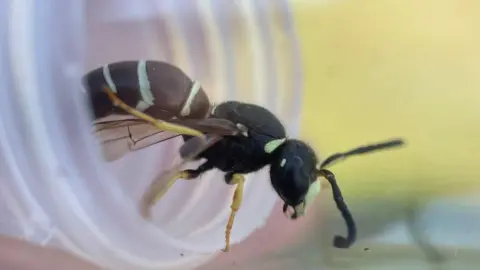
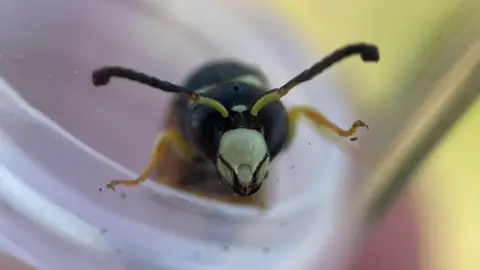
The Fen Mason Wasp has been recorded as living at Essex Wildlife Trust's Howlands Marsh nature reserve in St Osyth, after 17 years.
The wasp was considered extinct in Britain until it was spotted again in 1986, but over the past few decades, populations have been limited to the Norfolk Broads and pockets of Suffolk.
Harry Witts, ecologist at the trust, said: "I knew Fen Mason Wasps were recorded in the area nearly 20 years ago, but to find that it is still surviving here is very exciting. "It goes to show that Essex's grazing marshes are extremely special."
 Essex Wildlife Trust
The trust said the wasps require coastal grazing marsh and fens, where they build a 'chimney' of mud above the entrance to their burrow.
Adults are smaller than a common wasp and are mostly black with creamy stripes and orange legs.
Outside the UK, the nearest population is in eastern Europe, in Poland and Estonia.
Witts continued: "Don't worry, this wasp isn't going to be interested in your jam sandwiches – it has incredibly specific tastes.
"Mother wasps will only feed their young larvae one species of weevil, which only feeds on two species of wetland plant in the carrot family."
The wasps were found in an area that had recently been dredged but the trust said they want to tailor the area to support the wasps and other rare insects.
Do you have a story suggestion for Essex? Contact us below.
Follow Essex news on BBC Sounds, Facebook, Instagram and X.