Budget pressures could mean further council tax rises, leaders warn

 Getty Images
Councils across the country may have to increase council tax and make further cuts to services next year because of budget gaps.
Current figures suggest Welsh authorities are facing a shortfall of more than £272m in 2027-28, according to analysis by the BBC Shared Data Unit.
The Welsh Local Government Association (WLGA) said "councils continue to face significant financial pressures" but "the precise position will depend on forthcoming Welsh and UK government budgets".
The Welsh government said "every authority is receiving an increase of at least 4% this financial year" and councils "will be planning on a range of scenarios at present and we will set out our budget proposals this Autumn".
Every council in Wales is expecting to face a budget gap according to the research.
The deficit is forecast despite councils making savings totalling £132m this year and putting council tax up by an average of 4.9%.
Cardiff is projected to see the biggest overall deficit at nearly £43m, while Conwy is forecast the largest per person gap of £200.
A budget gap means the difference between the amount of income a council expects to receive and the amount it expects to spend.
Councils have to balance their budgets by increasing revenue, cutting spending or using reserves.
Anthony Hunt, head of WLGA and leader of Torfaen Council, said councils were at the point in the year where they are working out spending for the year ahead.
"We're estimating how much we think it will cost us to run the services that we need to run as local councils and also trying to estimate the amount of money we think we'll have in order to run those services."
He said in the months to come councils would be "trying to see what we can do to try and bridge that gap" including lobbying "all levels of government to try and give local services the money they need to operate".
Hunt added that councils were trying to be more innovative in finding savings.
"Councillors of all political persuasions hate having to ask for more council tax, but if the alternative is services being completely decimated then it's a very difficult decision for them to make."
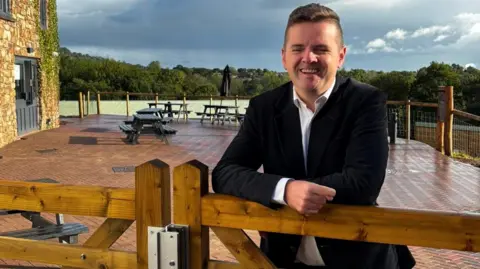 Anthony Hunt
Education and social services make up the majority of spending by councils, with the past decade seeing significant increases in both demand and complexity.
The auditor general for Wales recently warned that "fast rising costs in areas like children's services and temporary accommodation are bringing some councils to the very edge of financial sustainability".
The WLGA estimated that councils have made £3bn worth of cuts and efficiencies since 2009-10 and many places had seen cuts in services that councils were not legally obliged to provide, like leisure centres and parks.
At the same time people have seen council tax bills increase while the services they receive have been reduced.
Around a quarter of the Welsh government's budget is given to local authorities and councils will not know what they are likely to get for 2027-28 until ministers publish the draft budget in November.
That means the current projected figures for the budget gap for each council are likely to change.
The WLGA said: "Without sufficient funding, councils will face increasingly tough decisions as they work to balance their budgets while protecting the services communities rely on.
"We will continue working closely with the Welsh government to ensure that the scale of the pressures is understood and secure a sustainable funding settlement for local services."
The Welsh government said the minimum 4% funding increase councils received this year was "supporting councils to protect services and limit council tax increases".
"We are committed to reviewing the local government funding formula and working with local government to better reflect the cost of delivering services in different parts of Wales."