Oxfam warns of 'lack of resources' in Ebola outbreak

 Reuters
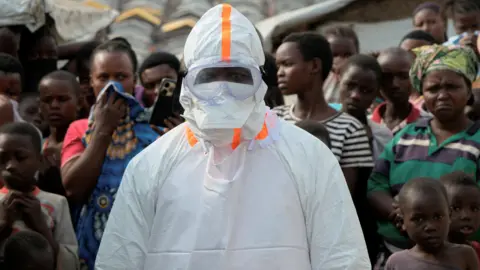
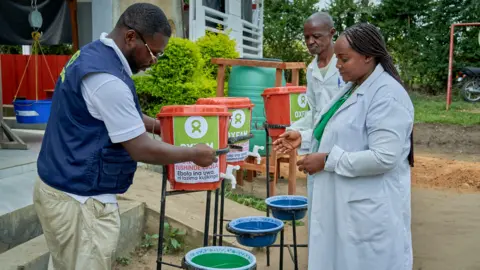
Oxfam aid workers in the Democratic Republic of Congo have warned that the latest Ebola outbreak has been exacerbated by cuts to the foreign aid budget.
The current outbreak has killed more than 2,000 people and is on track to surpass the deadliest ever, according to the World Health Organization (WHO).
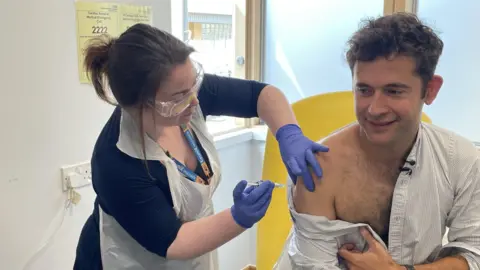
Oxford researchers are trying to prevent the spread, and recently began a world-first trial to test a new Ebola vaccine developed in the city.
The BBC has contacted the Foreign, Commonwealth & Development Office for a comment.
In 2025, the government announced it would cut about £6bn from the overseas budget by 2027 in order to fund an increase in defence spending.
In DR Congo, Oxfam's Ebola field response co-ordinator, Manel Rebordosa, said the situation was "complicated" by a "lack of resources".
"I was here in 2018 and also in 2014 and there is a huge difference on the mobilisation of resources at the international level to respond to this outbreak," he said.
"You can see that things that we used to do very easily in the past, now we are not really able to."
 Azaria Muhongya/Oxfam
More than 2,000 people have died from the virus since the outbreak was officially declared in DR Congo in May, making it the second-worst Ebola outbreak ever.
Infection rates remain high, according to the WHO, adding to concerns that authorities are struggling to get to grips with the spread of the disease.
"At some point we are afraid that it will even reach the biggest outbreak to date in 2014," said Rebordosa, speaking to the BBC from the country's capital Kinshasa.
"We work with community volunteers so they can really raise awareness at the very community level.
"Our main concern at this point is that even if we can tell the people that they need to go to the Ebola treatment centres, that they need to trust the system, if the system doesn't have the resources to really work.
"It's really difficult to confront communities and to support them if then you have nothing to provide in the form of a health system that works."
The epicentre of this outbreak of the Bundibugyo species of Ebola is in the east of DR Congo, where insecurity has hampered control efforts.
There is also no approved vaccine or any recognised therapeutic drugs, making treating Bundibugyo harder.
The Oxford Vaccine Group is currently running a trial in the hope of creating an inoculation directly targeting the current outbreak strain.
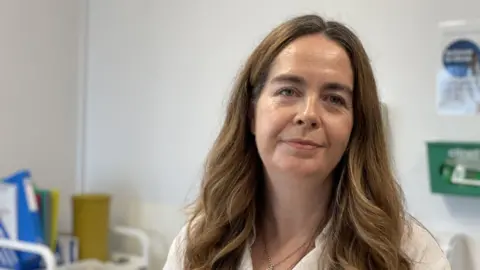
"It's pretty significant and the whole team are really excited about this clinical trial," the lead scientific investigator for the study, Prof Teresa Lambe, said.
"We're using the same type of vaccine platform that we used in Covid.
"We know what the immune response is going to induce, so we've just made the vaccine more specific for this Ebola outbreak."
The vaccine, created by University of Oxford scientists, was ready for trials after just eight weeks of development.
Although 14 subjects have already taken part in the Oxford trial, volunteers are still being recruited.
"With any new intervention or clinical trial, you start slow, you recruit a small number of people, you look to see that you've got the right safety and immune response and it's all going in the right direction so far," Prof Lambe said.
"What we're trying to do is get to the DRC and get to those communities that are impacted as quickly as possible but doing that safely of course."