'Wild' conditions for canoes on drought-hit river

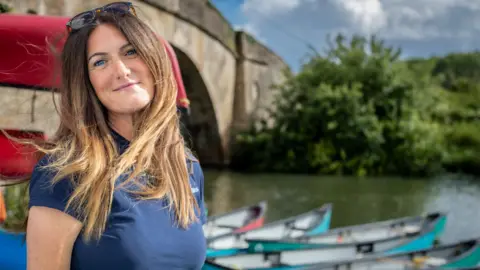 Edith Cameron
Canoeists on the River Thames have faced "wild" conditions amid the ongoing drought, the owner of a hire business has said.
Cotswold Canoe Hire, in Lechlade, Gloucestershire, says the lack of rain has left soil on the flood plains "like concrete", increasing the risk of flooding when heavier rain eventually arrives.
Owner Edith Cameron said the low river levels could also mean they have to cancel some of their canoe trips, with the river they operate on becoming "quite wild" due to dropping water levels.
A spokesperson for the Environment Agency (EA) said action was being taken "to help maintain safe depths for navigation, as well as to help reduce environmental impacts".
The source of the Thames is normally near Kemble, Gloucestershire, but the drought conditions mean this has dried up, with measurable water only found several miles downstream at Somerford Keynes and Cricklade.
Cameron said the dry weather has had a mixed impact on her canoe hire business, with the sunny weather "good for business".
However, their full stretch of the Thames route - from Castle Eaton down to Lechlade - has become more difficult for people to complete due to the low river level.
"It's now not suitable for novices," she said. "A lot of customers have really enjoyed it because it's been quite wild, but some have found it challenging."
Cameron said her staff are monitoring the route to make sure it's safe and that they are not disturbing the ecology of the river.
"We'll probably have to completely cancel [some] trips because we want customers to leave with a smile on their face and enjoy it," she said.
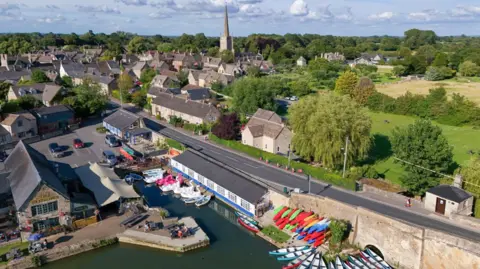 Cotswold Canoe Hire
But while dry conditions are making things difficult, there is also trepidation about the prospect of rain in the coming months with floodplains around the river susceptible to flash flooding.
"If we get heavy rainfall like we did over January and February, that water is just going to go straight into the river at a higher rate," Cameron said.
It is not just people getting out on the river - wildlife is also being impacted.
"Shallow water absorbs heat a lot faster, and warm water holds less oxygen which means animals within the watercourse are going to struggle, especially fish," explained Richard Spyvee, head of nature recovery zones at Gloucestershire Wildlife Trust.
Water voles are also particularly at risk when river levels drop, Spyvee said, because they become more exposed to predators and their food sources move further away from their resting and hiding places.
Follow BBC Gloucestershire on Facebook, X and Instagram. Send your story ideas to us on email or via WhatsApp on 0800 313 4630.