'Appalling' failures at trust over man's death

 Leigh Day Solicitors
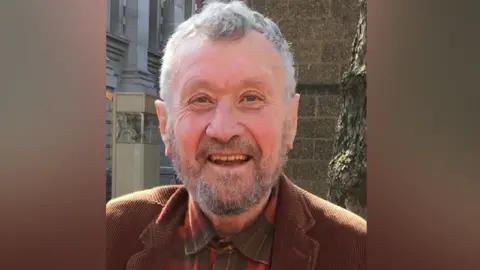
A grandfather who died after surgery at a Brighton hospital would have "more likely survived" if he was offered other treatments, a coroner said.
Arthur Brooke Craig, 77, was given no fluids for 24 hours after his operation at the Royal Sussex County Hospital by under-fire surgeon Dr Marc Lamah, and doctors were unaware that he had heart problems despite it being in his medical notes.
His daughter, Professor Cathy Craig said the family raised a "series of grave concerns" over her father's care and they "got some answers" from the inquest.
University Hospitals Sussex, which runs the hospital, said it "offers our sincere condolences to Mr Craig's family" and apologised for failings in his care.
Coroner Gareth Jones said in a narrative conclusion that the failure to offer Craig fluids was a "gross failure", but did not amount to negligence.
Speaking outside Horsham Coroner's Court on Thursday, Prof Craig said: "My father's dying wish was to find out what happened to him in that hospital and I feel that today we got some answers.
"Today, the coroner has confirmed many of our concerns in his findings.
"In particular, the failure to tell us about the right treatment options and risks, the failure to consider my father's underlying health conditions, and the gross failure to give my father proper fluids after he underwent major surgery."
'Litany of problems'
The family's solicitor Camilla Browne also said the inquest highlighted a "litany of problems" at the hospital, adding she "sincerely hopes important lessons will be learned by staff".
The inquest heard how Craig was initiailly adament that he did not want to have surgery for bowel problems he was experiencing in 2024.
Craig had been admitted to RSH after attending A&E on 28 May 2024 and tests initially found an ulcer, it was heard.
There were plans to discharge him, despite his family's concerns he was still unwell.
A CT scan then showed a large mass, prompting investigative intestinal surgery on 14 June that year.
After the discovery of a tumour, Craig was told he would need to have a major operation to remove his colon.
Jones told the court a second opinion should have been sought and that another less invasive treatment should have been explored.
He said: "Mr Craig and his family were not given the option of a defunctioning stoma.
"If they had been given that option, and he had taken it, he would have more likely survived."
 Eddie Mitchell
His surgery in 2024 was performed by Dr Marc Lamah who was previously banned from working by a private healthcare company over patient safety concerns.
Giving evidence on Thursday, Lamah said it was his firm opinion and judgment that Craig had been given all his options, adding: "I was confident I was able to give Mr Craig a good chance of surviving the operation and a fair chance of a cure."
Lamah still works for the NHS hospital trust.
'Deeply concerned'
The inquest heard how the left side of Craig's heart only had 30% functionality, which was described by expert witness Professor Stephen Brown as a "significant compromise of cardiac function".
Dr Stephen Drage, the chief of surgery and critical care at the hospital at the time, said doctors were unaware Craig previously had heart surgery because the hospital used a system "where everything was listed chronologcally on a long list and it would fall off the bottom of the screen".
He added that "whilst clearly they should have scrolled down, it wasn't immediately available to them at the time".
Coroner Jones replied: "I think that is absolutely appalling. Something as fundamental as previous heart surgery should be immediately available."
Professor Brown said he found it "deeply concerning" there had been no intravenous (IV) input for 24 hours.
The coroner said the "failure to provide IV fluids for 24 hours is a gross failure" but found it did not amount to neglect.
Drage said a subsequent audit found 60% of patients were receiving the required hourly fluid monitoring whilst 30% are being checked every four hours and that 10% "didn't have electronic fluid chart recording".
A hospital spokesperson said it would respond to the coroner's findings "as a matter of urgency", and had made "a number of improvements to patient care" since Craig's death.
"We remain committed to learning from this case to further improve the quality and safety of our services," it added.
Sussex Police are currently investigating more than 200 potentially preventable deaths and injuries at University Hospitals Sussex NHS Foundation Trust.
A police spokesperson said thet were reviewing cases related to neurosurgery and general surgery between 2015 and 2021, and that the trust is fully cooperating with the investigation.