The world's mysterious mangrove forests captured in 13 striking images

 Avijit Ghorai/ Mangrove Photography Awards
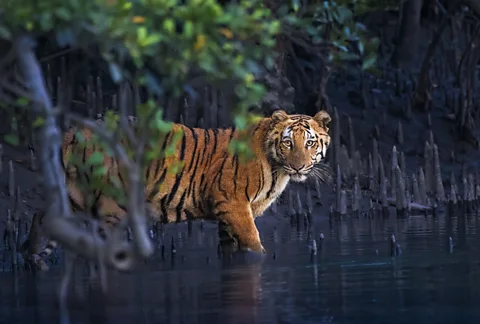
Eerie trees, prowling tigers and rare dolphin hunting behaviours have been featured at the 2026 Mangrove Photography Awards.
Found where tropical plants meet saltwater, mangrove forests hang in the balance between land and sea. These eerie ecosystems are home to some of the world's most fascinating wildlife. For some rare species, mangroves provide respite and protection. For others, they are a hunting ground – including this juvenile royal Bengal tiger in India (pictured above), in the world's largest mangrove forest, the Sundarbans.
These images from the 2026 Mangrove Photography Awards capture the extraordinary beauty and fragility of the world's mangrove forests. Here you can explore 13 of the competition's most striking entries, from Florida to Indonesia.
 Gaurav Patil/ Mangrove Photography Awards
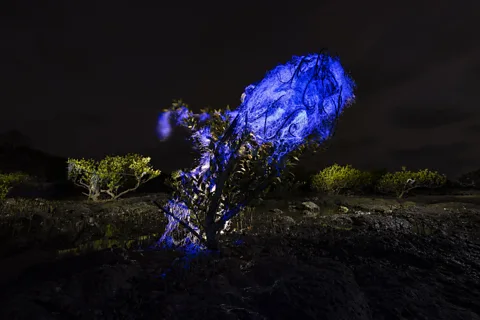
The overall winner of the competition was this eye-catching picture of a hidden "ghost net", glowing under ultraviolet light. The image, shot by Gaurav Patil, shows the net tangled in a mangrove on a tide-swept shore south of Mumbai, India. Discarded fishing nets become a hazard to wildlife when trapped in mangroves.
 Ashok Behera/ Mangrove Photography Awards
In awe
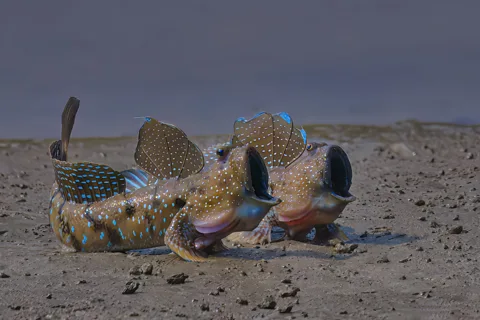
Also pictured in the Indian Sundarbans are these two colourful mudskippers, who walk, jump and breathe on land – skirting the transition zone between land and sea, much like mangroves do.
 Dillon Roberts/ Mangrove Photography Awards
Reddish rarity
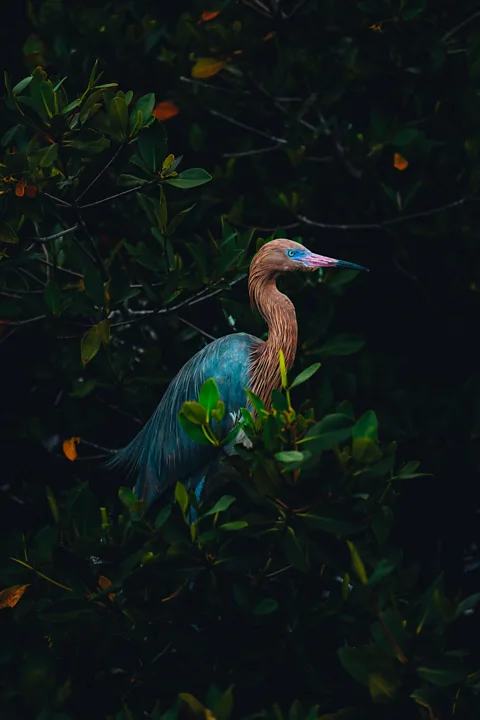
Mangrove trees are found along coasts and estuaries of more than 100 countries in the tropics and subtropics. In the Bahamas, this rare reddish egret stands out among the greenery.
 Mark Ian Cook/ Mangrove Photography Awards
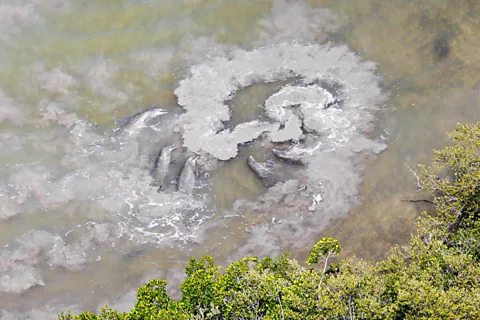
Mud feeding
The bottlenose dolphins of Florida Bay, US, are resourceful animals. The mangrove-lined coast provides them with their prey, including mullet. They trap the fish in a ring of mud they stir up from below, using the silty water like a net. This hunting strategy is almost unique to the dolphins of Florida Bay, and rarely captured on camera.
 Evan Cooper/ Mangrove Photography Awards
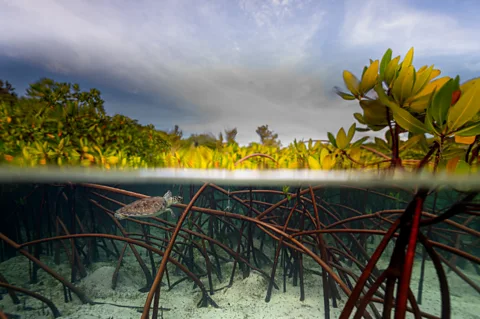
Seeking refuge
Mangroves provide a complex underwater habitat, as this shot of a young green turtle swimming among a web of roots shows. When water levels rise with the tide, this area becomes a flourishing ecosystem and offers shelter from predators, including tiger sharks.
 Mark Ian Cook/ Mangrove Photography Awards
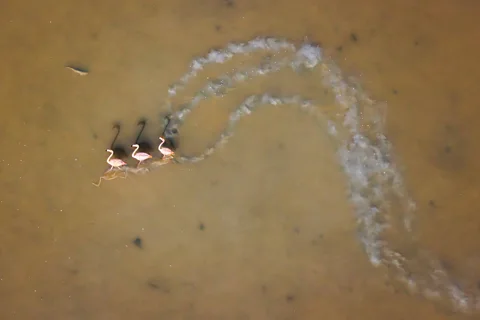
March of the flamingos
Another shot from Florida Bay took the top prize in the birds category. It features American flamingos closely observing a lemon shark.
 Pelayo Salinas de León/ Mangrove Photography Awards
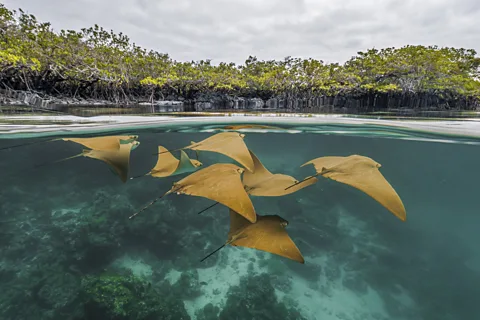
Enchanted islands
Just off the Galapagos Islands, a group of golden rays were pictured drifting past a shallow mangrove cove. Mangroves not only support biodiversity themselves, but also help adjacent ecosystems, such as nearby seagrass meadows or coral reefs.
 Crispin Middleton/ Mangrove Photography Awards
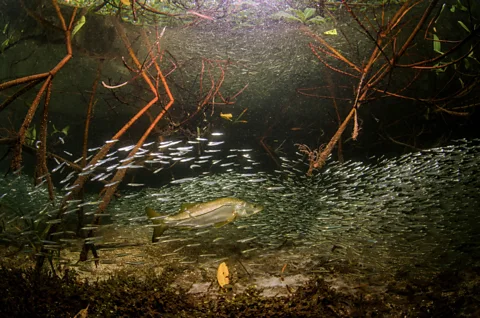
Snook attack
Mangrove forests are associated with more than 1,500 species, and provide nursery habitats for many commercially important fish. This shot shows a school of baitfish sheltering in Lac Bay, Bonaire, as a snook darts towards them.
 Erfan Samanfar/ Mangrove Photography Awards
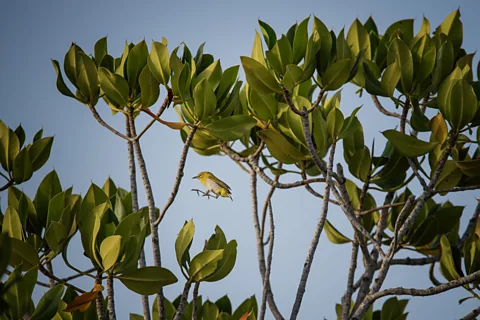
Coming in to land
Mangroves can store as much as five times more carbon than land-based forests. Roots slow incoming waves and protect communities from storm surges – while branches also offer refuge to birds, like this charming Indian white-eye, landing on a mangrove tree in Iran.
 Kallol Mukherjee/ Mangrove Photography Awards
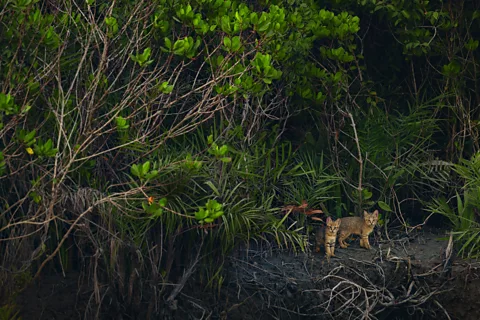
Where the mangroves begin
Kallol Mukherjee's picture won the mammals category and shows dense vegetation offering protection to jungle cat kittens. By one estimate, mangroves also offer coastal protection for more than 150 million people by stabilising shorelines and reducing erosion. Mangroves also sequester significant quantities of CO2.
 Ryuhei Suguri/ Mangrove Photography Awards
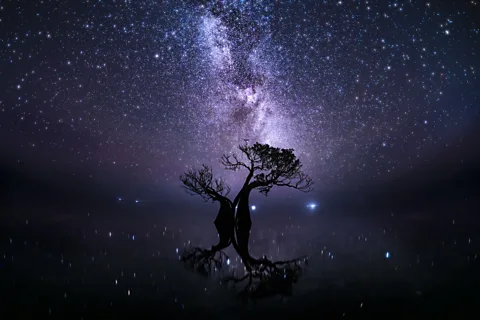
Reflected by ancient light
The competition's "on the ground" winner, shot by Ryuhei Suguri, shows a solitary mangrove tree in Indonesia, illuminated under the Milky Way.
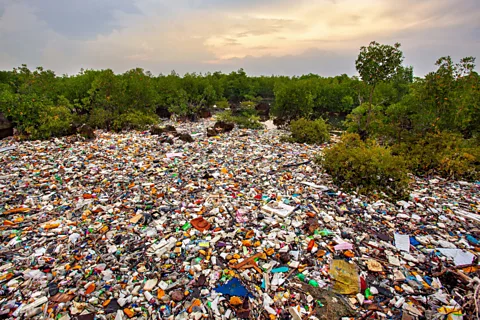 Michol Sanchez/ Mangrove Photography Awards
A sea of waste
Mangrove forests face numerous threats from humans, including pollution – as this image highlights in grim detail. Deforestation is another major issue, with many mangroves at risk of clearing for fish farming, agriculture or coastal development, as well as the impacts of climate change.
More like this:
Yet there are reasons to be hopeful: according to Global Mangrove Watch, the extent of mangrove cover worldwide has seen a net increase of 477.2 sq km (180 sq miles) between 1985 and 2025.
You can see more winners of the 2026 Mangrove Photography Awards here.
--
For essential climate news and hopeful developments to your inbox, sign up to the Future Earth newsletter, while The Essential List delivers a handpicked selection of features and insights twice a week.