Why do pipes burst in heatwaves - and what can be done?

 BBC
BBCBurst water mains, dwindling supplies and hosepipe bans across the West of England are just a few issues caused by this year's scorching summer.
On 18 August, a major road was closed in Cheltenham after a burst main sent a "raging river" down the street, threatening to flood residents' homes.
Two days later, a burst main on the edge of Bristol impacted nearly 1,500 homes, severing the water supply for much of the day.
Water companies said they were continually repairing leaks and replacing degrading pipes but, as climate change brings more extreme weather, experts are calling for renewed infrastructure and a more resilient, sustainable approach.
Why do heatwaves burst pipes?
When the ground heats up, it expands and moves - putting strain on underground pipes which are already under pressure, causing them to buckle and split.
Richard Stanbrook, a director at Bristol Water, said: "It's becoming a phenomenon that only used to happened in the winter but it's now happening in the summer because the ground dries out and moves.
"That challenges our pipes because they are more rigid than the ground.
"It's a disaster if we don't get on top of it - but we are very much aware of it."
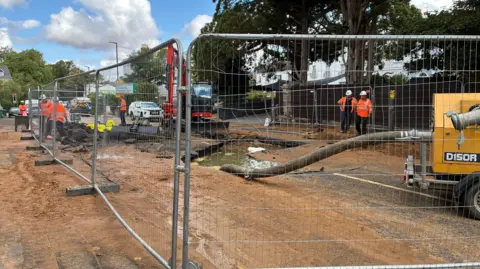
Burst pipes are much more common in older water networks because ageing materials lose their strength and crack easily, according to Bristol Water.
Some of the company's original infrastructure from 1846 still remains in active use today, including the 11-mile (17km) aqueduct carrying water from the Mendips.
A spokesperson said the prolonged period of hot and dry weather experienced this summer had "placed significant pressure on the network".
The number of bursts increased by 109% between June and July this year, the spokesperson said.
"In response, we have proactively increased our leak detection activities and expanded our repair teams by 55% to accelerate repairs and minimise disruption to customers."
The company said it continued to invest in technology, data-driven insights and improvement programmes, alongside targeted mains replacement and network upgrades.
 PA Media
Dr Francesca Pianosi, associate professor in water and environmental engineering at the University of Bristol, said most UK water networks are simply outdated.
"[They] were built long ago when climate conditions were different from what we are experiencing today, and will likely experience in the future," she said.
In 2018, the National Infrastructure Commission, which advises the government on long-term infrastructure needs, published a report on "preparing for a drier future".
It recommended reducing leakage, building new supply infrastructure and reducing household demand to improve resilience during periods of drought.
"All those recommendations still hold true and, if anything, are even more urgent as changes in climate seem to be happening faster than anticipated," Pianosi said.
 Dr Francesca Pianosi
Pianosi described how climate projections were already being used to understand future water balances and "identify where gaps may emerge" between long-term water demand and supply.
However, she noted that investment in infrastructure - alongside variations in geology, soil and land use - meant that future water availability would be difficult to predict.
She suggested issues caused by urban expansion could be "significantly mitigated" by opting for water-saving technology, like rain harvesting or dual supply systems.
"Quantifying how exactly changes in precipitation and temperature translate into changes in demand and supply remains very difficult, as many other hard-to-predict factors affect these relationships," she said.
How are water companies responding?
On 18 August, Wessex Water announced its first hosepipe ban in 50 years as demand surged to 400 million litres per day - 30% above average for the time of year.
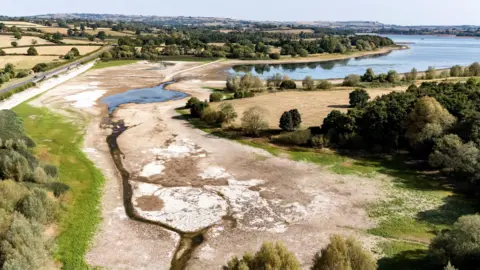
The utility company's reservoirs have fallen to 47% capacity following the driest spring and summer on record, while Bristol Water's reservoirs are only 55% full.
Bristol Water also imposed a hosepipe ban after the Environment Agency issued a drought order to protect the River Severn's resources.
Elsewhere in the region, Thames Water - which supplies parts of Wiltshire and Gloucestershire - issued its hosepipe ban on 23 July and South West Water's ban started on 8 August, covering parts of south Somerset.

Wessex Water said about £12m was spent each year on renewing its 7,558-mile (12,163 km) network and maintaining facilities which help store and move water around the region.
It said overall leakage rates had reduced by 60% in the past 30 years.
A spokesperson said: "With an ever-changing climate and growing population, we have a water resources management plan which ensures we're already taking further steps to meet our customers' demand from now to 2080."
While Bristol Water acknowledged performance in 2023-24 and 2024-25 was impacted by "weather extremes", it assured it was taking steps to "strengthen its network and adapt to changing conditions".
"Between April 2024 and March 2025, we successfully repaired 15,637 leaks across our network - reflecting our continued commitment to reducing water loss and improving service reliability," it said.
Since April 2025, Thames Water has also replaced more than 62 miles (100km) of ageing water mains as part of the company's biggest upgrade to its network in 150 years.
A spokesperson for the company said it plans to invest £3.3 billion before 2030 to help reduce leakage and improve long-term resilience.
Follow BBC Bristol on Facebook, X and Instagram. Send your story ideas to us on email or via WhatsApp on 0800 313 4630.