How did we get here?published at 16:19 BST 24 August
 Jessica Murphy
Canada digital editor
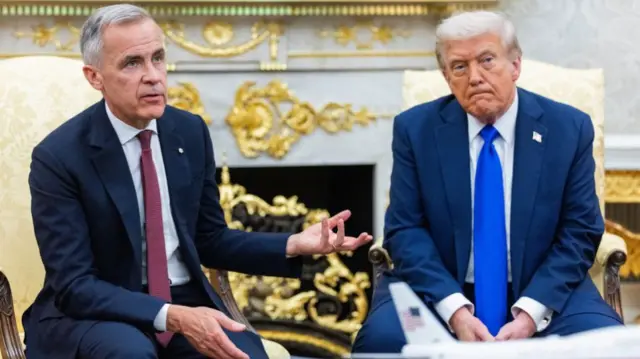 Image source, EPA/Shutterstock
Looking back, it can seem inevitable that the US and Canada ended up at the impasse they find themselves in.
Before Trump was even back in the White House for his second term, tensions were rising between the neighbouring nations.
In late 2024, Canada's then Prime Minister Justin Trudeau flew to Florida for a dinner meeting with Trump at his Mar-a-Lago resort to address the incoming president's threat to tariff Canadian imports at 25%.
It was at that dinner that Trump reportedly first floated the idea of Canada becoming a 51st US state.
Once in office, Trump quickly implement sweeping tariffs on Canada and Mexico, accusing both of allowing fentanyl and illegal immigration to flow across the borders, which many in Canada felt was unjustified.
Canada's current Prime Minister Mark Carney was elected that March in large part in response to concerns that Canada's largest trading partner suddenly posed a threat. Despite a couple of feel-good Oval Office meetings between the two leaders, trade talks never got off the ground and were sometimes called off altogether.
Trump has long accused Canada of taking advantage of the US, including its defence protections, and recently called Canadian negotiators “nasty”.
On Saturday, Carney listed his own series of grievances, including a constantly shifting rational by the Trump administration for imposing its duties and seeking to undermine Canadian sovereignty.
It was in that pressure cooker that trade negotiators were trying to finalise a complex deal that would be palatable to both sides - an endeavour that clearly failed.