Summary

Did you see the solar eclipse? Send us your comments and images

  1. The higher your viewing point the betterpublished at 17:41 BST 12 August
    Alison Francis
    Senior science journalist, reporting from north Cornwall

    Because the eclipse happens in the early evening in the UK, the Sun will be low in the sky - especially towards the end of the event, which is not too far off sunset.

    To watch it from start to finish, you will need to look west, and have a clear view of the horizon - so finding a raised position with no tall buildings obstructing your view would be a good idea.
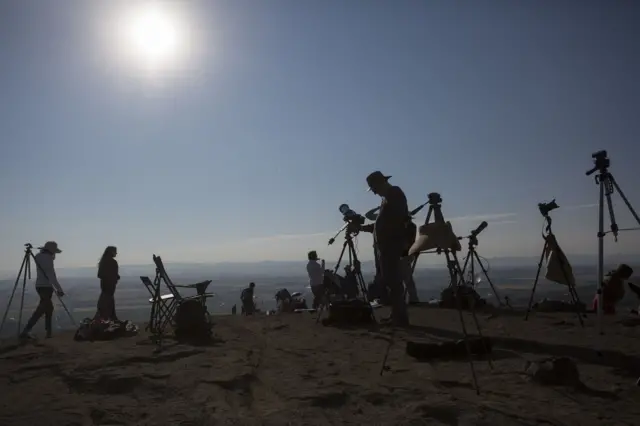
    People with telescopes gather on a rocky outcrop high above the background. They are in shadow as the sun is towards the cameraImage source, Natalie Behring/Getty Images
  2. No glasses? Here are other ways to watch the eclipse safetypublished at 17:37 BST 12 August

    You should never look at the Sun directly as it could seriously damage your eyesight. That includes looking through sunglasses or swimming goggles with dark lenses. The same goes for welding goggles or visors.

    And do not look through binoculars or telescopes unless they have a special solar filter. Using any of these can cause permanent eye damage or blindness.

    Pinhole projector - card, paper and pen

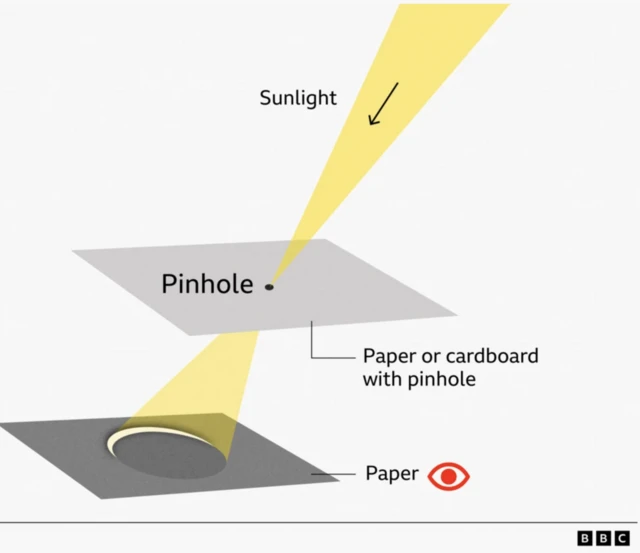
    Another safe way to watch this awe-inspiring celestial event is to create a pinhole viewer.

    Make a hole in a piece of card using the tip of a ballpoint pen, pushing it through the centre.

    Holding the card in one hand and a blank piece of paper in the other, face away from the Sun. Then line the card and paper up so that an image of the Sun becomes visible on the paper.

    This pinhole projector will show you the shadow being cast on the Sun replicated in miniature.

    A graphic showing how sunlight hits the paper with the pinhole at its centre, which then reflects onto the paper

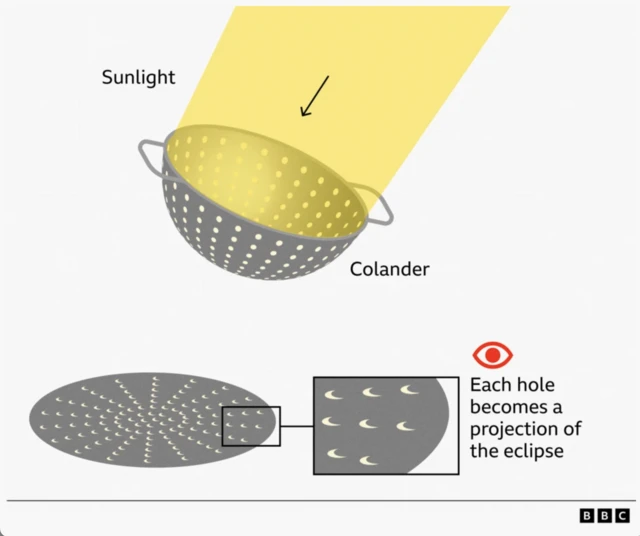
    Colander - find one in the kitchen

    By holding the colander to the Sun and looking away from the Sun, protecting your eyes, you can make not just one picture of the Sun but a hundred all at once.

    It creates a kaleidoscope of images showing the Sun and the shadow cast on it during the eclipse.

    A graphic of a colander, showing how each hole becomes a projection of the eclipse

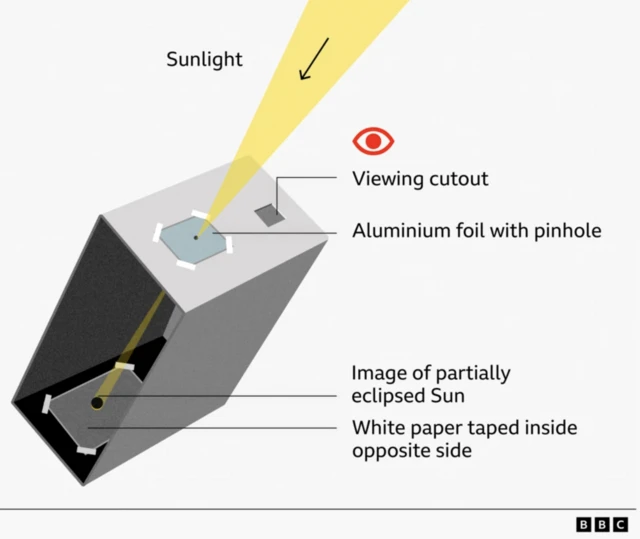
    Pinhole viewer - cardboard box, foil, paper

    An empty cereal box is ideal for making a pinhole viewer. It works similarly to the projector but should provide a clearer image.

    A graphic which shows the Pinhole viewer, which indludes a viewing cutout, aluminium foil with pinhole, image of partially eclipsed Sun and the white paper taped inside the opposite side
  3. Where the path of totality will followpublished at 17:26 BST 12 August

    Pallab Ghosh
    Science correspondent, reporting from Burgos, northern Spain

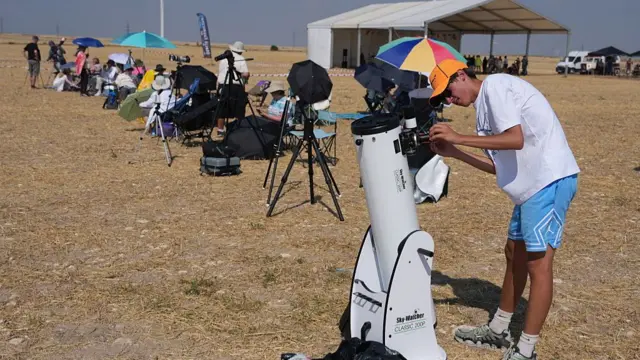
    Astronomy enthusiasts make their final adjustments in the hours leading up to the total solar eclipse observation in Lodoso, Burgos province, on August 12, 2026.Image source, Getty Images
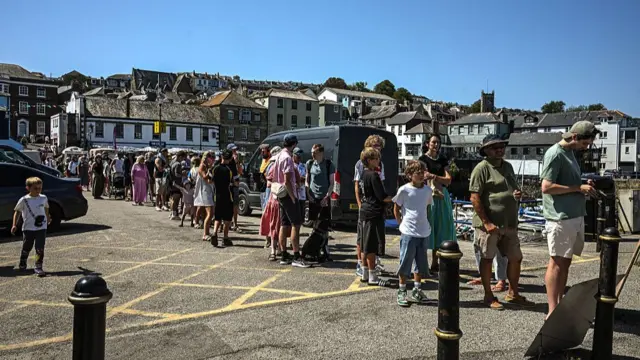
    Image caption,

    Astronomy enthusiasts in Burgos province making their preparations in the hours ahead of the eclipse

    The path of totality is the narrow, fast-moving strip of Earth swept by the Moon’s darkest shadow.

    Stand inside it and, for a minute or two, the Moon blocks the Sun completely: daytime falls away.

    Move even a short distance outside that track and it is different. The Moon still takes a huge bite from the Sun — a big partial eclipse.

    The shadow will first hit the far Russian Arctic at 17:58 BST, then races over the Arctic Ocean.

    It reaches eastern Greenland, where the late-afternoon Sun slips briefly behind the Moon, before crossing western Iceland.

    Reykjavík gets its moment at around 18:48BST.

    The shadow then skims across the North Atlantic and heads for Europe: brushing north-west Portugal, then sweeping across northern Spain from Galicia towards to me in Burgos, then Bilbao, Zaragoza and Valencia.

    Finally, as the Sun sinks, the shadow reaches the Balearic Islands.

    Palma is among the last places to see totality, at about 19:32 BST.

    It will be a black disc hanging low above the Mediterranean, before both eclipse and daylight fade away.

  4. How rare is a solar eclipse?published at 17:11 BST 12 August

    Rebecca Morelle
    Science editor, reporting from north Cornwall

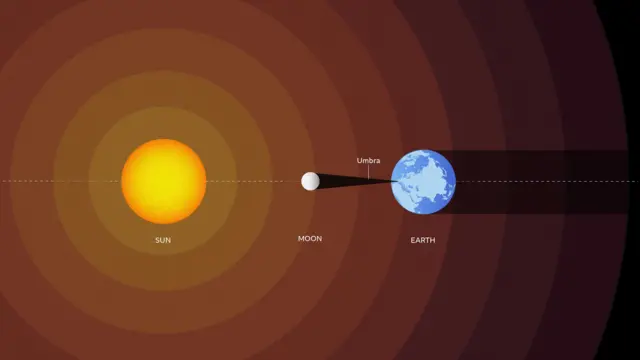
    An illustrative diagram showing the Moon blocking the light from the Sun reaching Earth. The point of shadow is labelled the Umbra. There are concentric orange circles travelling out from the Sun

    A total solar eclipse is a very special celestial event to witness - but they’re more common than you might think. They occur somewhere around the world about every 18 months.

    But they feel very rare because each one can only be seen from a tiny patch of the globe.

    During a total eclipse, as the Moon travels between the Earth and the Sun it casts its shadow on Earth’s surface - it’s called the umbral shadow.

    But that shadow zips along a very narrow path - and this might fall over the ocean or other uninhabited areas - so it’s only if you’re lucky enough to be somewhere directly under the umbral shadow that you get to see the full eclipse.

    The total eclipse happening today passes across five countries: Spain, Portugal, Russia, Greenland and Iceland - quite a lot of populated areas.

    Whenever a total solar eclipse happens there’s also a much larger area of Earth that experiences a partial solar eclipse, where part of the Sun is covered by the Moon - millions more will be treated to that too.

  5. Northern tip of Siberia first place to get total eclipse - but don't expect many photospublished at 17:06 BST 12 August

    Mark Poynting
    Climate and science reporter

    The first place to get a total eclipse will be right at the northern tip of Siberia in northern Russia, where it will begin to show at 17:08 BST and reach its maximum just before 18:00 – midnight local time.

    It’s so far north that the Sun doesn’t set in summer. That means even though it’s late at night, the eclipse would still be visible.

    But Siberia is a very sparsely populated area – so don’t expect many photos.

    The path of the total eclipse will now curve around between Iceland and Greenland and head on just west of the UK.

  6. Eclipse watchers descend on Spain amid wildfire devastationpublished at 16:57 BST 12 August

    Alfie Tobutt
    Reporting from Mallorca

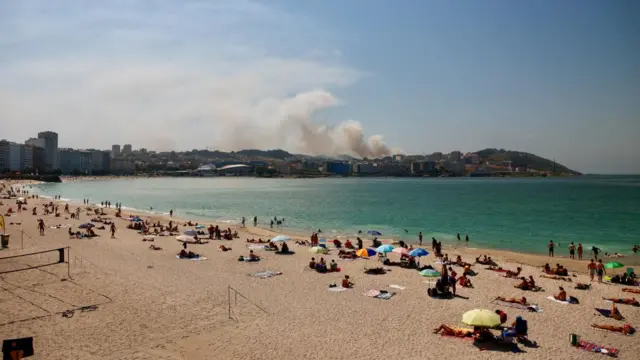
    Smoke rises from a forest fire as people gather at Orzan Beach ahead of a solar eclipse in A Coruna in Galicia, SpainImage source, Reuters
    Image caption,

    Smoke rises from a forest fire as people gather at Orzan Beach ahead of a solar eclipse in A Coruna in Galicia, Spain

    Spain is one of the best places to see the total eclipse, and millions of tourists are expected to have travelled here. But they come as the country grapples with devastating wildfires.

    The Spanish government has deployed tens of thousands of additional police officers and set up a major surveillance operation to minimise the risk of fires starting.

    Extra soldiers have also been sent to the Balearic Islands, where there has been an increase in surveillance flights. With temperatures forecast to reach 40°C in some parts of the country, this is a challenging moment for the Spanish authorities.

    The last total eclipse in Spain happened more than a century ago. But people here will now have the fortune of seeing two in as many years.

    After today’s total eclipse, another is due to occur on the 2 August 2027, with totality lasting more than six minutes in some places - that one has been dubbed the "Eclipse of the Century".

  7. Eclipse moving over Alaskapublished at 16:44 BST 12 August
    Breaking

    The partial solar eclipse has started and its full path will take hours.

    It is beginning to show in Anchorage, Alaska, where the local time is coming up to 07:45 (16:45 BST). It is set to reach its peak there at 08:27 (17:27 BST), though the total coverage will only be 28%.

    We are expecting to see it over Nuuk, Greenland, from 17:30 BST.

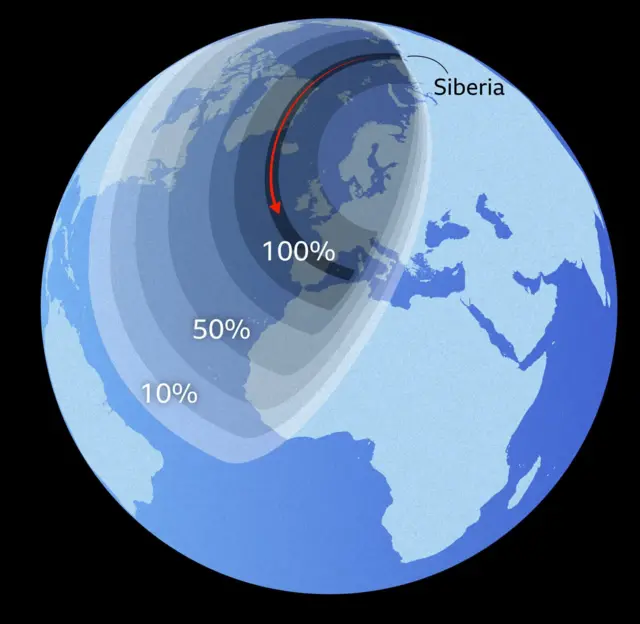
    An illustrated globe centred on Europe, the North Atlantic and North Africa showing the varying visibility of a solar eclipse. The darkest band marking the narrow path of totality - i.e. where there is a 100% eclipse - runs from the far North Atlantic into western Europe, passing close to Iceland and the British Isles before continuing south towards the Iberian Peninsula. Surrounding the path of totality are progressively lighter shaded bands representing decreasing eclipse coverage. The 90% band covers much of the British Isles, northern France and nearby areas of western Europe. The 75% band extends further across western and central Europe and into the eastern North Atlantic. The 50% band reaches across a large portion of Europe, North Africa and the North Atlantic Ocean, while the 30% and 10% bands spread even wider, covering most of the visible hemisphere shown in the graphic.
  8. What is a solar eclipse? Phenomenon explainedpublished at 16:37 BST 12 August

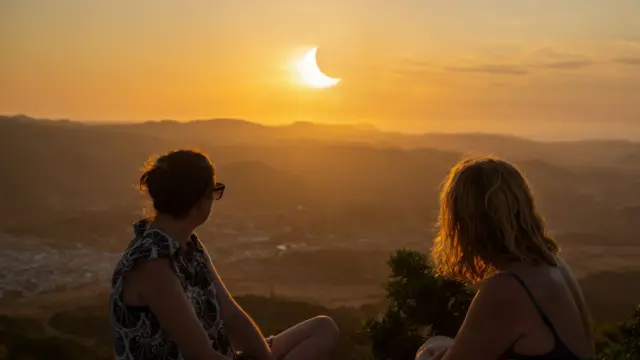
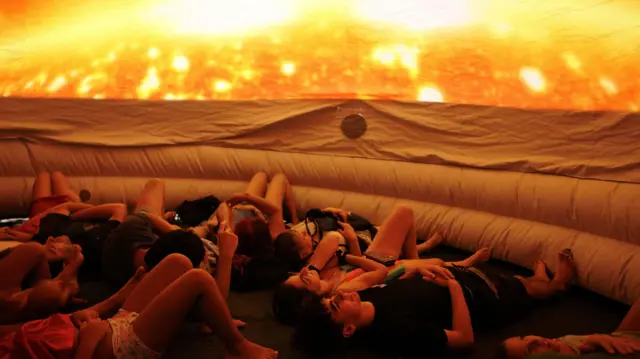
    Two women sat on a hill watching a partial solar eclipse in Menorca, SpainImage source, Getty Images
    A solar eclipse is simply when the Moon passes in between the Earth and the Sun, blocking some or all of the Sun's rays from hitting Earth.

    But not all eclipses are the same.

    When the Moon blocks out all of the Sun's rays, this is known as a total eclipse, with the shadow that is cast on the Earth known scientifically as an "umbra".

    That's what happened in parts of the UK in 1999.

    However, this time around the UK won't see a total eclipse, but some areas will see up to 95% of the sun disappear behind the moon.

    Those of us experiencing a partial eclipse are within the "penumbra" - partial shadow.

  9. Eclipse fast approaching - here's where and when people can see itpublished at 16:28 BST 12 August

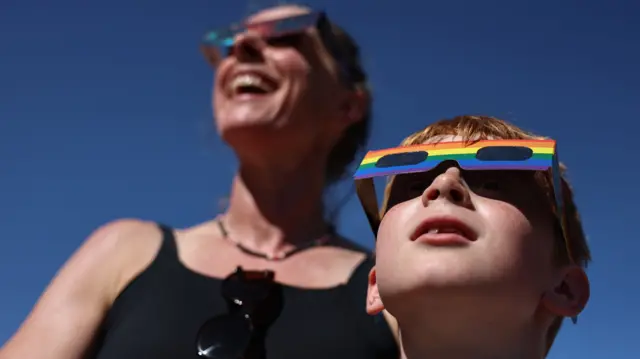
    People shield their eyes with protective glasses during an eclipse event at Greenwich Observatory in London, Britain, 12 August 2026Image source, EPA

    We're quickly approaching the first glimpse of the solar eclipse.

    A partial eclipse will be seen in Anchorage, Alaksa, just after 16:30 BST. We will bring you the first pictures of the event as they arrive.

    A total eclipse will only be visible in a few places, including:

    • Reykjavik, Iceland - 17:48 local time (18:48 BST)
    • León, Spain - 20:28 local time (19:28 BST)
    • Zaragoza, Spain - 20:29 local time (19:29 BST)
    • Valencia, Spain - 20:32 local time (19:32 BST)

    In the UK, we won't be getting a total eclipse, but large parts of the country will see more than 90% coverage - with the eclipse peaking between 19:02 to 19:16 BST.

    You can also watch live footage as the eclipse crosses the globe at the top of this page.

    This Flourish post cannot be displayed in your browser. Please enable Javascript or try a different browser.

  10. 'My eclipse glasses are at the ready and I absolutely can't wait'published at 16:19 BST 12 August

    Eleri Griffiths
    Reporting from Rest Bay, Porthcawl

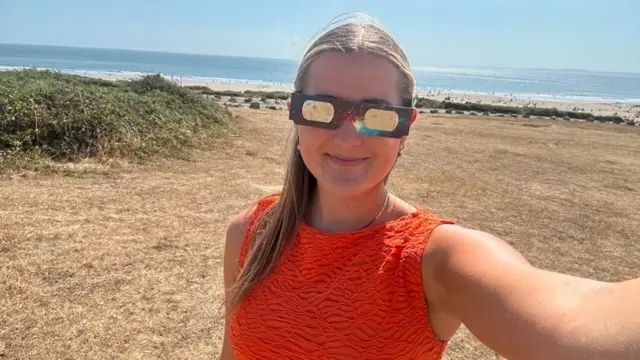
    BBC Reporter Eleri Griffiths wearing eclipse glasses on a beach in south Wales

    Well, today is a very exciting day - it’s my first solar eclipse!

    Over our weekly coffee date on Sunday, my mother and I were reminiscing about her memories of the last one.

    She told me how magical it felt, and I’m hoping today will give me that same sense of wonder.

    I’ve just arrived at Rest Bay in Porthcawl, south Wales, which I’m told is set to be one of the best spots to watch the spectacle unfold.

    The crowds are gathering, the excitement is building, and there’s a real buzz in the air.

    My eclipse glasses are at the ready, and I absolutely can't wait to experience a partial eclipse of the heart!

  11. Wales one of the top places in the UK to watch solar eclipsepublished at 16:19 BST 12 August

    Wales is among the best places in the UK to watch the solar eclipse on Wednesday, with the celestial event seen between 18:17 and 20:06.

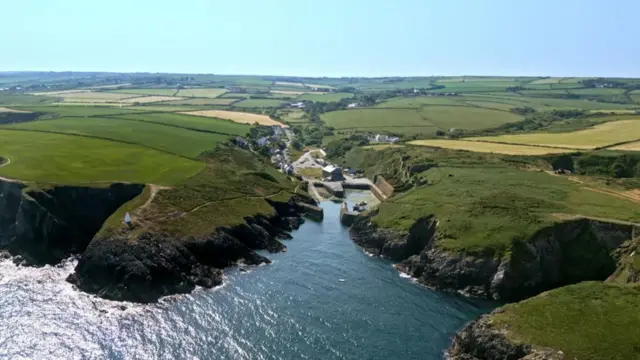
    Pembrokeshire is expected to see between 94% and 96% of the Sun covered, according to the Met Office, with Strumble Head being ranked second in the UK as one of the best individual viewing locations.

    The rest of Wales can expect to see 92% to 94% solar coverage.

    Rhossili Bay on Gower, south Wales, has also been named a top spot, and in Cardiff 93.24% of the Sun will be covered by the Moon. The rare celestial event is forecast to peak in the capital at 19.13.

    Mid Wales is also likely to offer some of the clearest views, with Craig Goch Dam in the Elan Valley highlighted as another prime spot in Wales, as it offers wide views of the surrounding landscape and sky.

    Gower Peninsula, Swansea and Rest Bay Beach in Porthcawl are also among the top locations to spot the eclipse.

    A coastal village in Pembrokeshire.Image source, Purple Productions/BBC
    Image caption,

    Pembrokeshire is expected to see between 94% and 96% of the Sun covered

  12. Peter's eyes were damaged by 1999 eclipse. Now he's warning otherspublished at 16:12 BST 12 August

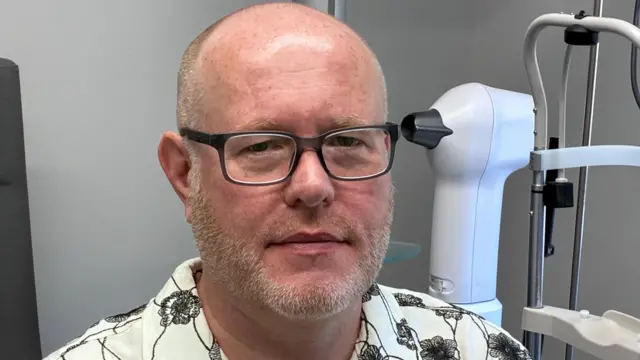
    A man wearing glasses and a white shirt with black flowers on it. He is in a room at an optician surgery.

    A man who suffered permanent eye damage by watching the 1999 solar eclipse has warned people to use protection when watching Wednesday's astronomical event.

    Peter Smith, from Taunton in Somerset, viewed the solar eclipse 27 years ago wearing a borrowed welder's mask having thought it would provide protection from the sun's rays.

    But the next morning he noticed flashing in his eyes alongside headaches and later discovered both of his retinas had been damaged. He is now asking people to use appropriate eye protection to enjoy the eclipse safely.

    "Make sure it's got the right protection and filters to stop any damage because any damage you get, it'll never heal. It's not like cutting your hand," he says.

    Smith says he still feels the effects of looking at the eclipse directly.

    "Even now there is a residual impact. When I'm tired sometimes a flashing dot might come back, and it's not nice when it does.

    "If you're going to go and watch it, make sure that everything you've got is correct."

  13. Clouds threatening eclipse viewing chances in parts of Scotlandpublished at 16:07 BST 12 August

    Claire Thomson
    BBC Scotland

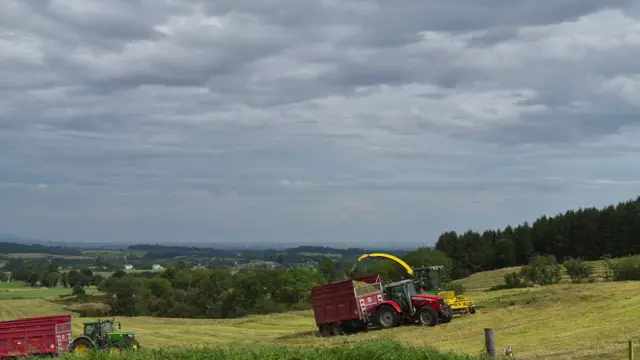
    Clouds above a field being worked by two tractors in  Kilmacolm, InverclydeImage source, Weather Watchers Farm Outlook
    Image caption,

    There is plenty of cloud cover over much of Scotland, including in Kilmacolm, Inverclyde, pictured above

    Hopes of catching a glimpse of the solar eclipse are fading in parts of Scotland as clouds threaten to hide the celestial event.

    Whitelee Windfarm Visitor Centre in Eaglesham, East Renfrewshire is organising a range of activities, including space-themed arts and crafts - but is now warning visitors of the potentially unfavourable weather.

    "It depends on how thick the clouds are but as of now we cannot guarantee you will be able to see the eclipse," says the centre.

    BBC Weather presenter Joy Dunlop suggested southern Scotland would have the most optimal conditions for viewing the eclipse, while cloud and rain in the north west Highlands, Western and Northern Isles will cause very limited or no visibility.

    “High level cloud could make views hazy across the country,” she adds.

  14. All the gear and a bit of fear for astronomer in Ibizapublished at 16:03 BST 12 August

    BBC Radio Guernsey

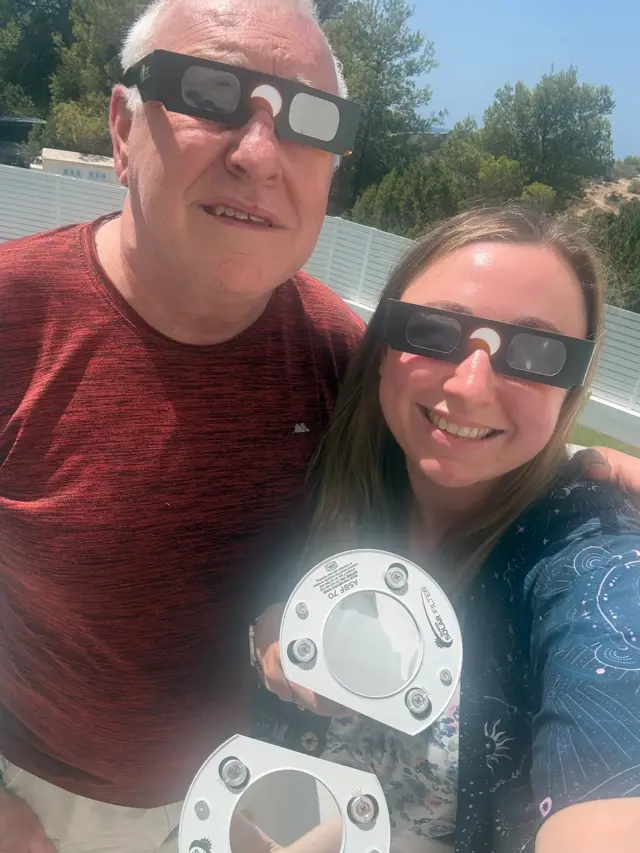
    Jenifer Millard smiling with her dad as they hold their eclipse equipmentImage source, Jenifer Millard

    Astronomer Dr Jenifer Millard is in Ibiza with her dad to watch the eclipse. She says he is the person who first got her interested in space as a child, and they've been preparing their kit together.

    “I’m really excited - I’m also slightly anxious that all my equipment’s going to work and everything’s going to be OK!” she tells BBC Radio Guernsey.

    “I’ve got my eclipse glasses, I’ve got some binoculars and I’ve got filters with me to make those binoculars safe for solar viewing and I’ve got a smart telescope with me and I’m just like, I hope the batteries last," Millard adds.

    “But as long as I’ve got my eclipse glasses, I’m good to go.”

    Dr Millard warns it is essential not to look at the sun without proper protection.

    “They block out 99.999% of sunlight but it’s not just the light we see with our eyes – it’s also infrared light and ultraviolet light and that’s what makes them safe," she explains.

  15. Queen guitarist and astrophysicist: 'It's a kind of gift from God'published at 15:56 BST 12 August

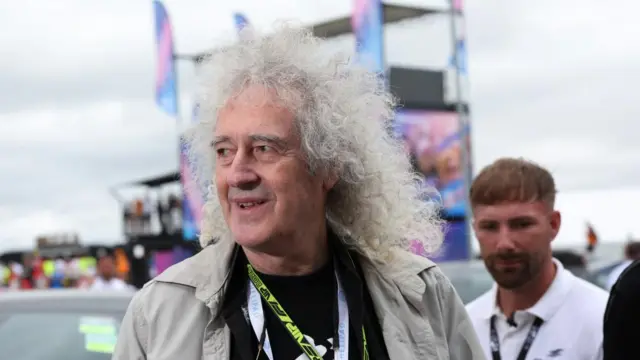
    Queen's Brian May looks to his right as he walks through SilverstoneImage source, Reuters

    Queen guitarist Brian May - who is also possibly the world's most famous eclipse chaser and astrophysicist - has travelled to eastern Spain to experience the total eclipse of the Sun.

    "This particular eclipse is very low in the sky so you need to have a very good horizon," May - who will be watching from an observatory high in the mountains - tells BBC Newsnight.

    "It's a kind of gift from God really right in the middle of the line of totality... so you actually see the Sun obscured completely by the Moon."

    But the guitarist and stargazer warns he has only seen around half of the eclipses he has attended after being left "at the mercy of the weather".

    "I just want to use my eyes, my ears, every sense to absorb what I'm really taking part in and it's a unique experience because you feel that you know where you are in space," he says.

    "It's the only time that happens. You're looking in towards the centre of our solar system, the Sun, and you can never do this any other time."

  16. Thousands queue in the scorching heat for once-in-a-lifetime British eclipsepublished at 15:49 BST 12 August

    Jacob Phillips
    Live reporter

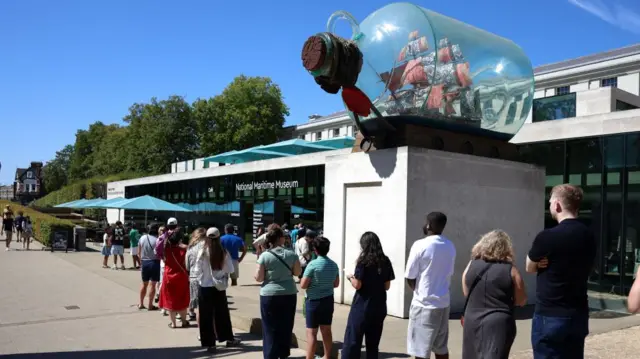
    People queue to buy solar eclipse glasses outside the National Maritime Museum in GreenwichImage source, Reuters
    Image caption,

    People queue to buy solar eclipse glasses outside the National Maritime Museum in Greenwich

    Thousands have been queuing in the scorching heat as the hunt for last minute lenses across the country ramps up.

    A central London shop keeper has told my colleague that they have sold 26,000 pairs in three days across a handful of stores while they have become "like gold dust" in Glasgow. "We cannot keep up with demand," reveals a shopkeeper in Liverpool.

    As a reminder experts have warned people do not look directly at the Sun.

    In just a matter of hours the Moon will cover more than 90% of the Sun for most of the UK while parts of Iceland and Spain will experience a total eclipse.

    Millions are getting ready for the UK's biggest eclipse of the century. "Bring your favourite chair," a volunteer tells me from the Wynyard Planetarium & Observatory in Country Durham. If you're local they are planning to "ration out" more than 300 pairs of lenses.

    Meanwhile, aircraft filled with scientists are preparing to chase the Moon's shadow across the Atlantic Ocean while one eclipse chaser is preparing for another "highly addictive" experience in northern Spain.

    Researchers from NASA and the Exploratorium in San Francisco gather in a small town in Villalibado, SpainImage source, EPA/Shutterstock
    Image caption,

    Nasa researchers gather in Spain as they prepare for the solar eclipse

  17. Orderly, yet long, queue for viewing glasses hours in central Londonpublished at 15:40 BST 12 August

    Katie Law
    BBC News

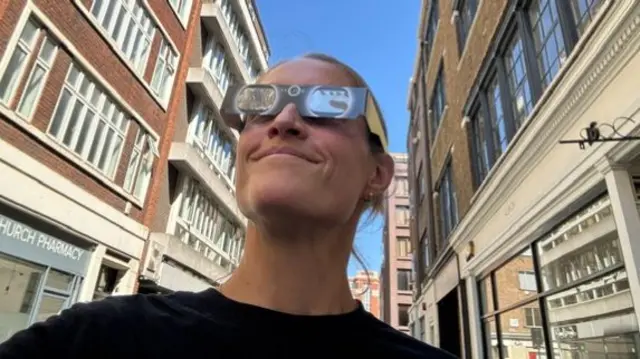
    BBC journalist Katie Law wearing her eclipse glasses
    Image caption,

    BBC journalist Katie Law managed to pick up an incredibly last-minute pair of eclipse glasses from a pharmacy in central London

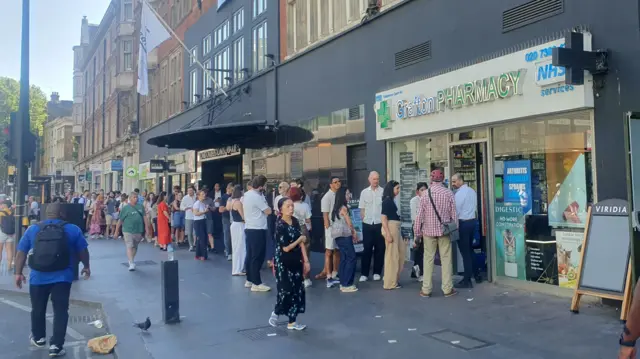
    I went down to the pharmacy on my lunch break expecting to have to climb over a frenzied mob of eclipse fanatics with my elbows out, but in fact it was a very polite and orderly queue!

    If you phoned up Grafton Pharmacy yesterday you could have reserved a pair, but now they've stopped taking names, and have limited the amount per customer from two to one.

    While I've managed to buy a pair, with the queue stretching all the way down the block, it’s a good job I already made some cereal box pinhole viewers as a back-up.

    eople form a long queue for solar eclipse glasses outside Grafton Pharmacy on Tottenham Court Road, London, 12/08/2026
  18. 'Will I feel same awe from watching Earth?' US astronaut asks ahead of eclipse in Icelandpublished at 15:27 BST 12 August

    Wedaeli Chibelushi
    Live reporter

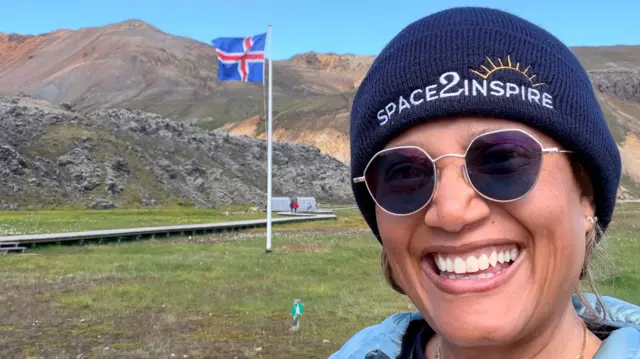
    Dr Sian Proctor smiles in a selfie, wearing sunglasses and a hat that reads "space2inspire". An Icelandic flag flies behind her.Image source, Dr Sian Proctor

    Astronaut Sian Proctor has travelled all the way from the US to Iceland to attend an eclipse festival later today.

    "I am excited for the eclipse and I really hope the skies clear so that we all get to experience totality," she tells me, as she prepares for the event in the north-western village of Hellissandur.

    Iceland is one of the few countries where people will be able to experience a total eclipse. Countries like the UK will have partial coverage.

    "I decided to come to Iceland because it is a special place... I am wondering if I will feel the same kind of awe and wonder I felt when seeing the Earth," says Dr Proctor, who will witness the big event with a group of other astronauts.

    Dr Proctor was part of the first private, all-civilian team ever to orbit the Earth with SpaceX in 2021.

  19. In pictures: Eclipse glasses and telescopes at the readypublished at 15:12 BST 12 August

    Millions of people across parts of the northern hemisphere are gearing up for a once-in-a-generation solar eclipse. Here's a selection of images from the places preparing for the spectacle.

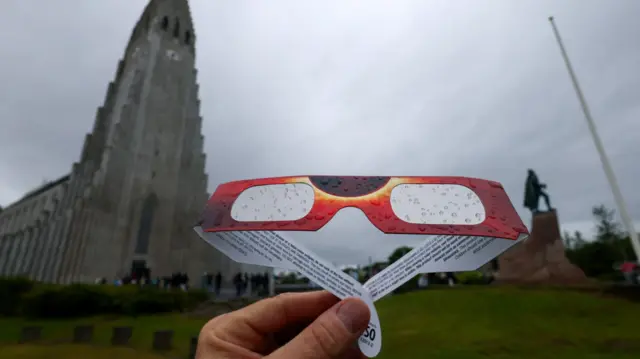
    Raindrops collect on a pair of protective glasses ahead of a total solar eclipse, near the Hallgrimskirkja church and the statue of Norse explorer Leif Erikson in Reykjavik, IcelandImage source, Reuters
    Image caption,

    Raindrops collect on a pair of protective glasses in Reykjavik, Iceland

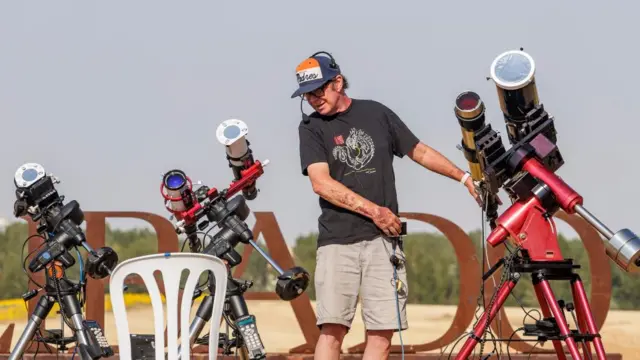
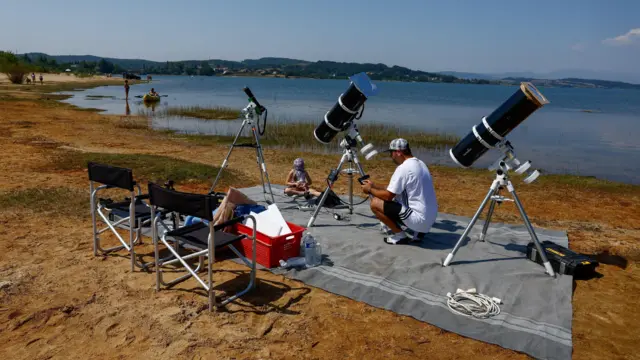
    A Frenchman, Leyssalle Anthony, 39, prepares a telescope to view the total solar eclipse from the beach, in Arija, SpainImage source, Reuters
    Image caption,

    A man prepares a telescope in Arija, Spain

    Members of the public queue for solar eclipse glasses at a stall on Custom House Quay, on August 12, 2026 in Falmouth, EnglandImage source, Getty Images
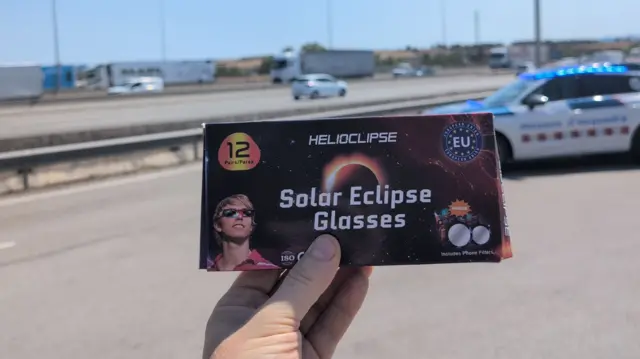
    Image caption,

    People in Falmouth, England, queue for solar eclipse glasses

    People attend an eclipse watch party on the day of a total solar eclipse in Buitrago del LozoyaImage source, Reuters
    Image caption,

    People in Spain attend an eclipse watch party

  20. Eclipse mania 'everywhere' near Barcelonapublished at 15:01 BST 12 August

    Freddy Tennyson
    Reporting from Spain

    A hand holding out a pair of eclipse glasses on a Spanish motorway north of Barcelona
    Image caption,

    For those still searching for eclipse glasses, they're still available at at least one motorway service station near Barcelona

    On the motorway just northwest of Barcelona eclipse mania is everywhere.

    The roads are filled with foreign cars from all over Europe heading south to the area of full totality.

    We've seen licence plates from as far as Finland on the road here.

    Luckily the service station hadn't yet sold out of the eclipse glasses!