Key points
Overview
A sonnet by Seamus Heaney paying tribute to the Irish rebels known as the ‘Croppies’, who were defeated by British forces at the Battle of Vinegar Hill during the 1798 Irish Rebellion. The poem presents the rebels as poorly equipped but resourceful, determined and courageous. Written in 1966 for the 50th anniversary of the Easter Rising.
Main themes
- Death
- Rebellion and resistance
- Mercilessness
- Honour and courage
- Remembrance
- Tone and voice
Tone and voice
The tone is factual, realistic, harsh, determined, solemn, reflective and defiant. The poem has an anonymous first person speaker. This emphasises that the speaker was one of many ordinary men who died in the battle.
Context
Heaney wrote the poem in 1966 to mark the 50th anniversary of the Easter Rising. It focuses on the poorly equipped Irish rebels defeated by British forces at the Battle of Vinegar Hill during the 1798 Irish Rebellion.
Form and structure
The poem is a 14-line sonnet, divided into an octet and sestet, with an ABAB CDCD EFEFEF rhyme scheme. It uses slant rhyme and partly follows iambic pentameter, but often breaks the regular rhythm. Barley appears at the beginning and end, creating a cyclical structure.
Poetic devices to spot
- Symbolism – the barley represents the continuing spirit of resistance against British rule.
- Metaphor – “the final conclave” describes the final battle, while “broken wave” conveys the defeat of the massed rebels.
- Imagery of nature – the Croppies use the countryside, cattle and farm tools, linking them closely with the land.
- Personification – the hillside “blushed” after the rebels’ deaths, suggesting the land itself sympathises with them.
- Consonance – repeated harsh ‘k’ sounds reinforce the violence and brutality of the fighting.
- Juxtaposition – the poorly equipped Croppies, with scythes and cattle, are contrasted with British infantry, cavalry and cannon.
- Repetition – the repeated “no” emphasises the rebels’ lack of supplies and preparation.
- Pronouns – “we” and “us” are contrasted with “they”, creating a clear division between the Irish rebels and British forces.
Requiem for the Croppies
by Seamus Heaney
The pockets of our greatcoats full of barley -
No kitchens on the run, no striking camp -
We moved quick and sudden in our own country.
The priest lay behind ditches with the tramp.
A people, hardly marching - on the hike -
We found new tactics happening each day:
We'd cut through reins and rider with the pike
And stampede cattle into infantry,
Then retreat through hedges where cavalry must be
thrown.
Until, on Vinegar Hill, the final conclave.
Terraced thousands died, shaking scythes at cannon.
The hillside blushed, soaked in our broken wave.
They buried us without shroud or coffin
And in August the barley grew up out of the grave.
from New Selected Poems 1966-1987, published by Faber and Faber
A link to this poem is available in the CCEA Poetry Anthology which can be downloaded from the CCEA website.
The BBC is not responsible for the contents of any other sites listed.
Summary
Seamus Heaney’s tribute to the Irish rebels known as ‘Croppies’ who died in the Battle of Vinegar Hill in 1798. Written in 1966, for the 50th anniversary of the An armed rebellion centred in Dublin during Easter 1916 by Irish republicans who wanted to end British rule in Ireland..
Title: ‘Requiem’ suggesting a ceremony honouring the dead; ‘Croppies’ was the nickname given to Irish rebels on account of their cropped, short hair.
Themes: Death, rebellion and resistance, mercilessness, honour and courage, remembrance.
Tone: Factual, realistic, harsh, determined, solemn, reflective, defiant.
Speaker: A The 'I' or 'we' used by a narrator who is a participant in a narrative, in contrast to the third person - 'he', 'she' or 'they' - of a narrator who is not directly involved. speaker whose identity is anonymous, emphasising how they were one of many ordinary men who died in the battle.
Applicable context
- Seamus Heaney was born in Castledawson in 1939, one of nine children in a rural farming family. He was primarily renowned as a poet, but was also a translator, playwright, teacher and lecturer; his extensive work made him one of Ireland’s most celebrated literary figures. Much of his poetry is concerned with The use of language to create images and pictures in the reader's mind. of nature and the countryside, reflecting the landscapes in which he grew up.
Four Sides of Seamus Heaney. audio
A BBC Radio 4 series exploring different aspects of the works of the Nobel Prize-winning poet Seamus Heaney.

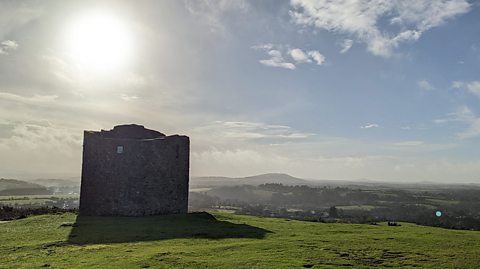
His poem Requiem for the Croppies focuses on the Battle of Vinegar Hill – fought in County Wexford as part of the 1798 Also known as the United Irishmen Rebellion - was an uprising against British rule in Ireland lasting from May to September 1798. – where the ‘Croppies’ of the title were defeated by British forces on 21 June. The Irish rebels were called ‘Croppies’ because of their cropped hairstyles; these were inspired by the fighters of the French Revolution who cut their hair short to mark themselves out as different from rich noblemen wearing lengthy powdered wigs. The Irish rebels were disadvantaged by the fact that they were poor and hungry and had no military training or adequate weaponry – for example, using farm implements against the well-equipped British forces. Many of them died in this battle and the poem is written as a tribute to them.
Requiem for the Croppies was published in Heaney’s second poetry collection – Door into the Dark – in 1969, but it was written in 1966. He wrote it to pay tribute to the 50th anniversary of the An armed rebellion centred in Dublin during Easter 1916 by Irish republicans who wanted to end British rule in Ireland., in which A person who wants to establish an all Ireland republic completely independent of Britain. began an armed rebellion to fight for control of Ireland against British rule. Due to the subject of the poem, it was used as Propaganda is when words, images or films are used to try and make people think a certain way. for the IRA when The time of unrest and violence in Northern Ireland between 1969 and 1998. began in Northern Ireland in 1969. As a result, Heaney stopped reading the poem in public as he did not want to add fuel to an already violent situation.
Form and structure
Requiem for the Croppies is a A fourteen-line poem, usually with ten syllables in each line., a set Some poems adopt specific 'forms'. For example, they could be sonnets or narrative poems. Many don’t have an identifiable form. of poetry made up of 14 lines arranged in a particular rhythm and rhyming pattern. The sonnet form originated in Italy but was popularised in England by poets like Shakespeare. It became a form associated with prestige and nobility, often used to praise or elevate its subject; the fact Heaney uses it here to pay tribute to Irish peasants fighting against the British crown forces is perhaps a little rebellious in itself.
The poem is The way the poet has organised the poem on the page eg number of stanzas, lines per stanza, breaks in between lines and stanzas. as an octet (a group of eight lines) and a sestet (a group of six lines). The rhyme scheme uses alternating rhymes throughout, with an ABAB CDCD pattern in the octet and an EFEFEF rhyme pattern for the sestet. Often the rhymes are A rhyme in which the stressed syllables of ending consonants match. Also known as a half rhyme or imperfect rhyme. (imperfect or ‘half’ rhyming words), which may reflect the imperfect ‘rough and ready’ nature of the ‘Croppies’ and the uneven match between their lowly farm tools and the brutal war weapons of the British. Many sonnets would finish with use of a In poetry, a pair of lines that rhyme and have the same length and metric pattern. for the last two lines, to keep it neat and give a sense of closure and finality. However, Heaney does not include this, and instead keeps the alternating rhyme from the previous lines, adding to the sense that this battle would not be the end of the Irish rebellion against the British.
The poem is partly written in One ‘iamb’ is a two-beat combination: an unstressed syllable followed by a stressed (emphasised) syllable, making a ‘da-DUM’ pattern, like a heartbeat. Pentameter means five of these two-beat units per line, making ten syllables altogether, the traditional The rhythm of a line of poetry based on how many syllables it has and where they are stressed or emphasised – likes beats in music. used in most sonnets. One ‘iamb’ is a two-beat combination: an unstressed Each individual part of a word which is pronounced when the word is said aloud. followed by a stressed (emphasised) syllable, making a ‘da-DUM’ pattern, like a heartbeat. A line of poetry that has five metric feet or beats in it. means five of these two-beat units per line, making 10 syllables altogether:
| And stam- | -pede cat- | -tle in-       | -to in-      | -fant-ry  |
| da-DUM     | da-DUM    | da-DUM    | da-DUM | da-DUM |
However, just as the rhyme scheme of the poem is imperfect within the sonnet form, Requiem for the Croppies also deviates from consistent use of iambic pentameter – many of the lines add syllables or disrupt the regular rhythm. Even the first line adds an extra syllable, making 11 beats instead of 10: “The pockets of our greatcoats full of barley”. This disruption of the set ‘rules’ for the meter of the poem reflects the disruptive and rebellious nature of the Irish fighters.The fact that the poem begins and ends with the mention of the “barley” creates a A cyclical process is one in which a series of events occurs in a repeating pattern, for example the change of seasons each year. in which the beginning and end connect. The barley crop grows again in the new season from the graves of the fallen; the implication is that the ‘Croppies’ themselves died but would return in spirit in new waves of rebellion.
Language and poetic methods
Symbolism: The “barley” becomes a A literary device where an object, person, place, or event represents something beyond its literal meaning. used to represent the fighting spirit and resistance against British rule that cannot be silenced by death. At the beginning of the poem it is a plain and humble food, all the men had to keep them alive as they roamed the countryside to fight the enemy; in the end it continues to grow from the graves of those who sacrificed their lives. This gives the poem its cyclical structure, showing the barley going from being food in the men’s “greatcoats” to growing out of their graves. It strongly suggests that the seeds of the 1916 Easter Rising were sown during the Also known as the United Irishmen Rebellion - was an uprising against British rule in Ireland lasting from May to September 1798. of 1798. The barley – growing every year – comes to symbolise the regeneration of passion and the fight against British rule. The deaths of the ‘Croppies’ killed on Vinegar Hill has therefore not been in vain: a spirit of resistance has grown from their sacrifice.
Metaphor: After a period of Spanish for “little war”; irregular fighting by unofficial groups against larger, better-equipped forces, often using surprise attacks and local knowledge. warfare against the British, the speaker describes the actual face-to-face battle as “the final conclave”. A conclave can mean a general gathering of people, but more specifically it comes from the Latin term for a “locked room” and implies a secret meeting. It is also specifically used in the Catholic church for the meeting at which a new Pope is chosen, and the word would have religious overtones for many (as would the ‘Requiem’ in the title). As such, Heaney’s choice of description could be to metaphorically highlight the religious conviction that was present as part of the rebellion, or could even imply the “locked room” sense of word and show the battle as a kind of trap – it took place in the open and not in a locked room, but the rebels stood no chance against the British guns. A further A metaphor is a word or a phrase used for dramatic effect, to describe something as if it were something else. refers to their “broken wave” – the “terraced thousands” of men were enough to attack like a tide, but the fact their charge was “broken” shows how easily they were defeated despite their great numbers.
Imagery of nature: The rebels are fighting “in our own country”; as farmers and natives they knew the land. Guerilla warriors throughout history relied not only on “quick and sudden” surprise attacks, but on using their local knowledge to best advantage. Heaney’s imagery shows the ‘Croppies’ are under-prepared but resourceful enough to use nature and the landscape where they can; they attack with the simple farm tools they can access, “stampede cattle” into foot soldiers to overwhelm them and then disappear “through hedges” so those on horseback couldn’t follow. The idea that they are aligned with nature is carried on through the symbolism of the barley growing on their graves. The British are associated with technology and weaponry like cannons, while the Irish are closely associated with the countryside – so much so that the A type of imagery in which non-human objects, animals or ideas are given human characteristics. hillside “blushed” in sympathy at their deaths in battle.
Consonance: The poem uses repeated harsh spiky “k” sounds throughout the poem’s build-up to the battle, highlighting the discord and violence of warfare through The repetition of similar consonant sounds in nearby words.. “Pockets”, “kitchens”, “striking”, “quick”, “hike”, “tactics”, “cut”, “pike”, “cattle” and “conclave” are examples of this regular repeating sound, which reinforces the harsh brutality of the fighting.
Juxtaposition: Heaney creates contrast between the Irish rebels and the British forces to evoke sympathy for the ‘Croppies’ in this battle. The repetition of “no” in the line “No kitchens on the run, no striking camp -” reminds us just how poor and ill-prepared these rebels were for battle with the British troops. They were living rough with only pockets full of barley for food, while the British forces had organised camps and proper meals. The most striking use of Two things placed side by side to highlight their differences. is when Heaney shows the lack of effective weaponry on the Irish side – “shaking scythes at cannon” and sending “cattle into infantry” shows they were ordinary farming men and not trained soldiers. This contrasts with the well-equipped British who have “artillery”, “infantry”, “cavalry” and “cannon”. The uses of the plural A third person narrator is not a character in the story. They see the events from the outside and tell the story using third person pronouns, like 'him', 'her' and 'they'. Pronouns are short words like it, she, he, you, we, they, us and them. They are used to describe either individuals or groups of people, rather than using their name or names. “they” contrasts with the “us” and “we” from the speaker. This creates a ‘them and us’ division between the Irish rebels and the British soldiers, highlighting the huge differences between the two sides of the battle.
This is not a list of every method or notable use of language and structure in Requiem for the Croppies. Look at the poem again. Can you find any of the following?
Personification
Aside from showing how the Irish rebels tried to use their knowledge of the countryside to their advantage, Heaney suggests a sympathy between the people of Ireland and its land through use of personification in the line “The hillside blushed, soaked in our broken wave”. The hillside ‘blushing’ not only implies the extent to which it was red with spilled blood, but it also conveys the idea of embarrassment and shame at the soldiers’ brutal destruction of the Irish rebel side, and the sense that it was dishonourable of them to fight such an ill-equipped side with such a blatant lack of mercy, or bury them in mass graves “without shroud or coffin” showing total disrespect for them.
Imagery of unity
Heaney subtly suggests a unity of purpose among the Irish rebels throughout this poem with several A technique used in literature to help make a point or show an idea. The frequent inclusive pronouns “we” and “us” show how they acted together, and the imagery of the “priest” and the “tramp” hiding together in a ditch shows how united the native people were, whether their Position of an individual in relation to another or others, especially in regard to social or professional standing. was high or low. Heaney’s unidentified speaker describes himself and his fellow fighters as “A people” – “people” is a plural noun but Heaney adds The indefinite article is the word 'a' or 'an' used before a noun to show it refers to any general item, not a specific one “a” which is used for singular items, emphasising that everyone is unified and included in the fight – they are all united behind a single cause. The fact the “terraced thousands” died together, all while “shaking scythes at cannon” in a hopeless but defiant gesture, shows their unity despite the desperation of their situation.
Caesurae
The punctuation in the poem – dashes, commas and frequent end-stopped lines – creates a lot of pauses. They are not used to make the speaker sound unsure or hesitant, but to give a sense of the “quick and sudden” movements as they dart across the landscape. The pauses imply the interruption and disruption caused by their attacks. In other places, A break in poetic rhythm in the middle of the line, a momentary pause. add emphasis. The phrase “on Vinegar Hill” is enclosed in caesurae, with the small pauses giving it a sense of importance or even foreboding. Conversely, the last two lines of the poem are uninterrupted, and the unusual flow of these lines compared with what came before gives a sense of one thing leading to another – the crude mass graves leading to the regrowth of the barley and the renewal of the rebellion.
If you have found these methods, consider what you know about the poem and the poet already.
What effects do these methods create? Why has he used them?
What other poems could I compare with Requiem for the Croppies?
Mametz Wood – the first person speaker in Heaney’s poem fights on home territory rather than in France, but there are parallels with Mametz Wood in the imagery of a mass grave and the land growing crops again, as well as the doomed nature of the croppies’ rebellion echoing the equally doomed Welsh regiment walking into German fire.
Vitaï Lampada – the well-trained former schoolboys of Vitaï Lampada fight out of a sense of duty to the British Empire and so are similar to the British soldiers who fought at Vinegar Hill a century earlier in Requiem for the Croppies; the calm and resolve they show while they are under attack could be compared to the tenacious and spirited but ultimately doomed fervour of the ill-equipped Irish ‘Croppies’.
An Irish Airman Foresees His Death – both poems share experiences by Irish speakers in first person, but the calm, philosophical detachment and fatalism of the airman and the way he seems to bear no personal hatred for his supposed enemies can be contrasted with the ‘Croppies’, who are rebelling against ruthless enemies and fighting for their homeland and survival.
Example questions
Use these questions to hone your knowledge of Requiem for the Croppies, and to practise using your notes and analysis in organised paragraphs that focus on how particular themes or ideas are shown in the poem. There is an example answer in the following section to demonstrate how you can do this.
- How does Heaney present the Irish forces in Requiem for the Croppies?
- How does Heaney portray the battle and the events leading up to it in Requiem for the Croppies?
- What poetic methods does Heaney use to show his attitude to war and remembrance in Requiem for the Croppies?
- How does Heaney create a sense of sympathy for the rebels in Requiem for the Croppies?
Example answer
Below is a demonstration of how to use the material in this section to answer an example essay question. The answer below is not a full essay, but only an extract of a longer answer showing some of the points that could be made.
Q: How does Heaney present the Irish forces in Requiem for the Croppies?
A: Requiem for the Croppies was written in 1966 for the 50th anniversary of the Easter Rising, and pays tribute to the ‘Croppies’, a group of Irish fighters nicknamed for their cropped hairstyles inspired by the rebels of the French Revolution. The Croppies engaged in guerilla warfare against the British forces before meeting their end in the Battle of Vinegar Hill in 1798; there the ill-equipped Irish army was mown down and destroyed by the superior weaponry of the British. Heaney’s poem reflects both the simple backgrounds of the Irish fighters and their undying rebellious spirit; he presents them as untrained, desperate and lacking firepower but also as resourceful, unified and brave. The portrayal is deeply sympathetic and invites the reader to reflect on their sacrifice, as indicated by the use of the word ‘Requiem’ in the title, evoking a solemn religious service for the dead. The timing of the writing of Heaney’s poem strongly links the spirit of the Croppies to the spirit of the Easter Rising, drawing a clear line from the Croppies’ sacrifice over a hundred years earlier to Ireland gaining independence from Britain.
Requiem for the Croppies is a sonnet, a poetic form associated with prestige and nobility, and often used to praise or elevate its subject; the fact Heaney uses it here to pay tribute to Irish peasants fighting against the British crown forces is perhaps a little rebellious in itself. It shows the poet feels these men were worthy of respect and commemoration, presenting them as noble in spirit. The poem uses alternating rhymes throughout, but the rhymes are often imperfect or slant rhymes, which may reflect the imperfect ‘rough and ready’ nature of the Croppies and the uneven match between their lowly farm tools and the brutal war weapons of the British. This shows how the Irish forces were strongly disadvantaged but fought on anyway. Likewise, Requiem for the Croppies also deviates from consistent use of iambic pentameter that was usual for a sonnet – many of the lines add syllables or disrupt the regular rhythm. Even the first line adds an extra syllable: “The pockets of our greatcoats full of barley”. This disruption of the set ‘rules’ for the meter of the poem reflects the disruptive and rebellious nature of the Irish fighters. Overall Heaney’s bending of the conventions of the sonnet form shows the rebellious nature of the fighters but still honours them, presenting them as brave and determined.
This essay could go on to make the following points, backed up by evidence from the poem and detailed analysis of that evidence:
- Heaney uses symbolism to equate the barley that fed the men while they were on the run and that later grew out of their graves to the undying nature of the rebellion against the British, presenting the Irish forces as inspiring to future generations and showing their sacrifice wasn’t in vain.
- Heaney uses metaphor and imagery of nature to show the resourcefulness of the Irish forces in using what little they had and aligning them with nature and the land, juxtaposing them with the organisation and weaponry of the British which shows their bravery but also how desperate and hopeless their positions were; the personification of the hillside after the massacre suggests the land’s deep sympathy for the Irish fighters’ sacrifice.
- Heaney uses imagery of unity to create a sense of solidarity among the fighters and community, showing the Irish as loyal to each other and united against the British forces.
Test yourself
More Seamus Heaney
Four Sides of Seamus Heaney. audio
A BBC Radio 4 series exploring different aspects of the works of the Nobel Prize-winning poet Seamus Heaney.
Kirsty Wark Talks To: Seamus Heaney. video
Seamus Heaney talks to Kirsty Wark about how divisions in Northern Ireland affected his use of language, with reference to his poem Requiem for the Croppies.

English File. collection
Poetry Backpack: The poetry of Seamus Heaney. Aimed at GCSE students.
More on Anthology Three: Conflict
Find out more by working through a topic
- count3 of 15
- count4 of 15
- count5 of 15
- count6 of 15