Key points
Overview
A reflective poem in which an Irish airman anticipates his own death during World War One. The speaker explains that he feels no strong loyalty to either side in the conflict and is not motivated by patriotism, duty or public praise. Instead, he is driven by a personal desire to fly.
Main themes
Death, patriotism and duty, nationalism and identity, the futility of war, British colonialism.
Tone and voice
Matter-of-fact, calm, straightforward, blunt, resigned, detached, philosophical, unsentimental and occasionally slightly scathing. The poem uses a first-person speaker, creating a personal perspective as the airman reflects on his situation and beliefs.
Context
Written in 1918 and published in 1919 after World War One had ended. The poem explores the experience of Irishmen fighting for Britain during a period when Ireland was seeking independence. The airman is based on Major Robert Gregory, a fighter pilot who died in 1918.
Form and structure
A dramatic monologue written as a single sixteen-line stanza. The poem uses a regular iambic tetrameter rhythm and an alternating rhyme scheme, helping to create the speaker's calm, balanced and controlled tone.
Poetic devices to spot
- Metaphor – "my fate" is used as a metaphor for death, while "waste of breath" suggests that both the speaker's past and future feel meaningless.
- Symbolism – "cheering crowds" symbolise public admiration, patriotic pride and the promise of glory associated with fighting in war.
- End-stopped lines – frequent end-stopped lines create a calm, controlled and measured tone.
- Repetition – repeated structures such as "Those that I fight I do not hate, / Those that I guard I do not love" emphasise the speaker's equal lack of feeling towards both sides.
- Polysyndeton – the repeated use of "nor" ("Nor law, nor duty bade me fight, / Nor public men, nor cheering crowds") reinforces the speaker's rejection of conventional motivations for war.
- Caesura – pauses within lines, such as "I balanced all, brought all to mind" and "this life, this death", highlight balance, reflection and emotional detachment.
- Consonance – repeated consonant sounds are used to add emphasis and shape meaning.
- Enjambment – lines run on into the next without punctuation, carrying the speaker's thoughts forward naturally.
An Irish Airman Foresees His Death
by WB Yeats
I know that I shall meet my fate
Somewhere among the clouds above;
Those that I fight I do not hate,
Those that I guard I do not love;
My country is Kiltartan Cross,
My countrymen Kiltartan’s poor,
No likely end could bring them loss
Or leave them happier than before.
Nor law, nor duty bade me fight,
Nor public men, nor cheering crowds,
A lonely impulse of delight
Drove to this tumult in the clouds;
I balanced all, brought all to mind,
The years to come seemed waste of
breath,
A waste of breath the years behind
In balance with this life, this death.
A link to this poem is available in the CCEA Poetry Anthology which can be downloaded from the CCEA website.
The BBC is not responsible for the contents of any other sites listed.
Summary
An Irish airman during World War One weighs up his reasons for taking to the skies to fight for – and against – forces who mean little to him. Written in 1918 but not published until 1919, when World War One was over, as it was believed it would be controversial to criticise the war while it was ongoing.
Title: A declaration of a moment in time relayed in the present tense; it gives a sense of immediacy introduces the speaker and makes clear that he believes his death in the war is inevitable.
Themes: Death, patriotism and duty, nationalism and identity, the futility of war, British colonialism.
Tone: Matter-of-fact, calm, straightforward, blunt, resigned, detached, philosophical, unsentimental, sometimes slightly scathing.
Speaker: A The 'I' or 'we' used by a narrator who is a participant in a narrative, in contrast to the third person - 'he', 'she' or 'they' - of a narrator who is not directly involved. speaker in the The voice adopted by an author for a particular purpose, this voice does not necessarily reflect the author's true thoughts. It can also mean a mask that someone presents to the world as their real character ('persona' is the Latin word for an actor's mask). of a fighter pilot used to portray a personal perspective on something the poet himself hadn’t experienced.
A reading of WB Yeat's poem, An Irish Airman Foresees his Death
I know that I shall meet my fate
Somewhere among the clouds above;
Those that I fight I do not hate,
Those that I guard I do not love;
My country is Kiltartan Cross,
My countrymen Kiltartan’s poor,
No likely end could bring them loss
Or leave them happier than before.
Nor law, nor duty bade me fight,
Nor public men, nor cheering crowds,
A lonely impulse of delight
Drove to this tumult in the clouds;
I balanced all, brought all to mind,
The years to come seemed waste of breath,
A waste of breath the years behind
In balance with this life, this death.
Applicable context
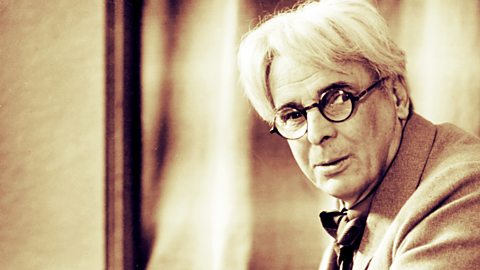
- William Butler Yeats came from a Protestant A term often used to describe people from a social class which was often made up of descendants of Protestant landowners and professionals, from the Protestant Ascendancy of Ireland. family. He was raised in London in his painter father’s An unconventional person, often involved with the arts. circle, but he gained a love of Irish literature and mythology through summers spent at his mother’s home in County Sligo. His early poems reflect this passion. He played a prominent role in the Irish literary revival and was awarded the Nobel Prize in 1923.
- Yeats lived during a period of great change in Ireland as it fought to achieve full independence from Britain. When World War One broke out, many Irishmen joined up and fought for Britain, at least partly in the belief this would help the cause of gaining independence when the war was over. In An Irish Airman Foresees His Death, Yeats tries to show how they struggled with their identity as Irishmen risking their lives for a country they did not feel was their own. He believed passionately in a brand of Irish People who believe their country should be independent from other nations. For example, Irish nationalists who want Ireland to be fully independent of Britain. where art and literature revived myth and legend, and where courageous political figures would give Ireland a sense of what it was to be Irish. The question of national identity was never far from the poet’s mind.
- The airman in the poem is based on Major Robert Gregory, the son of Yeats’ patron and friend, Lady Augusta Gregory. He flew several successful missions as a fighter pilot during World War One before his plane went down in Italy in 1918; it wasn’t conclusively proved whether it was shot down or crashed by accident. His death prompted Yeats to write several poems dedicated to him.
Only a little context is needed for each poem; where used, it should be applied to the point you're making.
Form and structure
An Irish Airman Foresees His Death is a A poem in which the speaker addresses the reader directly. A dramatic monologue usually involves a fictional speaker who may not necessarily speak the views of the poet. composed of one 16-line A grouped set of lines within a poem.. In some ways the poem can also be thought of as an a serious poem usually written to reflect on and show sorrow for someone’s death because it pays tribute to one who has died. However, it takes the unusual stance of having the speaker talk about himself and imagine his own death rather than a detached speaker who mourns for the one who has died. It also shows great detachment and fatalistic acceptance rather than reflecting on the nature of death and offering consolation to those left behind, making it very different from a typical elegy.
The The rhythm of a line of poetry based on how many syllables it has and where they are stressed or emphasised – likes beats in music. of An Irish Airman Foresees His Death is known as Line of verse written in four pairs of syllables each made up by an unstressed syllable followed by a stressed syllable.. One ‘iamb’ is a two-beat combination: an unstressed Each individual part of a word which is pronounced when the word is said aloud. followed by a stressed (emphasised) syllable, making a ‘da-DUM’ pattern, like a heartbeat. A line of poetry that has four metric feet or beats in it. means four of these two-beat units per line, making eight syllables altogether:
| The years | to come  | seemed waste | of breath |
| da-DUM   | da-DUM  |      da-DUM       | da-DUM  |
The metre is regular throughout, showing the calm, controlled mood of the speaker and his complete lack of emotion as he contemplates his own death.The rhyme scheme uses alternate rhyming lines, forming four A type of stanza - or a complete poem - consisting of four lines that have a rhyming scheme. (four-line units) within the single united stanza. The regular rhyme scheme again helps to add to the sense of balance that is present throughout the The way the poet has organised the poem on the page eg number of stanzas, lines per stanza, breaks in between lines and stanzas. of the poem, and helps to portray the steadiness of the airman and his control of his emotions, underlining how unaffected he is by his certainty that the flying he enjoys will soon kill him.
Language and poetic methods
Metaphor: Although the speaker has a straightforward point of view, he still uses several A metaphor is a word or a phrase used for dramatic effect, to describe something as if it were something else. in the poem to illustrate his point. In the first line of the poem, the airman’s solemn declaration uses “my fate” as a metaphor for his death. This could be seen as a Polite or neutral words or expressions used to refer to things which people may find upsetting or embarrassing to talk about. used to make the concept of death easier to accept or even ignore, but it is more likely a way of showing how death is not frightening or intimidating to the speaker, instead seeming more like a metaphorical concept.
Another metaphor is used when he labels both his past life and his future prospects a “waste of breath”; this suggests that not only does he consider his life up until this point to have been meaningless, but also that he harbours no hope for the future either. Some readers tie this sense of hopelessness to the idea that British colonialism oppressed the Irish and robbed them of their future potential; there is certainly an underlying tension between the Irish identity of the speaker and the war being fought for British interests.
The speaker’s use of metaphor at the end lends some poetic resonance and a slightly philosophical tone to his The belief that life has no real meaning, purpose, or value. viewpoint, but it may be worth considering whether this metaphorical language shows his real understanding and true acceptance of death, or whether he is actually using metaphors to distance himself from accepting what death really means for him.
Symbolism: The mention of “cheering crowds” in line 10 uses the image of popular public support as a A literary device where an object, person, place, or event represents something beyond its literal meaning. of the glory that was supposed to await those who fought for their country. Patriotism was considered a duty by many and, particularly in the early days of World War One, there were parade-like assemblies in many towns and villages where young men who had signed up were cheered on by their communities as they marched off to war. The poem’s speaker uses the “cheering crowds” reference in a list of things that did not entice him to join the war effort, showing he did not care about being lauded by the public or admired for his bravery – the promise of glory was not a factor in his decision to become an airman.
End-stopped lines: The even, considered tone of the speaker is created with several linguistic devices, one of these being the use of end-stopped lines. Three-quarters of the poem’s lines are end-stopped, lending a sense of regularity and evenness that supports the unemotional, matter-of-fact tone the speaker uses. It helps him sound as balanced as he considers his arguments to be, and shows a sense of control and a lack of passion, fear or other overwhelming emotions that could also accompany a sense of one’s impending death.
Repetition: The poem uses several repetitive aspects to add to the sense of symmetry and balance that the dispassionate airman relays. “Those that I fight I do not hate, / Those that I guard I do not love” creates a sense of symmetry by repeating the same structure with different words across two lines, creating contrasting meanings created as a result. This helps directly compare the two things discussed, and emphasises the equal lack of feeling he has for both sides, showing his apathy and lack of interest or investment regarding the war.
The repetition of the conjunction “nor” is a particular literary device called A writing technique where a lot of conjunctions like 'and', 'or', or 'but' are used close together. It slows down the rhythm and can make ideas feel more dramatic or emotional. (adding many conjunctions like ‘so’ or ‘and’ between words and phrases that might usually only have one – a single ‘and’ at the end of a list of items separated by commas, for example) when the poet lists the many things that did not convince him to join the war: “Nor law, nor duty bade me fight, / Nor public men, nor cheering crowds,”. This gentle but insistent repetition creates a tone of quiet certainty, negating the things he lists as all equally incapable of influencing him, and equally worthless in his eyes.
Towards the end, he repeats “waste of breath” to describe both past and future, emphasising how it is all equally pointless and meaningless to him. Yeats’ arrangement of the word order to mean “waste of breath” is repeated immediately, separated from the initial phrase only by a A break in poetic rhythm in the middle of the line, a momentary pause., shows how firmly and emphatically the speaker holds this belief.
The years to come seemed waste of breath,
A waste of breath the years behind
Caesurae: An Irish Airman Foresees His Death uses a Check your connection, refresh the page and try again. in line 13 when he describes his thought process in volunteering to fight: “I balanced all, brought all to mind”. The comma neatly cuts the line in half, supporting the idea of ‘balance’ that he employs in his decision-making. It helps suggest he is considering things factually and dispassionately, using no emotion to sway him either way. The final line is similar; the use of a comma to create a caesural pause in “this life, this death” divides the two states equally and creates a sense that, to him, both things are equal – he does not really care if he lives or dies.
This is not a list of every method or notable use of language and structure in An Irish Airman Foresees His Death.
Look at the poem again. Can you find any of the following?
Consonance
The speaker does not betray any strong feelings in what he says, but on occasion there are pockets of The repetition of similar consonant sounds in nearby words. – repeated sounds within the words – that give a sense of sharp feeling underneath. One example of this is in lines five and six: “My country is Kiltartan Cross, / My countrymen Kiltartan’s poor”. The repeated ‘c’/’k’ and ‘t’ sounds make the statement seem crisp and even bristly, with a hint of defiance. These repeated sounds add a little sharpness to the idea that the airman does not consider himself British or even particularly Irish. It suggests he is not patriotic or proud to belong to a wider country, but a product of the poverty of his own home townland, and local area. He notes himself that they are so cut off from the war that they not be affected by it no matter what the outcome.
Enjambment
Only four lines in the poem are not end-stopped: lines one, seven, 11 and 15. Each of these expresses a longer idea than the other end-stopped lines, suggesting these are more truthful emotionally than the controlled statements elsewhere. The opening line runs onto the next line – “I know that I will meet my fate / Somewhere…” – to give a sense of how little control he has over when or how he will die.
Lines 11 and 12 reveal his real reason for enlisting: “A lonely impulse of delight / Drove to this tumult in the clouds” – the A poetic device where a sentence continues beyond the end of the line or verse. here suggests the emotional truth of what he is saying, and again gives a sense that, while he made the choice to become an airman, he has little control over his fate otherwise. Likewise the final enjambment in line 15 flows into “In balance with this life, this death”, showing his comparison between his meaningless life and his joy in flying but similarly giving the impression of him speeding towards his death.
What poems could I compare with An Irish Airman Foresees His Death?
- The Man He Killed – Yeats’ poem has a more philosophical tone that Hardy’s, suggesting a slightly more sophisticated speaker, but the poems share many concerns, including the idea of war as pointless or wasteful, and the concept that many who fought had few other prospects, insubstantial reasons for enlisting and bore no personal hatred for their supposed enemies.
- Bayonet Charge – both poems focus on serving soldiers, but the visceral panic of war on the ground in Hughes’ poem creates a very different atmosphere from the remote and almost pleasurable detachment Yeats’ speaker experiences in the air, even though both situations are potentially deadly.
- Out of the Blue – the calm, philosophical detachment and fatalism of the airman who does not care if he dies can be contrasted with the shock and rising panic of the speaker in Out of the Blue who is desperate to live; in some ways both may be sure they are about to meet their deaths but their feelings about this, as well as the circumstances around them, are very different.
Example questions
Use these questions to hone your knowledge of An Irish Airman Foresees His Death, and to practise using your notes and analysis in organised paragraphs that focus on how particular themes or ideas are shown in the poem. There is an example answer in the following section to demonstrate how you can do this.
- How does Yeats show the airman’s lack of strong emotion in An Irish Airman Foresees His Death?
- How does Yeats portray the character of the airman in An Irish Airman Foresees His Death?
- What poetic methods does Yeats use to show his attitude to war and patriotism in An Irish Airman Foresees His Death?
- How does Yeats create an unsentimental tone in An Irish Airman Foresees His Death?
Example answer
Below is a demonstration of how to use the material in this section to answer an example essay question. The answer below is not a full essay, but only an extract of a longer answer showing some of the points that could be made.
Q: How does Yeats portray the character of the airman in An Irish Airman Foresees His Death?
A: Although An Irish Airman Foresees His Death was written in 1918, Yeats did not publish it until 1919 when World War One was actually over, feeling trepidation at criticising the war while it was ongoing. His first person speaker, the airman of the title, has a wholly indifferent attitude to the war in which he fights and feels apathy towards both sides in the conflict and even towards his own death. The poem opens with the enjambed lines “I know that I will meet my fate / Somewhere among the clouds above” – this bold opening statement establishes the speaker as fatalistic and makes him seem accepting of his own death from the outset. While he does not sound frightened or upset at the prospect, it is notable that he uses a metaphor for death, “my fate”. This could be seen as a euphemism used to make the concept of death easier to accept or even ignore, but it is more likely a way of showing how death is not frightening or intimidating to the speaker, instead seeming more like a metaphorical concept. This shows his detachment from human emotion – we do not know exactly why he feels this way but he goes on to examine his reasons for enlisting in the rest of the poem, showing that he is a fairly detached character all round.
Yeats does not tell us much about the airman personally – we do not know his name, age or family situation. He reveals where he is from – “Kiltartan Cross”, a village in Galway – and identifies with the “poor” of that area, showing he does not come from a wealthy family. These are the main lines that help establish his own identity. The consonance of repeated ‘c’/’k’ and ‘t’ sounds make the statement seem crisp and even bristly, with a hint of defiance. They add a little sharpness to the idea that the airman does not consider himself British or even particularly Irish. It suggests he is not patriotic or proud to belong to a wider country, but a product of the poverty of his own home townland, and local area. He does not seem proud of where he’s from or seem to have a strong sense of belonging, again showing he is a detached character. He doesn’t even seem invested in making things better for his people or even himself; he asserts that “No likely end could bring them loss / Or leave them happier than before.” Here he conveys the sense that ‘his’ people will be largely unaffected by the outcome of the war he is taking part in, and he isn’t fighting it to try and make their lives better. This all shows the airman is quite apathetic and disaffected as a character – he does not seem to have much hope he can change things, nor does he feel he should.
This essay could go on to make the following points, backed up by evidence from the poem and detailed analysis of that evidence:
Yeats uses end-stopped lines, iambic tetrameter and a regular rhyme scheme to let the structure of the poem reflect the airman as a fairly controlled and dispassionate character who does not let emotion take over.
Yeats uses the phrase “A lonely impulse of delight” to describe the airman’s only reason to enlist, showing him to be an independent character and possibly impulsive; however, use of caesurae and polysyndeton suggest he didn’t just act on impulse and did consider the consequences before signing up. He feels the danger is worth it for the opportunity of flying, which he seems to think is the best his life will offer – this could suggest he is pessimistic as a character or simply realistic in having little hope for the future.
Yeats uses the metaphors “meet my fate” and “waste of breath” to show the airman as possibly philosophical or perhaps not fully engaged with the reality of his death; the idea of life as a “waste” suggests he has little hope for the future, which could be pessimistic or realistic.
Test your knowledge of An Irish Airman Foresees His Death
Further study
The Essay. audio
Colm Toibin tells the story of Lady Gregory's fighter pilot son, whose death inspired one of Yeats' most famous poems, An Irish Airman Foresees His Death.

WB Yeats turns 150: The 20th Century’s greatest poet? interactive
His influence on today’s writers may be as great as Shakespeare’s. A century and a half after his birth, WB Yeats still shapes the English language.

WB Yeats at 150. collection
To mark the 150th anniversary of his birth in June 1865, five of Ireland's leading cultural figures reflect on their relationship with the poet, dramatist and prose writer William Butler Yeats.
More on Anthology Three: Conflict
Find out more by working through a topic
- count4 of 14
- count5 of 14
- count6 of 14
- count7 of 14