Summary

  • This live coverage has closed - but you can read more about this story in our full piece

  • Repeated water supply issues have caused "lasting damage" to trust in Kent and Sussex, regulators have told MPs - after senior leadership from South East Water (SEW) were questioned over a spate of outages

  • Earlier, the chair of the water company told the Environment, Food and Rural Affairs Committee (Efra) that it had "failed our customers" after the disruptions

  • At least 24,000 customers reported problems in November and December - weeks later, as many as 30,000 households were hit with more issues, which one resident likened to "Armageddon"

  • Regulator Ofwat has also proposed fining the water firm £22m over issues affecting 286,000 people in Kent and Sussex between 2020 and 2023 - the second-largest fine ever proposed

  • The acknowledgement from the South East Water boss that the company could have done more is a significant change from his previous evidence, says our environment correspondent

  • Senior figures at Ofwat, the Drinking Water Inspectorate, and the Consumer Council for Water have been speaking to Efra - who's asking the questions?

  1. Pembury 'wasn't on our risk radar', says SEW directorpublished at 10:47 BST 14 April
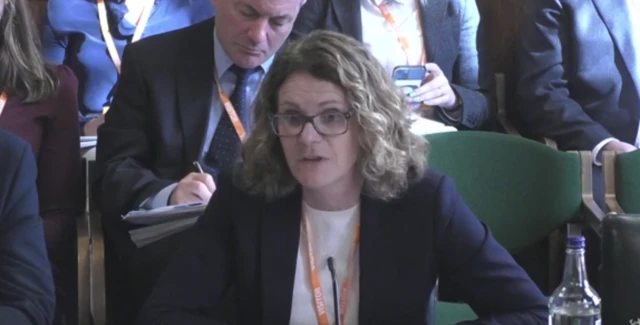
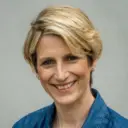
    A woman with shoulder-length wavy hair and glasses sits behind a desk, wearing a suit jacket, white shirt and orange lanyard.Image source, Parliament TV

    Caroline Sheridan, non-executive director at South East Water (SEW), tells the committee the Pembury site "wasn't on our risk radar" before issues started in November.

    She says facing potential problems at the site and the impact on the area was “not something that we were talking about as a board to be brutally honest".

    Sheridan explains that the company is focused on “known issues across SEW”.
  2. MP queries if South East Water has been ‘asleep at the wheel’published at 10:42 BST 14 April

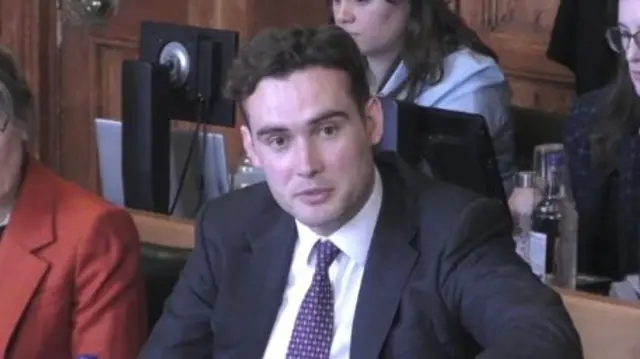
    Henry Tufnell sits at a select committee table, dressed in a suit and purple tie.Image source, PARLIAMENT TV

    Henry Tufnell, one of the select committee's MPs, tells South East Water (SEW) that “you are not doing the basics” in relation to a Drinking Water Inspectorate report which highlighted the lack of routine maintenance.

    A total of seven of 13 scheduled site visits were not started or completed between 9 and 25 November last year.

    David Hinton admits that the numbers are “not good enough” but adds it would never be 100% as site technicians react to other issues at the Pembury plant.

    Tufnell ends by questioning if SEW was “asleep at the wheel”.

  3. Analysis

    David Hinton, under pressure, now accepts that some issues were foreseeablepublished at 10:37 BST 14 April

    Fiona Irving
    Environment correspondent, South East

    Having spent much of the January select committee hearing saying the problems at the Pembury Water Treatment Works were “unexpected”, David Hinton has now accepted that the issues at the site were foreseeable.

    The Drinking Water Inspectorate had previously said that the problems at the treatment works “should not have been a surprise”.

    The acknowledgement from the South East Water boss that the company could have done more to prevent the supply failure is a significant change from his previous evidence.

  4. Chair admits visiting Pembury Water Treatment Works just oncepublished at 10:34 BST 14 April

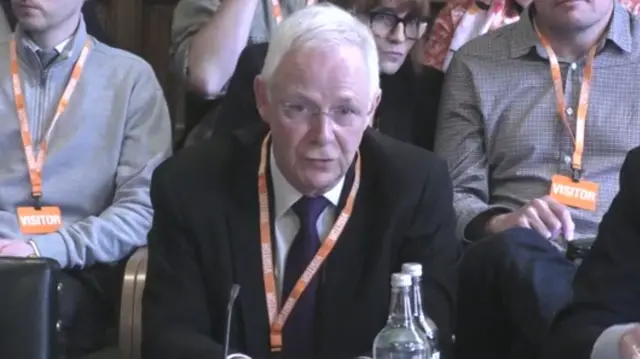
    A man with shirt white hair wearing a white suit and purple tie.Image source, Parliament TV

    The chair of South East Water says he has visited the treatment works in Pembury just once since he started his role in 2022.

    Committee chair Alistair Carmichael asks for clarification: “Given all the previous warnings and the history of the plant, you’ve only visited it once?"

    Train explains that the company has 88 treatment works across its network.

  5. Analysis

    David Hinton's £400k salary resurfaces as political flashpointpublished at 10:27 BST 14 April

    Helen Catt
    Political editor, South East

    There was a slightly awkward moment in the committee as MPs ask about David Hinton’s £400,000 salary and his future.

    This was the big political issue at the time of the outages, after several of the South East’s MPs and the leader of Kent County Council said they had no confidence in him and he should resign.

    Chris Train, the chair of South East Water, says the company’s board is backing Hinton.

    He also says Hinton has indicated he would not accept a bonus this year.

  6. David Hinton ‘surrendered’ bonus, committee toldpublished at 10:20 BST 14 April

    Asked if South East Water had failed its customers and shareholders, independent chair Chris Train says the firm is “disappointed” in itself.

    “David (Hinton) has surrendered his bonus,” Train says.

    “As a remuneration committee, that made the conversation a lot easier than it might have been otherwise."

    When questioned by MPs, Train clarifies that Hinton would not have been given a bonus even if he had asked for one.

    Hinton's salary is £400,000 a year.

  7. 'We failed our customers,' chair sayspublished at 10:15 BST 14 April

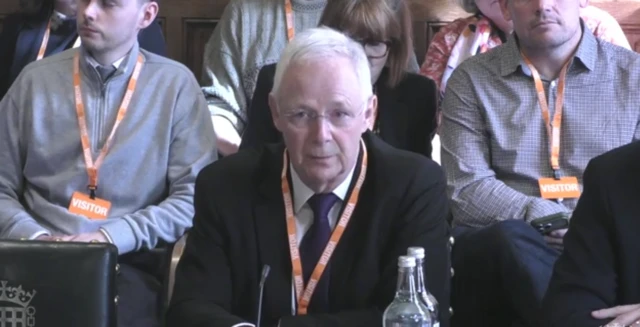
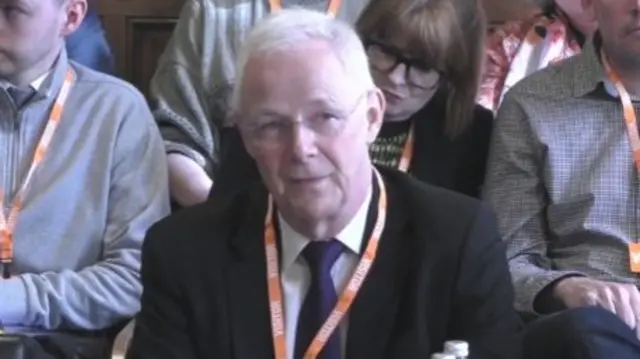
    A man with short, white hair and a shirt and tie.Image source, Parliament TV

    Chris Train, chair at South East Water, says the company "failed on the basic objective of delivering water to customers, and therefore that is a failure".

    “We failed our customers. We worked very hard to rectify that situation and since the events and the independent reviews we have undertaken a lot of actions to improve the resilience and the operations," he adds.

  8. SEW boss acknowledges 'disappointing' response to second round of issuespublished at 10:12 BST 14 April

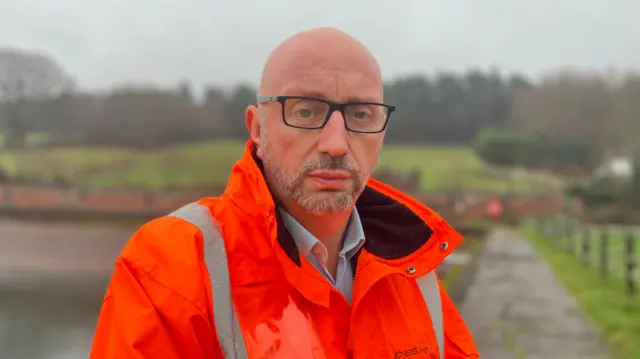
    A bald man with glasses and an orange South East Water coat.

    South East Water (SEW) chief executive David Hinton says he would label his company's response to the second outage as "disappointing".

    Select committee chair Alistair Carmichael reminds Hinton he gave SEW's response to the outage at the end of November a score of 8/10.

    But when pushed to give a rating for the response to the second round of issues he refuses, saying it would be "too complicated".

  9. £600,000 compensation ‘doesn’t touch the sides’ - committeepublished at 10:10 BST 14 April

    David Hinton says £600,000 has been put aside to compensate businesses that lost money during the water outages.

    In a letter to the committee, Tunbridge Wells MP Mike Martin says a survey of 100 businesses in the area reported total losses of £1.2m.

    The chair of the committee says the offering from South East Water “doesn’t even touch the sides”.

    Applications for the fund close at the end of May, with compensation decided on a “case by case basis”, Hinton adds.

  10. Climate change an ‘element factor’ in outages, says SEW chairpublished at 10:01 BST 14 April

    Chris Train speaks as he sits at a parliamentary table, wearing a suit and tie and orange lanyard.Image source, PARLIAMENT TV

    Asked if South East Water (SEW) still blames climate change for its outages, David Hinton says: “No, I’m not blaming climate change.”

    But Chris Train, independent chair of SEW, says it was an “element factor”.

    Train goes on to agree that the “speed and severity of climate change in the South East particularly has outstripped reasonable predictions”.

  11. Tunbridge Wells was 'disproportionately affected' by Storm Goretti - SEW bosspublished at 09:53 BST 14 April

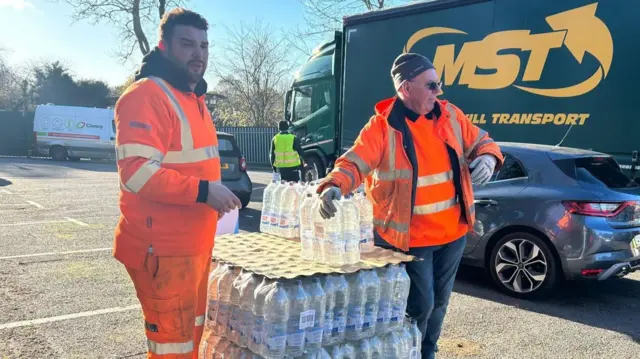
    Two men stood giving out water bottles.

    Some 24,000 South East Water (SEW) customers near Tunbridge Wells saw disruption in November and December last year after a plant failure. Weeks later, as many as 30,000 households were hit with further water supply issues following Storm Goretti.

    When questioned about its response to the second outage, SEW chief executive David Hinton said the area had “not fully recovered” from the first.

    “It meant the Tunbridge Wells area was disproportionately affected again, for which I really apologise,” he said.

    “Those two events effectively joined up from a Tunbridge Wells point of view.”

  12. 'Clearly we've got more to learn,' Hinton sayspublished at 09:49 BST 14 April

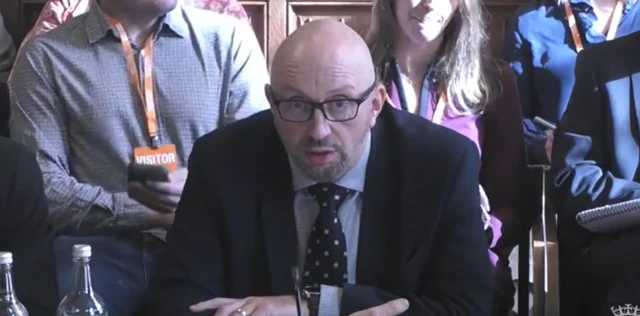
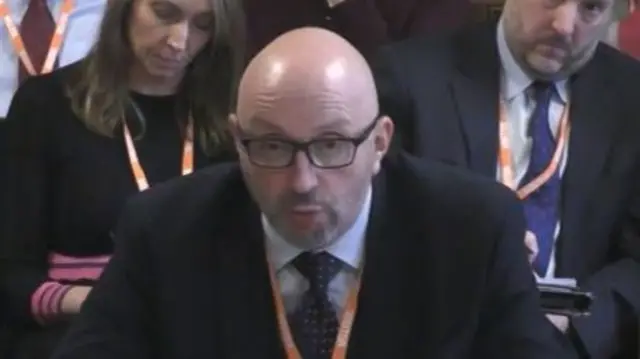
    A bald man with black glasses wearing a suit.Image source, Parliament TV

    South East Water (SEW) chief executive David Hinton says although "we did learn some lessons, clearly we've got more to learn".

    "We’ve put in a short-term resilience plan which picks up a number of lessons from both events, which were pretty much concurrent, and we’ve also got a transformation programme we’re putting in place for the business," he adds.

    The chief executive says the programme will "ensure that we pick up all the lessons from these different events both in terms of [the] engineering side, but also in terms of response".

    He says hearing the company missed bottled water deliveries in January "upsets me and we need to do better".

  13. Did David Hinton have to attend this committee hearing?published at 09:40 BST 14 April

    Helen Catt
    Political editor, South East

    A man in a dark black suit. He is bald and wearing an orange lanyard.Image source, PA Media

    A select committee usually requests that witnesses give evidence by issuing an informal invitation.

    David Hinton voluntarily agreed to attend both this session and a previous one in January.

    On the rare occasions that a witness refuses an invitation, the committee does have powers to formally summon them, but that doesn’t mean they can actually be forced to turn up.

    The head of Vote Leave and former government advisor Dominic Cummings refused to attend a hearing of the Culture, Media and Sport Committee in 2018 in an inquiry into fake news.

    He was found to be in contempt of Parliament and was reprimanded by MPs.

    Still, it is only a symbolic move.

    For a witness, it’s a case of weighing up the damage to their reputation and relationship with MPs in deciding whether or not to attend, although most witnesses do.

  14. Efra select committee starts questioning David Hintonpublished at 09:32 BST 14 April

    The Environment, Food and Rural Affairs (Efra) Select Committee has started questioning the chief executive and chair of South East Water (SEW), alongside a non-executive director of the company who has led its investigation into a two-week drinking water outage that affected the Tunbridge Wells area last year.

    The committee will later question the chiefs of Ofwat, the Drinking Water Inspectorate and the Consumer Council for Water.

    You can watch live above.


  15. South East Water: A snapshotpublished at 09:19 BST 14 April

    Joshua Askew
    Journalist, South East

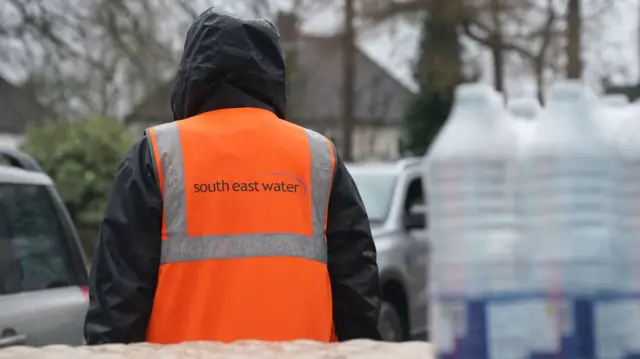
    A person in an orange high visibility jacket is standing in the rain. Their back is turned.Image source, PA Media

    South East Water (SEW) says it supplies drinking water to 2.3 million customers in the south-east of England.

    It employs some 1,150 people and has 9,000 miles (1,480km) of water mains.

    The company is owned by a group of investment and pension funds led by the Utilities Trust of Australia, which holds a 50% stake.

    Its latest annual report shows that SEW has £1.3bn worth of debt.

    Pre-tax losses for the year to 31 March 2025 narrowed to £19.8m from £36.7m in the previous year.

  16. Who sits on the Efra select committee?published at 09:10 BST 14 April

    Helen Catt
    Political editor, South East

    The Efra select committee scrutinises the work of the Department for Environment, Food and Rural Affairs.

    It is chaired by the Liberal Democrat MP Alistair Carmichael.

    Select committees are made up of MPs who are not government ministers or party spokespeople.

    The Efra committee has 11 members in total, made up of seven Labour MPs, two Conservatives and two Liberal Democrats.

    The others are: Sarah Bool (Conservative), Juliet Campbell (Labour), Charlie Dewhirst (Conservative), Sarah Dyke (Liberal Democract), Terry Jermy (Labour), Jayne Kirkham (Labour), Josh Newbury (Labour), Jenny Riddell-Carpenter (Labour), Tim Roca (Labour), and Henry Tufnell (Labour).

  17. Past water supply issues in Kent and Sussexpublished at 09:02 BST 14 April

    Fiona Irving
    Environment correspondent, South East

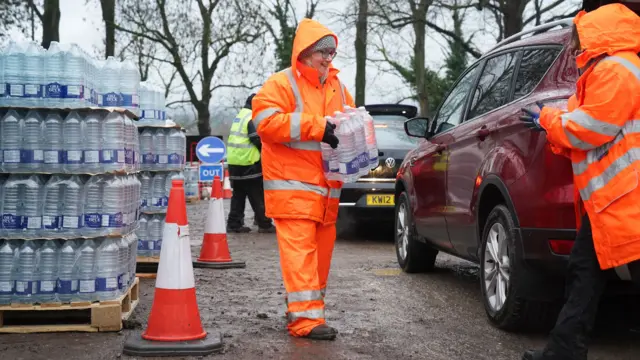
    A woman in a orange high visibility suit. She is carrying a pack of large water bottles.Image source, PA Media

    David Hinton was last in front of this select committee in January.

    Back then he was giving an account to MPs of problems at Pembury Water Treatment Works in December which left 24,000 homes and businesses in the Tunbridge Wells area without drinking water – some for two weeks.

    Less than 24 hours after that hearing, South East Water customers faced more water supply misery when the taps ran dry again.

    This time 30,000 properties across Tunbridge Wells, East Grinstead, Maidstone, Whitstable and Canterbury were affected. "It's a bit like Armageddon," said Sarah Wilmot, a shop owner in East Grinstead who could not open due to the supply issues

    The water company said freeze-thaw conditions led to multiple pipes bursting, while Storm Goretti led to power outages and problems with the quality of the raw water at treatment works.

    Those two incidents were by no means isolated; there have been a series of supply failures by South East Water over the past six years.

    Last month the regulator Ofwat proposed a £22m fine for the water company after its investigation into a series of supply failures between 2020 and 2023 which affected more than 286,000 people.

  18. South East Water boss David Hinton set for a grillingpublished at 08:56 BST 14 April

    Fiona Irving
    Environment correspondent, South East

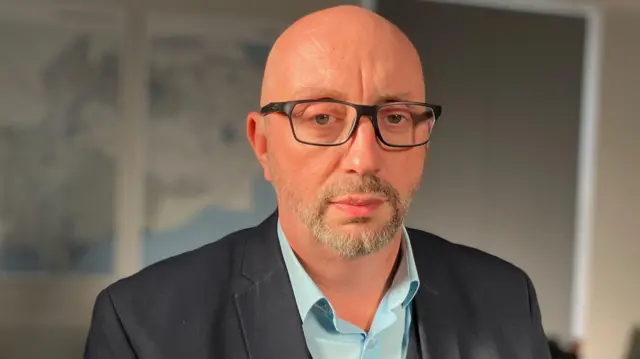
    A man in a grey suit. He is wearing a pale blue shift and has glasses.Image source, Fiona Irving/BBC

    The boss of South East Water, David Hinton, won’t be relishing the prospect of another grilling by MPs in front of the cameras.

    Last time, he told the Environment, Food and Rural Affairs select committee that problems with the Pembury Water Treatment Works, the source of the Tunbridge Wells outage, were “unexpected” and down to a change in the raw water coming into the site.

    But when the chief inspector of the drinking water regulator gave evidence to the committee, he contradicted Hinton’s explanation, saying the outage should not have been a surprise and that the treatment works was “flying blind” without appropriate online performance monitoring.

    Hinton faced huge criticism from customers and MPs following January’s performance.

    This time, after he is questioned by the committee, not one but two of the water regulators will be giving evidence.

    The under-fire water boss will be hoping there aren’t any more surprises from the regulators’ evidence.

  19. What is a select committee?published at 08:53 BST 14 April

    Helen Catt
    Political editor, South East

    A select committee is one way that Parliament scrutinises what the government is doing.

    In the House of Commons, they are made up of MPs from different parties who are not government ministers or party spokespeople.

    Each committee focuses on one broad subject area, usually linked to a government department.

    They decide what topics they want to investigate and they take evidence from witnesses in person and in writing and produce a report which they send to the government.

    Government ministers, civil servants and experts are among the kind of witnesses often asked to give evidence, along with significant industry figures like, in this case, South East Water’s CEO.

    South East Water has been invited to give evidence as part of the committee’s long-running inquiry into reforms in the water industry.

  20. South East Water boss to face MPspublished at 08:46 BST 14 April

    Today, we will be running a live page on the appearance of South East Water's chief executive, David Hinton, before a select committee of MPs.

    It comes after repeated water supply failures have hit tens of thousands of properties across Kent and Sussex, leading to calls for his resignation.

    We'll be bringing you coverage of the select committee, so stay with us.