6 Minute English now comes with a video! It's the same programme that you know and love, but now you can see us!
_____________________________________________________________________________________________________
Download a free 6 Minute English worksheet and transcript!
Try our free interactive quiz!
______________________________________________________________________________________________________


Introduction
When was the last time you had an alcoholic drink? Some people choose to live without drinking any alcohol, but for many others drinking alcohol is a normal part of life. Even so, in recent generations many people have chosen to stop drinking alcohol. Georgie and Neil discuss this and teach you some new vocabulary.
This week's question
Many people in the UK and other countries choose to give up alcohol in the new year for the whole of the month of January, but what is the challenge called?
a) No-drink New Year
b) Alcohol-free January
c) Dry January
Listen to the programme to hear the answer.
Vocabulary
sober
not drinking alcohol or taking recreational drugs
societal pressure
feeling that you should do something because lots of other people expect you to
the norm
the usual or common thing to do
self-optimisation content
videos, posts and other media about being fit, healthy and achieving big goals
tout
praise something or talk about it a lot to get others to try it
pushback
strong criticism of a trend; people doing the opposite of a trend
TRANSCRIPT
Note: This is not a word-for-word transcript.
Georgie
Hi Neil.
Neil
Hi Georgie. Do you want to hear something quite unusual for me?
Georgie
Err, yes!
Neil
I haven't had an alcoholic drink this year.
Georgie
Wow! That is really impressive. How do you feel? Like a new person?
Neil
I do feel very good, I have to say.
Georgie
I can't say the same – I did have a few alcoholic drinks at the weekend with my friends. But in many parts of the world, people don't drink alcohol at all. In the UK it's very common – that is until recently. Today on 6 Minute English, we're going to find out why many people are choosing to give up or cut down on alcohol, and we'll be asking, "Is this the end of British drinking culture?"


Georgie
OK. Neil, let's start with a quiz question. Many people in the UK and other countries choose to give up alcohol in the new year for the whole of the month of January, but what is the challenge called? Is it:
a) No-drink New Year
b) Alcohol-free January, or
c) Dry January?
Neil
Well, I know the answer to this, but I'm not going to give it away.
Georgie
OK. Well, then our listeners can find out the answer at the end of the programme.
Neil
Yes, they can. So, Georgie, I hear all the time that younger people don't drink as much alcohol today as they used to in the past. Is that true?
Georgie
Well, in the UK, surveys suggest that 16 to 24-year-olds are more likely to be non-drinkers than the older generations.
Neil
OK. So, why are more young people choosing to be sober? That means not to drink alcohol.
Georgie
Well, the BBC World Service podcast What in the World have been investigating this. Presenter Hannah Gelbart met three young people who choose to be sober for some alcohol-free drinks to find out more. Here's Daniel's story:
Daniel
Yeah. So, today I don't drink at all, but when I was in my early 20s, I think I felt maybe a bit of, like, societal pressure – you know, work drinks or being at uni, where it was the norm to just join in. I think you'd probably get a few weird glances if you're like, "Yeah, I'm not going to join in at all." So, I did that and I think Covid lockdown just gave me a bit of confidence to say, "OK, let me step away from this. It's not necessarily something I want to do moving forward."
Hannah Gelbart
So, how many years have you been sober for?
Daniel
I would say it's been six years now.
Hannah Gelbart
Six years?
Georgie
So, Daniel says that when he was younger, he felt societal pressure to drink alcohol. Societal pressure is feeling like you need to do something because lots of people around you are doing it.
Neil
Right. So, Daniel says drinking was the norm at university and after work. The norm is a way of saying that something is normal or common.
Georgie
But during the Covid-19 pandemic, when people in the UK were unable to socialise and visit pubs and bars, Daniel's attitude to alcohol changed. After that, he decided to be sober and he hasn't had a drink for about six years.
Neil
So, Georgie, it seems like many young people don't drink at all and lots of them share their experience of being sober on social media. But recently there's been a bit of a change, hasn't there?
Georgie
Yes. Whilst many people use social media to share their experience of drinking less alcohol or no alcohol at all, some people have been saying that they want to go out more and drink and have fun with friends. They argue we're too worried about fitness and wellness, and that drinking some alcohol to have a good time is fine. Here's Millie talking more about this to BBC World Service podcast What in the World:
Millie
I think we had this, like, rise of self-optimisation content. I think unfortunately sobriety, kind of, got swept in with that and it got touted as this way to, you know, get up at 5am, do a HYROX. And, you know, for many of us, that's probably not our reality with not drinking. It's that we do it to feel a bit more sane or, you know, things like that. And so, I think now we are entering this, like, almost pushback era of that content and you're seeing celebrities... Like, it's not just alcohol – you're seeing more celebrities smoking and, like, posting that on their Instagram and not worrying if it's brand-friendly.
Neil
OK. So, Millie thinks that being sober is associated with certain kinds of self-optimisation content, where people talk about fitness, diet and having big goals for themselves.
Georgie
Yes, and Millie says being sober gets touted as a way to get up at 5am to exercise. In other words, people talk about it a lot and try to encourage people to do it.
Neil
But Millie says that being sober isn't always about being super fit and healthy. For her, it's about being sane.
Georgie
But still, Millie thinks there's a pushback against self-optimisation content. Pushback means a criticism of the content, and people are pushing back by doing the opposite. For example, lots of celebrities post about themselves drinking and smoking.
Neil
Well, Georgie, I've decided to try to give up alcohol for a whole year, but I don't think everybody should do that if they don't want to. It's really up to the individual.
Georgie
Yeah, I still enjoy having a few drinks with my friends. I think it's just all about balance, really. OK. Neil, it's time to reveal the answer to this week's question. I asked, "What was the name given for when people give up alcohol in January?"
Neil
Yes. And the answer is Dry January.
Georgie
That is correct. Well done! Let's recap the vocabulary we learned in this programme, starting with sober, which describes someone who doesn't drink alcohol or take recreational drugs.
Neil
Societal pressure is the feeling that you should do something because lots of other people expect you to.
Georgie
Saying something is the norm is a way to say it's usual or common.
Neil
Self-optimisation content means videos and posts about being fit, healthy and achieving big goals.
Georgie
If somebody touts an idea or lifestyle, they talk about it a lot and try to convince people to do it.
Neil
And pushback is strong criticism of a trend, and people doing the opposite.
Georgie
Once again, our six minutes are up, but don't forget to test what you've learned with the worksheet on our website, bbclearningenglish.com.
Neil
Thank you for joining us and goodbye.
Georgie
Goodbye!

What do you think of the new version of 6 Minute English? Email us at learningenglish@bbc.co.uk.
Next
Find an A-Z list of our programmes.
Find more programmes for your level here.
Practise your reading skills with The Reading Room.
最新 6 Minute English


Can apps teach you a language?
Episode 260910 / 10 Sep 2026
What's better for learning languages – an app or a class?

Climate change and extreme weather
Episode 260903 / 03 Sep 2026
Every year we see damage, death and destruction caused by hurricanes, cyclones and typhoons - tropical storms. Is climate change making this impact worse?


Sharing the road with driverless cars
Episode 260820 / 20 Aug 2026
Would you trust a robot to drive you around a city?
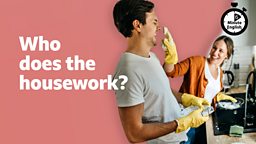
Who does the housework?
Episode 260813 / 13 Aug 2026
When you were growing up, did your mum or dad do more household chores?
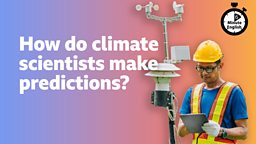
How do climate scientists make predictions?
Episode 260806 / 06 Aug 2026
What is the difference between a prediction and a projection?
The Enhanced Games
Episode 260730 / 30 Jul 2026
Would you watch a sport if you knew the athletes had taken drugs?
What's in a footballer's brain?
Episode 260716 / 09 Jul 2026
How do footballers cope with high-pressure scenarios like penalties and corners?
Stress-free family meals
Episode 260625 / 25 Jun 2026
What foods did you dislike when you were growing up?
Limiting screen time for children
Episode 260618 / 18 Jun 2026
Children are spending too much time with electronic devices.
How advertisers make us spend money
Episode 260611 / 11 Jun 2026
When was the last time you bought something you didn't need?
How reading shapes your brain
Episode 260514 / 14 May 2026
Can learning to read alter the way your brain works?
Searching for life on another planet
Episode 260507 / 07 May 2026
Does life on another planet exist?
Should we eat ultra-processed food?
Episode 260430 / 30 Apr 2026
Ultra-processed food can be tasty, but what is it doing to our health?
Weight loss drugs
Episode 260326 / 26 Mar 2026
How do weight loss drugs like Ozempic and Mounjaro help people lose weight?
How do we adapt to the cold?
Episode 260319 / 19 Mar 2026
Would you prefer to be too hot or too cold?
Should we pay more for chocolate?
Episode 260312 / 12 Mar 2026
Is chocolate becoming more expensive?
Why are some animals black and white?
Episode 260305 / 05 Mar 2026
The answer is not as black and white as you might think!


Why are billionaires building bunkers?
Episode 260129 / 29 Jan 2026
Is the end of the world closer than we thought?
Scared of speaking English?
Episode 260122 / 22 Jan 2026
Beth and Pippa talk about why we often find speaking a new language scary.
What English phrases really mean
Episode 260115 / 15 Jan 2026
Why don't British people say what they mean, or mean what they say?