Overview of the characters in The Sunlight Pilgrims by Jenni Fagan
- Jenni Fagan's novel The Sunlight Pilgrims is not told from the perspective of one character.
- Instead we are given two A third-person limited narrative point of view, where the reader sees everything from the viewpoint of the character but does not know things beyond their perspective perspectives from Stella and Dylan, in the third person.
- There is no single The chief character in a novel, film or play. to the novel, as we are following either Stella or Dylan at different points.
- There are three central characters: Stella, Dylan and Constance, and some secondary characters.
Looking for some quick revision? Try an interactive quiz for Higher English.
Main characters
Stella
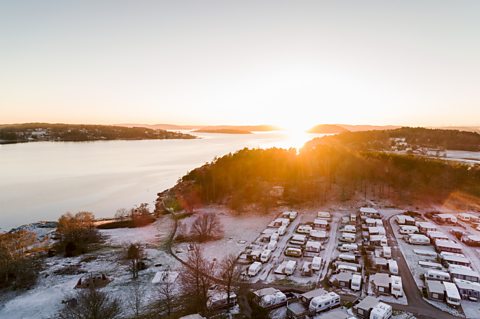
Stella is a twelve year old trans girl, who lives with her mum Constance in a caravan in the north of Scotland.
Her name means ‘star’ and she is the shining light at the centre of the novel: Her urge to take on life and live it fully embodies a sense of positivity and hope for humanity in crisis.
As she is transgender, she faces much abuse - some of it physical - from strangers and former friends alike. While Stella is certain and comfortable in her female identity: it is other people who have the problems.
One boy, Lewis, is attracted to her but he does not defend her when she is physically attacked and joins in when she is bullied. Although she is very afraid for her future ("Lately, fear is following her. It is two tiny pit-a-pat feet always skittering behind her", Chapter 3) - she consistently shows strength, honesty and determination. In Chapter 11, at the town hall meeting when her peers make a crude explicit drawing of her, she remains stoic in the face of their bullying:
Don't cry. It would be better to walk out now than to cry in a town hall in front of Lewis and the entire village and everyone from the crofts and farms. – (Chapter 11)
Stella is intelligent and curious, but also vulnerable, worried by the signs of male puberty, which she sees as something alien happening to her body:
Her tiny wax strips are in a pouch in the bathroom and she's been using one each week, even when she can't see any hair on her upper lip. – Chapter 34
She is also afraid of rejection and hostility, but comes to celebrate her uniqueness.
She is emotionally mature, spotting how Dylan feels about Constance, and shows loyalty to her mum and friends, such as Vito, the Italian boy she is in email correspondence with.
In contrast, she rejects Alistair, referring to him as her "biological donor" rather than her father, and she will not forgive Lewis.This shows there is a steeliness in her attitude, perhaps essential to her survival. When she meets Lewis after building her snowman, she says:
It was a good day until she saw his face. She hopes he freezes out there in the field, with nobody to watch him die but her snowman. – (Chapter 34)
Her triumph near the end when sledging demonstrates her ability to keep going, bravely and energetically, when the odds are against her. It wins her some respect from the same peer group who have bullied her:
Other kids look around and see she was the only one who made it down to the bottom. Stella Fairbairn is the only kid in the whole of Clachan Fells who has just sledged at 40 m.p.h. through a pack of huge Jersey cows. – (Chapter 31)
Dylan
Dylan is also undertaking his own personal ‘transition’ of a different kind. This begins with the physical journey from London to Clachan Fells. He is despairing at first, having lost his mother Vivienne and grandmother Gunn, and now leaving the family cinema; he is alone, bitter and isolated:
This is only grief - it will not bring them home. He presses his fists into his eyes and swallows down hard. Repossessors will clamp metal shutters over the foyer doors in about ten hours and he will not be here to watch them. – (Chapter 1)
He ends up in Clachan Fells after he finds the key to the caravan left to him by Vivienne. By journeying north, he finds a sense of belonging, acceptance and truth.
Physically, his height makes him awkward and not very confident. His mother always told him his father was a giant:
Your father lived in Hebden Bridge. I don't imagine there are many tall men there. – (Chapter 8)
Like Stella, he stands out and experiences discomfort in his body. He tells Stella "I was born in the wrong body" in chapter 4. He later finds out that his family tree is interwoven with the characters in Clachan Falls as Alistair's father Olaf was his grandmother Gunn's brother. Dylan's mother Vivienne was born as a result of their incest and implied rape.
He cries for Gunn, and his mum, who hadn't done anything wrong in coming into the world; he cries and cries, he wants to let them know he loves them, to somehow make okay a fact of their life that they all lived within the shadow of and barely understood at all.-- (Chapter 30)
His feelings for Constance deepen from initial attraction to love and a quiet longing just to be with her. He shows immediate acceptance of Stella and loyalty towards her ("Sounds like you're the only real, sane person in there." Chapter 4).
Constance
Constance is Stella's mum, who lives with her in the caravan park.
Her name means constant; unchanging, and this is reflected in her personality: Constance is strong, true to herself and steadfastly loyal to Stella, though she does worry about her.
She makes independent and free choices, for example she is non-monogamous, she has had two partners (Alistair, Stella's dad, and a man called Caleb) at the same time in the past and has no intention of ‘settling down’ further with Dylan, though they eventually become very close.
I like you, but it won't change anything else, she says.
What, like if Caleb came back, or if you want to see Alistair? he asks. – (Chapter 25)
Constance is free-thinking and she lives the life she wants without fear of the judgement of others. She wants the same for others, particularly Stella, who she defends from the disapproving community.
Her loyalty to Stella is shown in every aspect of her life, for example, ripping up the obscene drawing and shaming the perpetrators at the meeting. She also refuses to have closer contact with Alistair, who professes his love for her even although he is married to someone else, unless he accepts Stella’s transition.
She is shown to be a survivor with a range of practical skills: she upcycles old furniture for a living and provided a much-needed boiler for Dylan. She is also very caring and accepting, extending her family warmth to outsiders like Barnacle and Ida.
Constance's sense of freedom, and possibly her sense of loyalty and protectiveness for her 'pack', is symbolised by the wolf cloak she wears.
Secondary characters
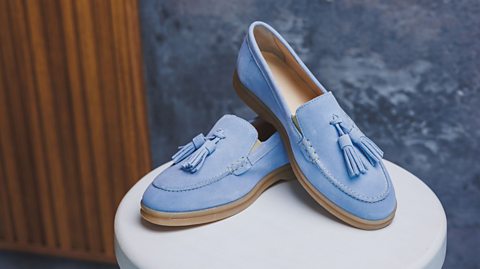 Image source, Getty Images
Alistair
Constance’s former partner, but still a presence in her life, partly because he is Stella’s father. Constance was also seeing a man called Caleb while they were in a relationship, and Alistair is married to another woman. His refusal to accept Stella’s female identity is a cause of tension between him and Constance, but he does still care.
- The wolf cloak present shows that he appreciates Constance’s wildness and freedom.
- Stella’s ‘feminine’ moccasins suggest he is trying to apologise.
He is A character who creates conflict with the main character. towards Dylan’s growing relationship with Constance. By the end of the book, he finally accepts Stella for who she is and offers shelter to the main characters from the worsening weather.
Image source, Getty ImagesBarnacle
He is a ‘character’ of the site, living with the triple problems of age, disability and poverty. He suggests a character on the margins of the society of Clachan Fells. He relies on neighbours like Constance for support and kindness. His death signals increasing danger.
Lewis
Stella’s former friend and possible boyfriend. He has rejected her – though attracted to her – and, hurtfully, did nothing to help her when she was beaten up by the other lads. His obscene drawing feels like an extreme betrayal. He attempts to make up with her at various points, but she refuses.
Vito
An online friend, whom Stella turns to for support and reassurance. When his online presence disappears, she is worried about him.
Ida
A sex worker who is practical and unashamed about her work, one of the marginalised people who live in Clachan Fells. Constance is welcoming and friendly to her.
Vivienne and Gunn
Dylan’s mother and grandmother appear in flashbacks as he experiences again Vivienne’s emotionally closed-off parenting and Gunn’s toughness. By buying Dylan the caravan and leaving him her scrapbook, Vivienne both provided for him and propelled him into a mystery. Gunn also appears to Stella, once in a dream and once in a vision, telling her about the sunlight pilgrims.
Video - What is symbolism?
Alistair's gifts for Constance and Stella have symbolic meaning:
- the wolf cloak represents Constance’s wild and free nature
- Stella’s ‘feminine’ moccasins are symbolic of Alistair's acceptance of her identity
Brush up on your knowledge and understanding of symbolism with this short Higher English revision video.
What is symbolism? How and why would you use it?
Symbolism
The use of symbols to represent deeper meanings or themes.
Symbols are usually objects which are easy to understand.
What they represent is more complex.
We use symbols every day. Some are universal.
We all know that a red rose symbolises love or romance.
A clock is a symbol of time.
Diamonds can represent wealth or value.
A white flag symbolises surrender or a truce.
Symbolism helps writers illustrate and develop the themes of their story.
If you wanted to explore the theme of death, you might use symbols like:
The colour black
Angel’s wings
or even a skull
These symbols provoke emotions in the reader linked to death, adding depth beyond action or conversation.
In her poem 'Revelation', Liz Lochhead uses symbolism to explore the idea of evil through a young girl’s experience on a farm.
“I remember once being shown the black bull… In the yard outside, oblivious hens picked their way about…”
The black bull, half seen in the darkness, symbolises evil. This evil is a danger to order and calm, which is symbolised by eggs as well as innocent female hens.
“I had always half-known he existed – this antidote and Anti-Christ, his anarchy threatening the eggs”
Once these are established as the symbols of the poem, Lochhead uses them to guide us through the heavy concept of evil versus good.
The next time you explore difficult themes in your writing, why not give symbolism a go?
You might just crack it!
Groups
There are other groupings of unnamed characters –
- the young people
- the women in the playground
These groups' reactions to Stella’s transition range from disapproving stares to actual violence. They conform as a group, adhering to social expectation rather than expressing their own individual opinions. Stella's presence is a direct challenge to this. Only when she triumphs at the sledging do the others cheer her, genuinely impressed by her courage.
Revise characters in The Sunlight Pilgrims
Quizzes - The Sunlight Pilgrims by Jenni Fagan quiz
Check your understanding of Jenni Fagan's novel, The Sunlight Pilgrims, with interactive quizzes for Higher English