Quick version
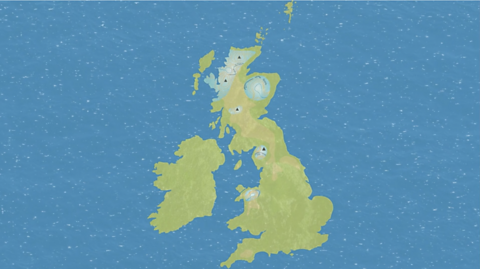
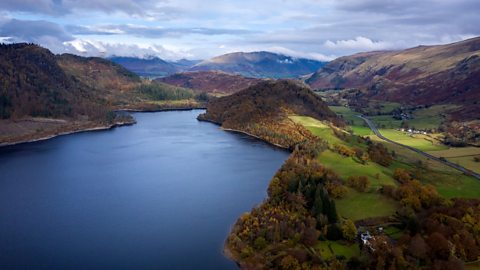
The Lake District is a glaciated upland landscape in north west England.
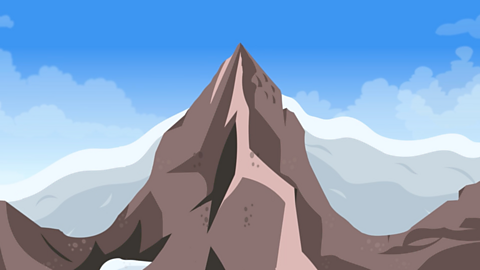
Features of this landscape include: corries, arêtes, and pyramidal peaks..
Most of the area is within the Lake District National Park which means the landscape's protection is prioritised.
Some of the most important land uses are:
farming - Sheep and cattle farming
forestry - Commercial forestry and conservation of ancient rainforests
industry - Quarrying of slate, limestone and granite. Manufacturing of food, wool, wood and paper products using local materials.
recreation and tourism - Picturesque scenery and a variety of year-round sporting activities
water storage and supply - High rainfall means lakes in this region can supply fresh drinking water to towns
renewable energy: - There are over 50 small-scale hydroelectric power schemes in the Lake District.
Learn in more depth
The Lake District is located in north west England, with the Yorkshire Dales to the east.
It has an unpredictable climate of high rainfall with mild temperatures in summer.
Due to its mountainous terrain, it experiences severe weather in winter, including gale-force winds and snow on high A hill or mountain, especially in the north of England. Scafell Pike in the Lake District is the highest mountain in England., while valleys are more sheltered. This creates challenging conditions for farming, so hardier breeds are favoured for sheep on the hills and cattle in the valleys.
Most of this glaciated upland landscape forms the designated Lake District National Park so conservation of the natural environment is prioritised alongside promoting tourism and access to the landscape.
The area is renowned for its natural beauty. The large lakes and fells appeal to visitors who are interested in the landscape, the local heritage and activities like hill walking or water sports.
Climate, geology, relief and history all contribute to the Lake District's varied land use.
Farming
Mountains and U-shaped valleys
- Due to the high elevation (height) of the land, low temperatures mean that the The length of time it takes for plants to fully mature. is too short to grow crops.
- A lack of sunshine means crops will not ripen.
- The slopes are too steep for modern farming machinery to be used.
- The high rainfall The process by which rainwaiter washes all the goodness out of top soil. nutrients from the soil, leaving it:
- thin
- acidic
- infertile
- Flatter areas in the sheltered valleys have more fertile soil but are often marshy making it impossible to grow crops there.
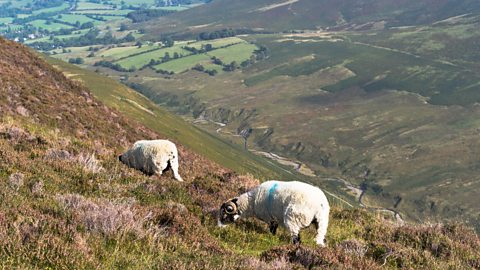
- Hill sheep farming is the most common type of farming
- Sheep are hardy and can survive in these cold, harsh environments - on the upper slopes of U-shaped valleys.
- On the valley floors, eg in Great Langdale, cattle can graze where the land is flatter and the grass is better quality because of more fertile soils.
- Hay is grown as a Crops such as hay which are grown to feed animals during winter months. to feed animals in winter.

Diversification
Many farms have When farmers undertake non-farming activities to generate more income. e.g. holiday lets, cheese making or farm shops. so add to income from farming:
- offering tourist accommodation, including holiday cottages, bed and breakfast, and camping.
- setting up farm shops to sell their own produce and other local products.
- visitor experiences for tourists can also bring in more income.
For example:
- Bank Ground Farm sells its own meat and other local produce online and at its own farm shop.
- Dodgson Wood Farm offer accommodation in cottages and a campsite.
- Yew Tree Farm offers experiences with Herdwick sheep and learning about fell farming
Forestry
 Image source, Stewart Smith / Alamy Stock Photo
The harsh conditions and poor soils of the upper landscapes make forestry difficult. Steep terrain makes use of machinery challenging.
Trees which are grown for sale. can take place on the lower, gentler slopes of U-shaped valleys, eg on Harter Fell, where:
- conditions are less harsh
- soils are better quality
Image source, Stewart Smith / Alamy Stock PhotoConservation
 Image source, Loop Images/Getty images
Forests in the Lake District also are used for
- recreation
- restoring native woodland biodiversity
The ancient temperate rainforest of Borrowdale was recently declared a National Nature Reserve.
The Borrowdale Oakwoods are one of England's largest remaining temperate rainforests that once spread from the north of Scotland down the west coast of England, Wales and Ireland.
Working with local farmers this land will be carefully managed to balance the need to produce food locally with nature's ability to regenerate.
These forests are also important carbon stores and home to a variety of animals, plants and fungi that have now become rare in Europe.
Image source, Loop Images/Getty imagesIndustry
Quarrying
 Image source, Tom Richardson Cumbria / Alamy Stock Photo
From the 16th and 19th centuries, the Lake District was one of the main locations for copper mining in the UK. Lead was also mined and the lasting impact can still be seen on the landscape in spoil heaps.
The process of removing rock, sand, gravel or other minerals from the ground. is still one of the main industries, alongside farming and tourism The process of making money and any form of employment that makes money. Types of industry include primary industry such as farming, secondary industry such as manufacturing, and tertiary industry such as hospitality and tourism..
- local slate is used in roofing and to repair stone walls
- granite is used in making roads
- limestone is used in steelmaking
Image source, Tom Richardson Cumbria / Alamy Stock PhotoFood and drink industry
 Image source, Jeff Greenberg/Getty images
The Lake District has a long history of industries related to farming. Products including the Cumberland sausage, Kendal Mint Cake, and Grasmere Gingerbread have been made for generations.
Local produce
Local wool and textile manufacturing are also an important local industry.
Businesses sell local produce to visitors as part of their experience of the area.
Events like agricultural shows allow local producers to set up stalls where they can sell to visitors.
Food and drink businesses diversify to increase sales and income, for example the Bank Ground Farm Shop sells its own meat and Yew Tree Farm offers experiences with Herdwick sheep and learning about fell farming.
Image source, Jeff Greenberg/Getty imagesTimber and paper industry
Forestry in the Lake District provides raw materials for manufacturing industry:
- A number of sawmills produce wooden products for construction, fences, and other products
- Local timber is used by furniture manufacturers.
- Wood pulp is used to make a variety of paper products.
Recreation and tourism
Why is the Lake District a popular tourist destination?
- natural picturesque scenery and variety of year-round activities
- close to urban areas, eg Carlisle, and within two hours travel of cities including Manchester and Glasgow
- excellent road links via a number of motorways such as the M6
- historical and cultural attractions, such as the Beatrix Potter exhibition and Dove Cottage, home to William Wordsworth
Glaciated upland features
- ribbon lakes such as Windermere provide excellent opportunities for watersports and activities including waterskiing, fishing and boat trips.
- arêtes like Striding Edge provide great opportunities for hill walking
- pyramidal peaks are good for rock climbing,
- corries provide excellent opportunities for winter sports such as skiing on Helvellyn.

Image caption, Boat tours and fishing are popular activities on Windermere in the Lake District, England


1 of 3
Water storage and supply

Glaciated landscape, impermeable volcanic rock, and wet weather have led to the formation of the many lakes that give the area its name. These features also create excellent conditions for water storage:
- Steep sided U-shaped valleys provide a natural basin for water storage.
- The high rainfall ensures that lakes in this region, such as Lake Thirlmere, can be used to supply fresh drinking water to nearby towns and cities like Manchester.
- The hard Rocks that do not allow water to pass through them, e.g. granite. provide excellent geological conditions for water storage in reservoirs.
Renewable energy
A method of generating electricity using the power of water in motion. This is usually done through building a dam and allowing water to flow through part of the dam, where it is turned into electricity. can be generated in the Lake District as a result of high rainfall and steep landscape.
As of 2022, there were around 35 run-of-river hydropower schemes dotted throughout the Lake District fells, with a combined output of just over 5.2MW. This is the equivalent to powering 5000 homes.
These small-scale schemes have less visual impact than larger dams. Powerhouses have been clad in local stone so to be in keeping with the surroundings of the National Park conservation area.
Video - Hydroelectric power
This video explains how hydroelectric power (HEP) generates electricity using the force of water. It also explores the advantages and disadvantages of hydroelectric power.
Water is stored high up in valleys behind a dam. At this point, the energy stored there is called potential energy.
When the water is released, gravity makes it fall down through pipes in the dam.
All that potential energy changes to a huge amount of kinetic energy. Down at the bottom are enormous turbines. The kinetic energy of the falling water turns the blades of the turbines. This turns electro magnets in a generator which changes kinetic energy into electrical energy.
Once it's done its job of turning the turbines and generating electricity, the water flows out of the power station and downstream. But in some power stations, the water is stored in a lower reservoir and can be pumped to back uphill to the dam, so it can be used again and again.
There's no pollution from waste products or greenhouse gases, no fuel costs and it's cheap to run once it's set up. Plus with dams, we can regulate the creation of electricity, only producing when we need to. So what's the catch?
Well, they're very expensive to build. A lot of concrete is needed to build dams and making that concrete creates a lot of CO2. There can also be environmental problems, too. When a valley is dammed, large areas of land are flooded.
Quiz
Recap
The Lake District has many diverse land uses owning to the different challenges and features of the glaciated upland landscape, including steep slopes, high rainfall and marshy ground.
Farming
- Climate and steep landscape make farming crops impractical in the mountains.
- Sheep farming is common on higher ground.
- Warmer, more sheltered U-shaped valleys have more fertile soil and are used for cattle and growing hay.
Recreation and tourism
- Picturesque scenery and variety of year-round sporting activities make it a popular tourist destination
Forestry
- Commercial forestry can take place on the lower, gentler slopes of U-shaped valleys. Conservation of ancient rainforests is also important in the National Park
Industry
- The main heavy industry is quarrying slate, limestone and granite.
- Food and drink production based on local produce is also important to the local economy.
- Forestry provides raw materials for manufacturing wood and paper products.
Water storage and supply
- High rainfall ensures that lakes in this region, such as Lake Thirlmere, can be used to supply fresh drinking water to nearby towns and cities like Manchester
Renewable energy
- Hydroelectric power is generated by a number of small run-of-river schemes.
More on Glaciated upland landscapes
Find out more by working through a topic
- count1 of 6