Key points
Overview
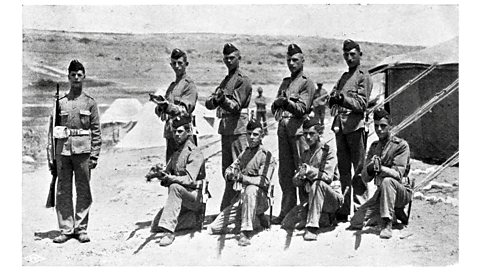
A ballad telling the true story of a misunderstood order which led to the unnecessary deaths of many British soldiers in the Battle of Balaclava during the Crimean War. Written in 1854.
Main themes
Honour and bravery, duty, sacrifice, patriotism and unquestioning obedience.
Tone and voice
The tone is rousing, urgent, evocative, serious and admiring. It becomes slightly more restrained and reverent towards the end of stanza four. The speaker is an anonymous third-person narrator who describes the battle but is not part of it.
Context
Alfred, Lord Tennyson was Poet Laureate during the reign of Queen Victoria. He wrote the poem shortly after reports of the Charge of the Light Brigade during the Crimean War. The poem focuses on honour, glory and sacrifice, rather than the senselessness of the soldiers' deaths.
Form and structure
The poem is a narrative poem with features of a ballad. It is divided into six irregular stanzas and uses repetition and a refrain to help hold the poem together. There is no consistent rhyme scheme, and the metre varies throughout. The most common rhythm is dactylic, creating a driving, urgent movement.
Poetic devices to spot
- Allusion – "the valley of Death" references Psalm 23.
- Metaphor – "the jaws of Death" and "the mouth of Hell".
- Personification – Death and Hell are presented as if they can consume the soldiers.
- Repetition – "Rode the six hundred" and repeated references to cannons.
- Anaphora – "Theirs not to make reply / Theirs not to reason why / Theirs but to do and die".
- Forceful language – "volley'd", "thunder'd", "storm'd", "shatter'd".
- Imperatives – "Honour the charge they made! Honour the Light Brigade".
- Consonance – harsh sounds in "Cossack" and "shatter'd and sunder'd".
The Charge of the Light Brigade
by Alfred, Lord Tennyson
Ⅰ
Half a league, half a league,
Half a league onward,
All in the valley of Death
Rode the six hundred.
“Forward, the Light Brigade!
Charge for the guns!” he said;
Into the valley of Death
Rode the six hundred.
Ⅱ
“Forward, the Light Brigade!”
Was there a man dismay’d?
Not tho’ the soldier knew
Some one had blunder’d:
Their's not to make reply,
Their's not to reason why,
Their's but to do and die:
Into the valley of Death
Rode the six hundred.
Ⅲ
Cannon to right of them,
Cannon to left of them,
Cannon in front of them
Volley’d and thunder’d;
Storm’d at with shot and shell,
Boldly they rode and well,
Into the jaws of Death,
Into the mouth of Hell
Rode the six hundred.
Ⅳ
Flash’d all their sabres bare,
Flash’d as they turn’d in air,
Sabring the gunners there,
Charging an army, while
All the world wonder’d:
Plunged in the battery-smoke
Right thro’ the line they broke;
Cossack and Russian
Reel’d from the sabre-stroke
Shatter’d and sunder’d.
Then they rode back, but not,
Not the six hundred.
Ⅴ
Cannon to right of them,
Cannon to left of them,
Cannon behind them
Volley’d and thunder’d;
Storm’d at with shot and shell,
While horse and hero fell,
They that had fought so well
Came thro’ the jaws of Death,
Back from the mouth of Hell,
All that was left of them,
Left of six hundred.
Ⅵ
When can their glory fade?
O the wild charge they made!
All the world wonder’d.
Honour the charge they made!
Honour the Light Brigade,
Noble six hundred!
A link to this poem is available in the CCEA Poetry Anthology which can be downloaded from the CCEA website.
The BBC is not responsible for the contents of any other sites listed.
Summary
A ballad telling the true story of a misunderstood order which led to the unnecessary deaths of many British soldiers in the Battle of Balaclava, during the Crimean War. Written in 1854.
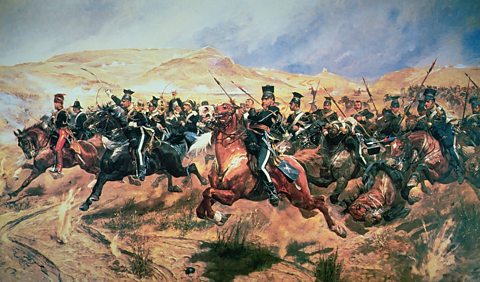
Title: Names the event the poem will describe, with the word “charge” suggesting a military advance and “Brigade” having similar warlike connotations. Use of definite article “the” could imply that this is a once-in-a-lifetime, momentous event.
Themes: Honour and bravery, duty, sacrifice, patriotism, unquestioning obedience.
Tone: Rousing, urgent, evocative, serious, admiring; slightly more restrained and reverent for the end of A grouped set of lines within a poem. four.
Speaker: A A third person narrator is not a character in the story. They see the events from the outside and tell the story using third person pronouns, like 'him', 'her' and 'they'. anonymous speaker who describes the battle in detail though they are not a part of it; the identity of the speaker is rendered insignificant compared to the detail of the heroes who fought and died in the battle.
Applicable context
Alfred, Lord Tennyson was a popular and influential English poet who held the post of A poet selected by royalty or the government who is asked to write poems for the organisation who selected them. during the reign of Queen Victoria. He was inspired to write The Charge of the Light Brigade because of a real-life event that happened during the Crimean War. The Crimean War was fought between Russia and a group of countries including the Ottoman empire, Britain, France and Sardinia from 1853 to 1856. The war started over disputes between Russia and the Ottoman Empire about protection and the power of specific religious groups.
The Crimean War is often described as the first ‘media war’. For the first time in history, newspapers carried eye-witness reports, detailing not just the triumphs of war, but the reality – the horrors and mistakes as well. It was common for people to support the wars in which their country was involved, simply because they rarely realised the full extent of the horror and devastation wrought on both sides; this was the first time the general public could access information that might cause them to question the validity of war. Nevertheless, it was largely seen as the ‘proper’ and patriotic thing to support the war by most. Despite Tennyson’s clear regret at “noble six hundred” being slaughtered in an unwise attack, he himself was supportive of the war effort; he carefully arranges the poem to focus on honour, glory and the sacrifice made by those who died rather than the senselessness of their deaths.
The Times newspaper's correspondent William Howard Russell used the then-modern technology of electric telegraph to send messages from the front line. Russell reported on an event during the Crimean War where around 600 soldiers from the Light Brigade charged at a heavily defended position due to a misunderstood order. Many died or were wounded and there was never a definite answer as to whose fault the mistake was. Tennyson wrote The Charge of the Light Brigade shortly after this happened, so the shock and frustration felt by many at the unnecessary deaths of the soldiers would have been very fresh. As Poet Laureate, he would have been expected, and often asked, to write about topical subjects and current events; he wanted to draw attention to the horrors that soldiers faced during the Crimean War and to the futility of war in general.
Only a little context is needed for each poem; where used, it should be applied to the point you're making.
Form and structure
The Charge of the Light Brigade is a narrative poem – it tells a story and does not follow a set pattern of rhyme or rhythm. It also features aspects of the ballad, a poetic form traditionally used in narrative poetry. Ballads normally feature repetition and rhyme, and were written to be remembered, read or sung aloud, often to music – this had helped people in the past to remember and pass on tales of heroism and other significant stories within their culture.
The poem is divided into six irregular stanzas to represent the 600 soldiers in the Light Brigade. The stanzas vary in length: those describing the height of the battle are longer and more filled with intense detail, while the final stanza, which contains only six lines, is made shorter than the others to leave a memorable impression at the end and reiterate Tennyson’s message – that we should remember the “noble six hundred”. While such variation could undermine his attempts to make it memorable, Tennyson uses repetition and a A short phrase or verse of a song or poem that is repeated at recurring intervals, especially at the end of each stanza. to hold the poem together more effectively and help the reader remember its story.
There is no consistent rhyme scheme in The Charge of the Light Brigade, but the poem does use recurring rhymes and A rhyme in which the stressed syllables of ending consonants match. Also known as a half rhyme or imperfect rhyme. (half rhymes) throughout – the uses of “blundered”, “thundered” and “wondered” halfway through a stanza to offer a partial rhyme with the final “six hundred”, for example. This gives some resonance and cohesion but is often uneven and unpredictable – consecutive lines may rhyme in couplets or triplets, or even with an alternate line, but there is no set pattern for the rhyming. Tennyson may have done this for various reasons, for example, to imitate the unpredictability of warfare or to mimic the uncertainty of the soldiers.
The The rhythm of a line of poetry based on how many syllables it has and where they are stressed or emphasised – likes beats in music. isn’t fully regular and varies throughout; there are between five and seven syllables on each line, again suggesting unpredictability. The most used metre throughout is dactylic – one is a three-beat unit with the first syllable stressed and followed by two unstressed syllables: a DUM-da-da rhythm that sounds driving and urgent, like the brigade’s charge toward their doom. In the following example, three dactyls are followed by a A verse that features trochees (If the first syllable is stressed, as for example in ‘ha-ppy’, but not the second, it is called a trochee). (a two-beat unit with the first syllable stressed):
| Half a league | half a league |
| DUM-da-da    | DUM-da-da |

| Half a league | on-ward |
| DUM-da-da   | DUM-da|
This main driving rhythm evokes the galloping hooves of the horses, adding a sense of urgency as they approach the enemy. The variations in rhythm that occur elsewhere in the poem once again help to mirror the chaos and disruption of the fight. Tennyson’s choice to use dactyls, where the stress is on the first beat of each metrical unit and then weakens for the rest of the length of the meter, can also be called a ‘falling rhythm’. The use of falling rhythm is appropriate as The Charge of the Light Brigade focuses on the devastating fall of the army in this particular battle.
Language and poetic methods
Allusion: The Charge of the Light Brigade uses an A quick reference - often to an image, character or place - from a work of literature or music or mythology. in the form of a Bible reference – the repeated phrase “the valley of Death” is taken from Psalm 23, “though I walk through the valley of the shadow of death, I will fear no evil”. It expresses the speaker’s faith in God through desperate situations, and readers would have recognised it as a Biblical phrase. Tennyson uses it to show the dire peril the soldiers are facing and their bravery in the face of such danger.
Metaphor: While Tennyson offers momentary insights of the horrific reality of battle, he also uses some A metaphor is a word or a phrase used for dramatic effect, to describe something as if it were something else. in the poem, both to enhance the vivid picture painted for the reader and to elevate the status of the Light Brigade, making them seem almost legendary in their exploits. The metaphors often double as other devices – “the valley of Death”, for example, is a metaphor but also an allusion to the Bible.
Likewise, “the jaws of Death” and “the mouth of Hell” are metaphorical but also employ A type of imagery in which non-human objects, animals or ideas are given human characteristics., making it seem that Death itself is targeting these brave men and that they are being literally eaten – consumed by Death as if they are prey to a predator. The shots that “thundered” and “storm’d” at them use metaphorical The use of language to create images and pictures in the reader's mind. of violent weather to capture a similar sense of being physically overwhelmed by forces of nature, as if the enemy is a storm that threatens to engulf and overpower them.
Boldly they rode and well,
Into the jaws of Death,
Into the mouth of Hell
Rode the six hundred.
Repetition: A feature of the A traditional poetic form used in narrative poetry. A ballad normally features repetition, regular rhyme scheme and rhythm. They were traditionally penned to be sung or read aloud. form itself, repetition features in the poem in several ways. The most obvious one is the use of the refrain that reinforces the central characters’ importance: “Rode the six hundred”. The repetition of this not only keeps them at the forefront of the reader’s mind but also emphasises how tenaciously they kept going in the face of everything they faced, and how they were united and together. Tennyson alters the line slightly at the end of stanzas four and five to show the impact of the attack on the six hundred men; we see that the deaths of many have meant that they are no longer six hundred in number but far fewer. In the last two lines of the fourth stanza, Tennyson uses repetition of “not” to emphasise this, briefly creating a more sombre and reverent tone than elsewhere in the poem.
More repetition occurs in stanzas three and five – “Cannon to the right of them, / Cannon to the left of them, / Cannon in front of them” (“behind them” in stanza five, to show they are riding back out). Tennyson uses this to emphasise the extent of the attack they rode into, as the repetition makes it sound overpowering and oppressive, showing they are surrounded. In stanza two, he uses another triple that repeats the same word at the start (a specific type of repetition known as The repetition of the same word, or words, at the start of successive lines or phrases.): “Theirs not to make reply, / Theirs not to reason why, / Theirs but to do and die”, starkly showing how the Light Brigade do not consider it their role to question orders, but to follow them unquestioningly – even if they know death will result.Forceful language: The poem is full of references to violence, death and weapons, which is unsurprising given the subject matter. The imagery that is used to describe the war is enhanced by the violent verbs Tennyson uses in stanzas three, four and five to give a sense of the intensity of battle: “volleyed”, “thundered”, “stormed”, “sabring”, “plunged”, “broke”, “reeled”, “shattered” and “sundered” all contain a violent energy and a sense of the extreme force and destruction caused. In the final stanza, Tennyson issues an instruction to the reader with his use of the Verbs that give commands, instructions, or requests directly to the reader or a specific character: “Honour the charge they made! Honour the Light Brigade” – this actively demands that everyone should acknowledge their sacrifice, insisting that the “noble six hundred” are deserving of respect and admiration.
Consonance: The repetition of similar consonant sounds in nearby words. occurs at various points to enhance the scene description with sounds that capture the mood – harsh ‘k’ sounds and hissing Alliteration or repetition of s sounds, producing a hissing sound like that of 's' or 'sh'. ‘s’ sounds in stanza four, for example: “Right through the line they broke; / Cossack and Russian / Reeled from the sabre stroke / Shattered and sundered”. These sounds evoke the cracking and shattering occurring in the fight, lending emphasis to the violence of the battle.
This is not a list of every method or notable use of language and structure in The Charge of the Light Brigade.
Look at the poem again. Can you find any of the following?
End-stopped lines
The triplet “Theirs not to make reply, / Theirs not to reason why, / Theirs but to do and die” in stanza two is end-stopped, lending it a kind of grim seriousness. The first two lines end with commas, but the final word “die” being followed by a full stop creates a brief and meaningful pause that allows the weight of the words to sink in; this shows the soldiers had no other option but to follow orders, and makes it seem like “to do and die” will be the inevitable fate of every man in the Light Brigade.
The fact the poem contains so many end-stopped lines conveys an overall steadiness that could suggest the determination, tenacity and bravery of the men, even as they gallop into battle – they are calm, steadfast and measured, and will do whatever they are asked.
Their's not to make reply,
Their's not to reason why,
Their's but to do and die:
A question asked in order to create a dramatic effect or to make a point, rather than to get an answer.
Tennyson offers two questions in the poem, neither of which need an answer because of the inevitability of the Light Brigade’s fate. The first, “Was there a man dismayed?”, occurs in the second stanza. The juxtaposition of the 600 brave riders with the idea of any one man being uncertain of his duty highlights the unlikelihood of any of them questioning their orders, even though we are next informed that “someone had blundered” and that there is a mistake at the heart of the order to attack.
The other question comes at the end, in the first line of the final stanza: “When can their glory fade?”. After the five previous stanzas the answer to this question is clear - their glory cannot ever fade because their sacrifice is symbolic of all those who lay down their lives for their country.
A poetic device where a sentence continues beyond the end of the line or verse.
Enjambment in the poem largely serves to create a sense of chaos and pace, with violence and danger on the battlefield causing the descriptions to spill over in the next line – “Cossack and Russian / reeled from the sabre stroke” is an example of this. The use of enjambment in the regular refrain “Into the valley of Death / Rode the six hundred” and its close variations serves to capture the forward momentum of the Brigade’s charge as they gallop on to meet the attack; it also helps to highlight the link between “the six hundred” and “Death” by allowing each to feature at the end of their line, making them more prominent.
If you have found these methods, consider what you know about the poem and the poet already.
What effects do these methods create? Why has the poet used them?
Other poems I could compare with The Charge of the Light Brigade?
Bayonet Charge – while the poets’ attitudes to war seem broadly different, both poems take place during a battle charge and use some of the same poetic methods to evoke a sense of the soldiers’ experiences for the readers.
Vitaï Lampada – written about 50 years after The Charge of the Light Brigade, this also concerns an historical battle, uses a powerful refrain throughout and celebrates the archetypal British soldier’s sense of duty and bravery, although there are subtle differences in the overall messages and attitudes to war in the poems.
Who’s for the Game? – both Pope and Tennyson were supportive of the wars about which they were writing; Pope’s jingoistic attempt to drum up recruitment can be contrasted with Tennyson’s post-mortem of an actual battle in many ways, but both use ideas about honour and questions about glory to encourage readers to view war as a noble thing.
This podcast gives some pointers on comparing The Charge of the Light Brigade to Poppies, another poem in the Conflict anthology:
Listen to a podcast comparing The Charge of the Light Brigade, by Alfred, Lord Tennyson, and Poppies, by Jane Weir.
ANNOUNCER: BBC Sounds: music, radio, podcasts.
TESTAMENT: Hello and welcome to the Bitesize poetry podcast. I'm Testament, a writer, rapper and poet. In this series I'm gonna tell you how to write about poetry in your exam. It's a good idea to start at the beginning and listen to the first three episodes in this series, so make sure you check those out. In this episode I'm comparing two poems. Make sure you've got a pen handy because it's really useful to make some notes and write down some quotes as we go.
TESTAMENT: We're talking about 'The Charge of the Light Brigade' by Alfred Lord Tennyson and 'Poppies' by Jane Weir. Victorian poet Tennyson wrote 'The Charge of the Light Brigade' in 1854, so he's not around to answer my questions. But luckily Jane Weir is here with me to talk to you about her beautiful poem 'Poppies'. Hello, Jane.
JANE: Hi, Testament.
TESTAMENT: We're going to talk about three key points today: context – when and why the poems were written; form – how they are written; and theme – remembering those who were lost. While these poems are about commemorating, honouring, and remembering those who've died in war, they're very different. We'll start with ‘Charge of the Light Brigade’. Like I said, it's written in 1854. What's it about? Jane?
JANE: It's about a group of men riding into battle during the Crimean War. And it concentrates on the men and how they carried out their orders regardless of any kind of personal risk to themselves.
TESTAMENT: Right. So Tennyson wrote this to commemorate roughly six hundred men in battle in the Crimean War. And this battle was famously badly organised. It was a disaster. But Tennyson's point is that it doesn't stop these men being brave. I wanna turn now to your poem, Jane, 'Poppies'. Even though you wrote it, it's a bit more of a tricky question. What's happening in, in your poem?
JANE: Well, my poem isn't actually located in the battlefield like Tennyson's is. And it's about those people that are left behind. The child is remembered alive as well as possibly dead. That's important to say because you never really truly know in my poem. You could read the poem as a ghost poem or a premonition of a child's death. It's ambiguous.
TESTAMENT: That's an important point. Poems can be ambiguous. They can have more than one meaning or leave you with a feeling of uncertainty. So you the reader can decide what you think it's about. We want you to have your own opinions about poems, but you've always got to remember to back it up with a quote in the exam.
TESTAMENT: Okay, for our first key comparison, let's dig into the context a little more. Both these poems are about conflict and memory, and there's a really great quote you can use from 'The Charge of the Light Brigade'. This is a line from near the end of the poem, so it's a thought Tennyson wants to leave you with. And it says, "Honour the charge they made." It's like a command to the reader, isn't it? What do you think "honour" means here, Jane?
JANE: Er, meaning remember and respect. So for me when Tennyson talks of honour he's speaking of it in an impersonal way.
TESTAMENT: And if you can't remember the whole line, "Honour the charge they made," you can just remember the word "honour". Write it down, underline it, because honour is so central to this poem. Thinking about memory, Jane, your poem is called 'Poppies', and we wear poppies to honour and remember. Jane, is there a quote from your poem 'Poppies' that you'd like to talk about?
JANE: "I traced the inscriptions on the war memorial, leaned against it like a wishbone." I think that's a way of thinking about the dead, recording them in some way. I mean, it's an intimate moment for the mother. She walks up through the graveyard and she stands against – I call it the wishbone, which is specifically the war memorial, which often kind of looks like a wishbone if you-, if you know what one looks like.
TESTAMENT: What is a wishbone, for those who don't know?
JANE: You know when you get a chicken carcass? It sounds a bit bizarre.
TESTAMENT: It's like a roast chicken, yeah.
JANE: It's like a roast chicken. And you get that little bone at the back of it. We always used to take it out, pick it clean, and then I'd hold one end of it and my mum would hold the other, and then we'd pull on it and make a wish. And the wish in my poem is wishing the child back.
TESTAMENT: With multiple meanings.
JANE: Yeah.
TESTAMENT: So it looks like a wishbone. Also it-, it conjures up and it creates that image of pulling on a wishbone, a chicken bone, and making a wish for something better.
JANE: That's right. And it's an intimate act, something that connects people.
TESTAMENT: Okay, so now we've got some context we're now going to compare the form of these poems. Jane, your poem is a dramatic monologue. That means it's a poem where a character – the speaker – tells their story. Why did you choose this form?
JANE: I think dramatic monologues are… are brilliant because they're very, very direct and immediate, and you feel sometimes that you're actually completely inside the person or the character's head, and you can use a lot of creativity and play around with language and imagery and metaphor. So all those things are used in the line like, "I resisted the impulse to run my fingers through the gelled blackthorns of your hair." It's a sort of simple, tender act of play and love.
TESTAMENT: That's a really powerful one. I'm gonna repeat the quote again. "I resisted the impulse to run my fingers through the gelled blackthorns of your hair." Now, 'The Charge of the Light Brigade' is a ballade. A ballade is a really old poetic form and it tells a story. So, often, like in this case, it's a story of a real-life event. They were often used to commemorate historically significant events.
The interesting thing about this poem is that it just happened. And he wants to give this recent event significance and weight. He wants it to go down in history? Also important is that the poem is in six stanzas. A stanza is a group of lines in a poem. These can change length as the story changes, as it does here: as the men go towards danger, the final stanza is only two lines long – a short, sharp conclusion.
TESTAMENT: And for our last key comparison, let's dig more into a key difference between these poems. They both share a theme of remembering those who've died at war. Jane, your poem 'Poppies' is much more personal. We hear the word "you", whereas in 'The Charge of the Light Brigade' they're written about as "the noble six hundred." It's a really useful quote, isn't it?
JANE: And Tennyson repeats that: "the noble six hundred." I mean, I think he does it – in a weird way he's also trying to create maybe the sound of the battlefield? I think he's trying to create some kind of thunderous momentum in the poem.
TESTAMENT: With your poem, because it's so intimate we really feel that sense of loss that the mother has and what it means to her. There's no glorifying war here. There's a line in your poem, Jane, which I think shows this really well. Here it is. "Your playground voice." It's such a tender line.
JANE: A parent who loves and knows their child can often pick out their voice amongst a whole crowd in a playground. And I've tried to do that with the poem, to identify a single child out of a mass of other sounds and other voices, and to pick up on the softness of that. And I do that by using the language of textiles in my poems, both soft and hard textiles.
TESTAMENT: That's a massive contrast with ‘Charge of the Light Brigade’ where we've got the sounds of canons and flashing sabres – you know, which is a type of sword.
JANE: The missiles and the canon and the shot, they're also very hard s-, are kind of symbols of violence.
TESTAMENT: Okay, so we can go through the poems and find language that shows us the contrast between them. In 'Poppies' we've got the soft textile language. Words like "lapel", "blazer" and "hair" all support this intimate feeling of "your playground voice."
JANE: Mmm.
TESTAMENT: And we can contrast this with the impersonal line in Tennyson's poem: "noble six hundred." If we look through that poem, there are lots of hard metal words. Remember, just a word can be a good quote. So, you can use "guns", "canon", "shell". But Tennyson's poem can sometimes be seen as using this grand impersonal language to show that these men were heroes. However, there could be room for ambiguity here too. The men might be brave and noble, but the war ought not to be.
TESTAMENT: Okay, so let's quickly run through what we've learnt today to wrap this all up. 'The Charge of the Light Brigade' is a ballade written to commemorate the "noble six hundred." Why? Because…?
JANE: Someone had blundered.
TESTAMENT: While 'Poppies' is a dramatic monologue in which the speaker of the poem is a parent thinking about a child. The language is soft and personal. Quote?
JANE: "Run my fingers through the gelled blackthorns of your hair."
TESTAMENT: 'The Charge of the Light Brigade' is about, quote, "honour", while in 'Poppies' we're thinking more about longing for one specific person. Can you give us a quote, Jane?
JANE: "Traced the inscriptions on the war memorial, leaned against it like a wishbone."
TESTAMENT: Jane, thanks so much. You really helped to show what poetry can do. We've got two poems that are about the same thing, about remembrance, but are so different because of the intent of the poet and the meaning that is made with language, image and form. Thanks so much for listening to the Bitesize poetry podcast. Remember, you can check out the rest of our podcasts, and you can subscribe now on BBC Sounds.
Example questions
Use these questions to hone your knowledge of The Charge of the Light Brigade, and to practise using your notes and analysis in organised paragraphs that focus on how particular themes or ideas are shown in the poem. There is an example answer in the following section to demonstrate how you can do this.
- How does Tennyson show the characteristics of the Light Brigade members in The Charge of the Light Brigade?
- How does Tennyson portray the intensity of the battle in The Charge of the Light Brigade?
- What poetic methods does Tennyson use to show his attitude to war and remembrance in The Charge of the Light Brigade?
- How does Tennyson create a tone of admiration in The Charge of the Light Brigade?
Example answer
Below is a demonstration of how to use the material in this section to answer an example essay question. The answer below is not a full essay, but only an extract of a longer answer showing some of the points that could be made.
Q: How does Tennyson show the characteristics of the Light Brigade members in The Charge of the Light Brigade?
A: Tennyson’s ballad The Charge of the Light Brigade was written just a few weeks after news reports of a disastrous real-life charge in the Battle of Balaclava in 1854, resulting in many unnecessary deaths. However Tennyson felt personally about this, his role as Poet Laureate would have strongly influenced how he wrote about the event, while the fact the poem was based so closely on a recent real-life tragedy means he would have wanted to pay tribute to the real people who lost their lives. Because of this, Tennyson portrays the Light Brigade members as honourable, noble, brave and self-sacrificing, focusing on their heroism in battle rather than dwelling on the despicable loss of life caused by the fact that “someone had blundered” and given a mistaken order. The speaker in the poem is a Where the story is written from the point of view of someone not involved in the action who is not part of the action and about whom we know nothing – Tennyson focuses solely on the dangers faced and the bravery of the soldiers facing it, characterising them all as heroes.
The bravery of the men is repeatedly shown in the poem through a number of techniques. The Charge of the Light Brigade uses an allusion in the form of a Bible reference – the repeated phrase “the valley of Death” is taken from Psalm 23, “though I walk through the valley of the shadow of death, I will fear no evil”. It expresses the speaker’s faith in God through desperate situations, and readers would have recognised it as a Biblical phrase. Tennyson uses it to show the dire peril the soldiers are facing and their bravery in the face of such danger. Likewise, personification is used in the phrases “the jaws of Death” and “the mouth of Hell” making it seem that Death itself is targeting these brave men and that they are being literally eaten – consumed by Death as if they are prey to a predator. The metaphors used show that although they face such danger, the men carry on with honour and valour, showing them to be brave.
This essay could go on to make the following points, backed up by evidence from the poem and detailed analysis of that evidence:
Tennyson uses a rhetorical question, “Was there a man dismayed?”, to show that not one of the six hundred cavalrymen in question showed concern about the order to charge, demonstrating their bravery and sense of duty.
Tennyson uses repetition in the form of a refrain: “All in the valley of Death / Rode the six hundred”. The repetition emphasises the way they keep going not matter what, showing their tenacity and courage. The repetition of “six hundred” also shows their unity as a fighting force – they ride together, loyal and fearless. The use of dactyls in the poetic metre means the poem mimics the rhythm of the galloping horses, showing them always moving forward.
In the final stanza Tennyson uses an imperative commanding the reader to “Honour the charge they made!”, showing the Light Brigade to be worthy of remembrance, respect and admiration for the sacrifice they made. The essay could note that the poem never focuses on blame for the mistaken order or the senseless loss of life, but on paying tribute to the men, particularly those who died.
Test your knowledge of The Charge of the Light Brigade
Further study
In Our Time. podcast
Melvyn Bragg and guests discuss the Charge of the Light Brigade and its iconic status in the British historical imagination.
Great Lives. audio
Andrew Motion chooses the troubled life of Alfred, Lord Tennyson, Poet Laureate for over 40 years
An eyewitness account. video
In a letter home from the Crimean War to his younger brother, Richard Temple Godman describes witnessing the Charge of the Light Brigade in 1854.
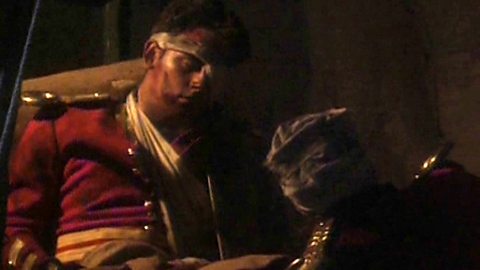
The Charge of the Light Brigade - analysis pt 1 of 2. video
Sheila Parry analyses The Charge of the Light Brigade. She discusses how Tennyson was influenced by an article in The Times, his use of patriotic language and the audience he was writing for.
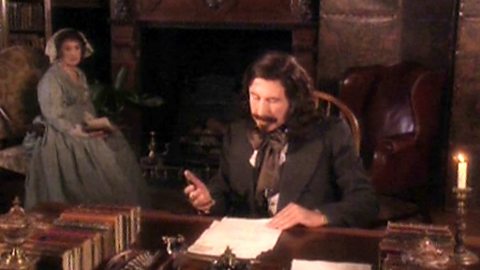
The Charge of the Light Brigade - analysis pt 2 of 2. video
Sheila Parry analyses The Charge of the Light Brigade. She explores how the action, fear and energy of the battle is captured through Tennyson’s use of language.
Texts in Time: The Way it Was. collection
A collection of useful videos around The Charge of the Light Brigade, by Alfred, Lord Tennyson.
More on Anthology Three: Conflict
Find out more by working through a topic
- count3 of 14
- count4 of 14
- count5 of 14
- count6 of 14