Introduction
Human activities can have a significant impact on marine ecosystems, including through commercial and recreational fishing. Fishing provides food and livelihoods for many people around the world, but concerns have been raised about the effects of fishing on some marine species and habitats. How has fishing changed over time, and what effects can it have on marine food chains?
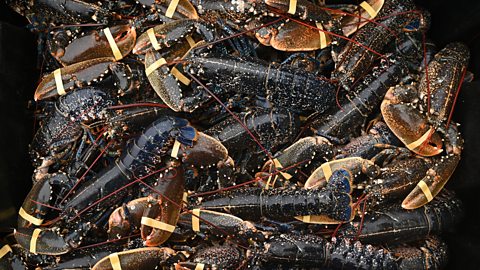
The number of lobster and fish in our oceans, as well as other ocean life, is declining. How is this happening?
What is overfishing
Overfishing is one factor that can contribute to declines in some marine populations. This happens when fish, lobsters and other marine species are caught faster than their populations can recover through reproduction. In some cases, overfishing has contributed to significant reductions in population size and may increase extinction risk.
Fishing has changed
Many scientists say the problem is that fishing techniques have improved. The modern fishing industry uses the latest technology like radar, helicopter spotters, planes and giant fishing boats to increase their Refers to the amount of fish that is caught., or amount of fish they catch. Large nets, often as big as football pitches are sometimes used to pick up everything in their path.
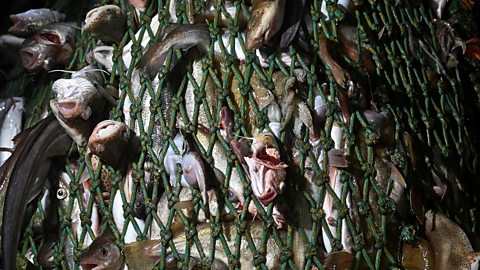
This technology enables large companies to fish at greater depths and in areas that are A place where animals or plants live. for a wide variety of fish and marine life.
Lobster fishing
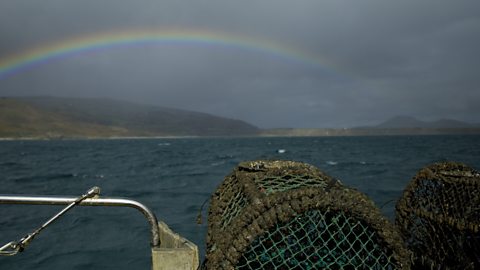
Some fishermen have adopted measures intended to support lobster populations and fisheries management. Lobster numbers are falling in Wales and therefore a group of lobster fishermen have formed the Welsh Seafood Cluster. They have agreed to follow some simple rules to protect the lobster population off the Welsh coast.
- They have agreed that they will only catch bigger, older lobsters who are not carrying eggs.
- Any smaller lobsters that are not yet fully grown, or any lobsters that are carrying eggs will be returned to the sea where they can continue to breed and lay eggs.
The aim is to help the lobster population to recover.
Some fishermen are also using specially-modified lobster pots that are designed to let smaller, younger lobsters escape. Bigger holes have been created to let lobsters that are under five years old swim free.
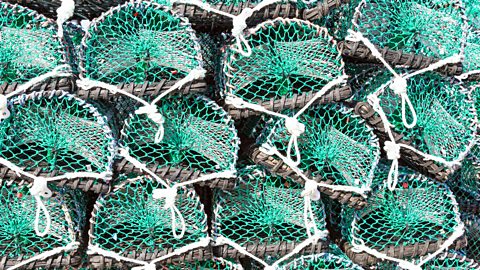
Video: The future of the Welsh lobster population
Learn about lobster fishing practices used by Brett Garner and their potential impact on Welsh lobster populations.
How does overfishing affect the food chain?
A food chain shows how plants and animals get their energy.
- A food chain always starts with a producer. This is an organism that makes its own food.
- A living thing that eats other plants and animals is called a consumer.
- A predator is an animal that eats other animals. The animals that predators eat are called prey.
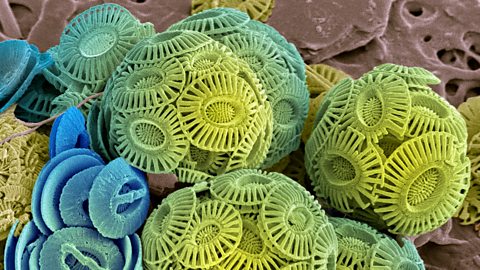
Image caption, Phytoplankton
The phytoplankton, microscopic tiny organisms that provide the base for the entire marine food chain, is the producer. It gets its energy from the sun.


1 of 4
Changes in fish populations can affect larger fish and sea mammals as well as by the fish and An animal with a hard, jointed shell. There are many kinds of crustaceans, including crabs, crayfish, lobsters, and shrimps. that we catch.
Fishing limits are used in some fisheries to help manage fish populations.
Approaches used to manage fish stocks
Many governments have set limits to protect the fish and marine life population. They control how, when and how much fish can be caught.
Some countries designate marine protected areas that are intended to support conservation and habitat recovery
Some seafood products carry certification schemes, such as those of the Marine Stewardship Council, which aim to identify fisheries that meet specified environmental standards
Reported outcomes of management measures
Some studies have found that fisheries management measures can contribute to the recovery of certain fish populations. Scientists have proven that taking steps to decrease overfishing and protect our ocean life does have a positive effect on the population of our oceans. Supporters of sustainable fishing argue that it can help maintain fish stocks while allowing continued fishing activity and also making sure there is enough ocean life for the future.
Quiz: Can lobster fishing be sustainable?

Where next?
How can we clean up ocean plastics?
Tonnes of plastic waste is discarded into the oceans each year. What can we do to tackle this problem?
How can seagrass help slow down climate change?
Did you know that seagrass is known as "the lungs of the ocean"?
KS2 Sustainability
A collection of lessons for pupils aged 7 to 11
More on Food
Find out more by working through a topic
- count2 of 2