What you need to know about Lyme disease
In recent weeks, actor, comedian and Celebrity Traitors star Miranda Hart has been open about her Lyme disease diagnosis and the impact it has had on her life.
The announcement prompted a slew of questions online: what is Lyme disease? How can it be cured? And why do so many celebrities seem to get it?
So, here at BBC Bitesize, we've put together a guide to give you the low down on all you need to know about Lyme disease.

1. What is Lyme disease?
Lyme disease, which is sometimes known as Lyme borreliosis, is a bacterial infection spread to humans by ticks - small, eight-legged arachnids that feed on the blood of mammals, birds and humans.
There are a few different types of tick that can spread Lyme disease. In parts of North America, the blacklegged tick, also known as the deer tick (Ixodes scapularis), is a major carrier of the bacteria that cause Lyme disease. It is particularly widespread in the eastern United States. The tick can pick up the bacteria by feeding on an infected animal and then pass them on to humans when it bites them. In the UK, the main tick responsible for spreading Lyme disease is Ixodes ricinus, better known as the sheep tick or castor bean tick.
Generally, a tick has to be attached for a number of hours for the infection to spread, so prompt removal of a tick can help greatly reduce the likelihood of contracting Lyme disease. A tick is known as a vector because it can carry and spread an infection from one animal or person to another.
2. How do you know if you have Lyme disease?
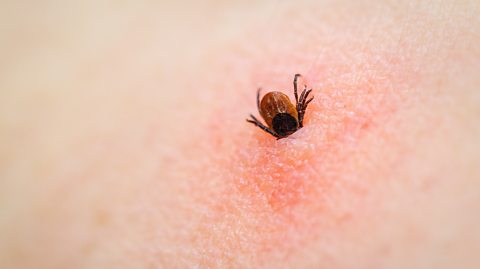
The NHS and the US Centers for Disease Control and Prevention (CDC) both list several symptoms that could indicate Lyme disease.
The most notable of these is a rash that can develop around the area of the initial tick bite. According to the NHS, this rash tends to appear around one to four weeks after the initial bite, though can take up to three months to show up! Whilst not usually hot or itchy, it can sometimes be slightly raised or bumpy.
Another notable aspect of the Lyme disease rash is its shape, often taking on the appearance of a target or bullseye.
Other common symptoms include a headache, high temperature, muscle pain, joint pain, extreme tiredness and loss of energy.
For more information on the various signs and symptoms of Lyme disease, check out the NHS website.
3. How common is Lyme disease in the UK?
As far as the UK is concerned, Lyme disease is pretty uncommon.
According to the UK Health Security Agency (UKHSA), there were 1,581 laboratory-confirmed cases of Lyme disease in England in 2024. Though this is anticipated to be a slight underestimation of the total number of cases, as some are dealt with by GPs without being laboratory confirmed. Not all these results mean someone has a new or active infection. Some may show that a person has been exposed to the bacteria in the past. It's also important to note that this figure covers England, rather than the whole UK. Scotland, Wales and Northern Ireland have their own arrangements for monitoring cases of Lyme disease.
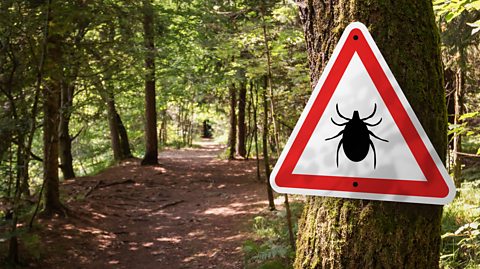
Ticks carrying the disease tend to be more prevalent in grassy or wooded areas, particularly during the spring and summer. It should be said, though, that the majority of ticks found in the UK do not carry Lyme disease. Research suggests that around 4% of ticks in England carry these bacteria, although the proportion can vary depending on the location.
In other areas of the world it is more common, such as the US. The US states most affected by Lyme disease tend to be those in the Northeast, upper-Midwest and mid-Atlantic areas of the country.
4. Is Lyme disease curable?
Lyme disease is most effectively treated when caught early, usually via antibiotics prescribed by a GP.
Most people with Lyme disease will begin to feel better after treatment, though the NHS states this can take a little time - in some cases, years.
Other methods of combatting Lyme disease revolve around prevention, as opposed to treatment. This includes regularly checking for tick bites after spending time in grassy or wooded areas, using insect repellent and ensuring that you're well covered when spending time outdoors.
5. Can cats and dogs get Lyme disease?
Yes, both dogs and cats can get Lyme disease.
It's more common in dogs than cats, but both acquire the condition in much the same way as humans - being bitten by infected ticks.
According to the RSPCA, symptoms of Lyme disease in pets can include loss of appetite, fever, lameness and joint pain amongst other things. As with humans, this is generally treated via a course of antibiotics which will be prescribed by a vet.
If your pet spends time outdoors, it's a good idea to check their coat regularly for ticks, particularly after walks through long grass or woodland. Your vet can advise you about ways to protect your pet from ticks.
6. Why do so many celebrities have Lyme disease?
Several celebrities have spoken publicly about being diagnosed with Lyme disease. But does this mean famous people are more likely to get the condition, or do we simply hear more about their experiences?
One reason we might hear more about celebrity diagnoses is that famous people have a much larger public platform. When they share their experiences, their stories can attract widespread media attention and help raise awareness of the condition.
There may also be a geographical link. Lyme disease is particularly common in parts of the United States, including the Northeast and upper Midwest. Some popular destinations in these regions, including the Hamptons in New York State, are also areas where people can encounter ticks. Celebrities who live in or spend time in these areas may therefore be exposed to ticks, just like anyone else.
However, this doesn't mean we know where any individual celebrity contracted the infection, or that famous people are more likely to develop Lyme disease than anyone else.
Notable famous folk to speak out publicly about having contracted Lyme disease include Justin Timberlake, Justin Bieber, Avril Lavigne, Bella Hadid, Miranda Hart, Kelly Osbourne, Shania Twain and Martine McCutcheon.