
Introduction
This may look like a very ordinary marine plant, but seagrass can have climate change reversing superpowers.
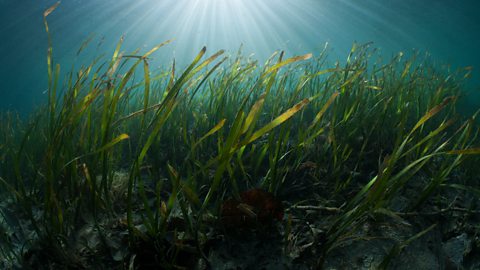
This Low in rank, importance or status. grass, which grows along the ocean bed, has been described as a ‘wonder plant’. It has the amazing ability to absorb carbon dioxide gas from the atmosphere.
Scientists have discovered that seagrass could have a vital role to play in the battle to reverse climate change.
Why is this important?
The planet is heating up. This is known as global warming. Carbon dioxide is one of the gases which contributes to this process.
It is known as a greenhouse gas, this means that it traps heat in the Earth’s atmosphere. As these greenhouse gasses build up they form an invisible ‘blanket’ that traps heat from the Sun. This is causing temperatures to rise here on Earth and is making the weather more unpredictable and extreme.
Approaches to address climate change
Scientists, governments and organisations have proposed a range of approaches to reduce the amount of carbon dioxide in the atmosphere. These include reducing greenhouse-gas emissions from activities such as energy production and transport, and increasing the amount of carbon stored by natural environments
Trees and other plants absorb carbon dioxide from the atmosphere and store carbon as they grow. Through photosynthesis, they also release oxygen into the environment.
The Earth's lungs
The Amazon rainforest in South America is often described as the lungs of the planet. This is because of its ability to absorb so much of the Earth’s carbon dioxide and to produce oxygen.
The trees absorb carbon dioxide from the atmosphere and release oxygen into the environment.
What about seagrass?
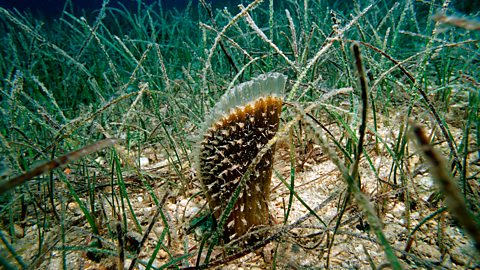
Just like trees and plants on land, seagrass can absorb large quantities of carbon dioxide from the ocean. It stores the carbon and releases oxygen back into the environment.
But seagrass also has a superpower. It can absorb large amounts of carbon dioxide. Each year seagrass absorbs as much as 10% of the ocean’s carbon dioxide.
The same area of seagrass can absorb 35 times as much carbon dioxide as an area of tropical rainforest.
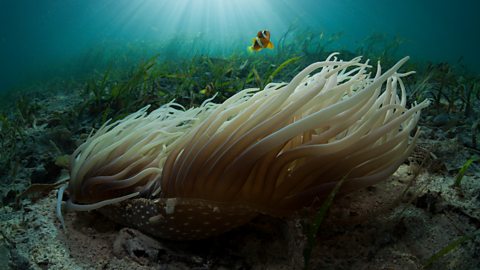
These seagrass beds also provide the perfect habitat, or home, for thousands of different species of animals.
Seagrass super-powers
- Seagrass can take carbon out of the atmosphere around 35 times faster than tropical rainforests.
- Seagrass produces oxygen.
- Seagrass is an important underwater habitat for thousands of different species of animals.
But this incredible underwater habitat is under threat. In the UK researchers believe that around 92% of our seagrass has been lost during the last century, or hundred years.
Seagrass is now critically endangered, that means action must be taken to ensure that seagrasses do not become extinct. Across the world, communities of scientists are working hard to make sure this doesn’t happen.
Project Seagrass
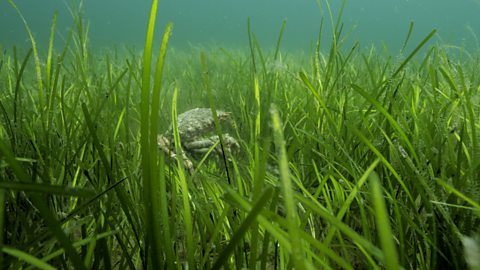
In Wales a team of scientists are determined to help the seagrass beds recover. They are working hard to collect over a million seagrass seeds and to replant them in Dale, Pembrokeshire.
Marine biologists are busy replanting seagrass shoots. Soon they hope the area will be a thriving seagrass meadow, like a carpet on the ocean floor soaking up tonnes and tonnes of carbon.
Video: Seagrass meadows, an important underwater habitat
Watch the Project Seagrass team as they replant seagrass to help slow down climate change.
Reducing carbon emissions
A range of actions have been proposed to reduce greenhouse-gas emissions, including:
- Tree planting and habitat restoration projects.
- Walking or cycling as alternatives to some journeys where practical.
- Reducing energy use by switching off lights and electrical devices when they are not needed.
Quiz: How can seagrass help slow down climate change?

Where next?
How will climate change impact the seaside?
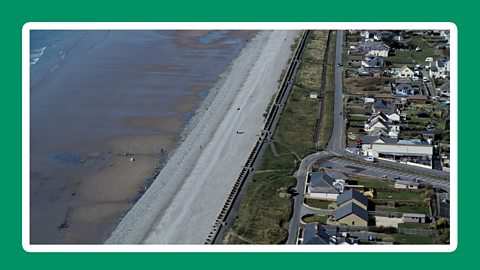
Learn about greenhouse gases, global warming, and melting ice caps and their impact on the village of Fairbourne in north Wales.
What predators are in the Celtic Sea?
Learn about the different species of wildlife in the deep oceans around Wales.

KS2 Sustainability
A collection of lessons for pupils aged 7 to 11

More on Climate
Find out more by working through a topic
- count2 of 2