All about by-elections
It seems like they’re becoming more common, with political races in places like Gorton and Denton, Makerfield and Clacton-on-Sea dominating headlines in the UK in recent months.
But what is a by-election? Here, BBC Bitesize breaks down everything you need to know about them – from what they are and why they happen, to who can stand and vote in them.
What is a by-election?
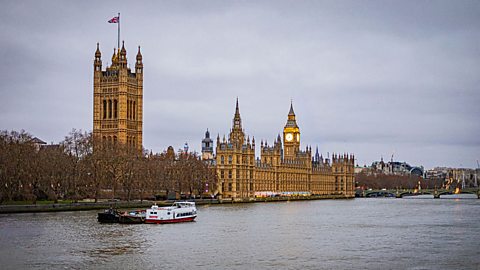
In the UK, we have general elections – when voters are able to choose their Member of Parliament – every five years, though they can be called earlier.
Each MP represents one constituency, which is a specific area of land. They speak for the people who live there in the House of Commons, which is why constituencies are also called seats.
For example, current Prime Minister Andy Burnham’s seat is Makerfield near Manchester. But to become the MP there, he had to stand in a by-election – when a seat becomes vacant between general elections.
This is essentially a small-scale version of a general election that only happens in one constituency. Only the eligible voters who live in that place go to the polls.
Why are by-elections called?
This can happen for a number of reasons. An MP might have resigned, died, been declared bankrupt, taken a seat in the House of Lords or been convicted of a serious criminal offence.
By-elections can also happen when voters in a constituency sign a recall petition. A recall petition is triggered by the Speaker of the House of Commons, the person responsible for keeping order in Parliament, when certain conditions are met. For example, this could be because an MP has been convicted of a crime or suspended from Parliament. Registered voters in the constituency then have six weeks to sign the petition. If at least 10% of eligible voters sign it, the MP loses their seat and a by-election is held.
Interestingly, though, a by-election isn’t triggered if an MP changes political party. For example, if someone is elected as a Liberal Democrat MP but ‘defects’ to the Greens, they can keep their seat until the next general election.
How do by-elections work?
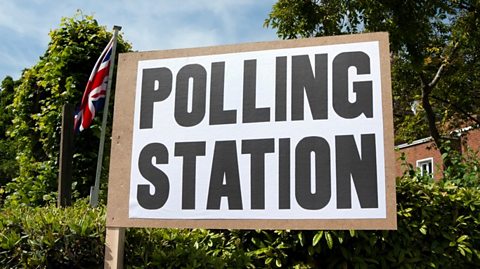
In between a by-election being triggered and the election actually taking place, the constituency has no representative. During this period, neighbouring MPs may sometimes help constituents informally.
But how does it all work? It starts with the Chief Whip of the party whose MP held the seat. This is the person, either an MP or a member of the House of Lords, in charge of party discipline – like making sure MPs turn up to vote and support the party leader’s decisions.
The Chief Whip ‘moves the writ’ to start the process of a by-election. This is a motion, or request, for the Speaker to ask MPs if they agree to the by-election happening.
If they do, the Speaker sends out a warrant to the Clerk of the Crown, a senior civil servant. This person then sends the writ – the order for the election to go ahead - to the Returning Officer for the specific constituency. This person is responsible for overseeing the election.
In general, by-elections take place between 21 and 27 working days from when the writ is first issued. This is usually done within three months of the seat becoming vacant.
If a seat becomes vacant towards the end of a Parliament – meaning the five-year period between elections – then a by-election isn’t called, because it will be filled at the general election anyway. And if there are several vacant seats at once, multiple by-elections can happen on the same day. This happened on 18 June 2026, when three took place.
Whoever is elected only serves for the remainder of that Parliament. So, if a by-election is called two years after the last general election, they will only serve for three years or until an early election is called, when they can stand again for their seat.
Who can stand in a by-election and who can vote in them?
The rules for voting in by-elections are the same as in general elections. For example, you must be registered to vote and be aged 18 or over on polling day.
You must also be a British, Irish or qualifying Commonwealth citizen, and you must either be living at a UK address or be a UK citizen living abroad who is eligible to vote under the current overseas voter rules.
Some people aren’t legally allowed to vote – such as members of the House of Lords or anyone who has been found guilty of a crime relating to an election in the last five years.
To stand as a candidate in a by-election, you have to meet the same citizenship requirements as for voting. Not everyone can stand as an MP. For example, active civil servants, police officers, judges, members of the armed forces and anyone serving a prison sentence of more than a year are disqualified.

While you don’t have to live in or be registered to vote in that specific constituency yourself, you do need the signatures of 10 people who are registered to vote there.
You might have heard people talk about deposits in relation to by-elections. That’s because all candidates have to pay £500 to stand, which they only get back if they win at least 5% of all the votes cast.
This is supposed to deter frivolous ‘joke candidates’ from standing, though it doesn’t always work. The most notable example of this is probably Count Binface, a satirical character created by comedian Jon Harvey who wears a bin on his head.
Binface has stood in two general elections. He is due to stand against Reform UK leader Nigel Farage in the Clacton by-election in August 2026. He stood in Uxbridge and South Ruislip in 2023 after former Prime Minister Boris Johnson resigned, and in Makerfield in 2026 where Andy Burnham won.
In fact, a total of 34 candidates are standing in Clacton – making the ballot paper almost a metre long, the longest in British history.
When was the first by-election?
Parliament’s roots stretch all the way back to the 13th century, but the modern by-election didn’t begin to take shape until Henry VIII’s reign almost three hundred years later.
Up until then, if a seat was vacated, it was simply left empty until the next Parliament sat. But Thomas Cromwell, the king’s chief minister for most of the 1530s, developed a procedure whereby the monarch could issue a writ to fill vacancies sooner.
Sometime between 1530 and 1532, what historians consider to be the first recorded by-election took place in Stafford to replace its MP, who had died. Since then, thousands of by-elections have been held. They are often viewed as a test of different parties’ popularity at a national level, not just at a local one.
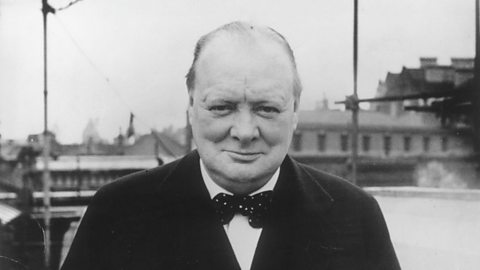
Some of the most significant include Oldham in 1899, which was the first time Sir Winston Churchill ran for Parliament. The 25-year-old lost to the Liberal Party, though he became an Oldham MP the next year.
Bermondsey in 1988 holds the current record for the by-election with the biggest swing since the Second World War. 'Swing' means the shift in voters' support from one party to another between two elections. In this election, 44.2% of previous Labour voters shifted to the Liberals.
It’s worth noting that there are also local government by-elections, which follow a similar process to parliamentary ones. These happen when a local councillor vacates their seat between two sets of local elections, and take place in the specific ward that councillor represented, not the entire area covered by the council as a whole.
This article was written in August 2026