The films cover:
- the experiences of a child who feels his body and appearance is not ‘good enough’ because of what he sees on the internet and by comparing himself with his peers
- dealing with negative feelings about yourself
- some ideas for dealing with difficult situations and some things that can help a child cope with feelings like this
In the first film Kareem feels unhappy with his appearance – and tries to change his body through physical exercise and not eating properly. With the help of his friend, he comes to see that he is reacting in a harmful way, and that he needs to find better ways to deal with his negative feelings about his image, and feel happier. The second film discusses some ideas for coping and developing strategies to deal with a situation like this.
Themes: image; influence of social networks; dealing with negative feelings; mental health; managing feelings; support from friends; asking for support.
Kareem's story: Film 1
Everyone probably has some doubts about how they look – but a few months ago it got really bad for me.
I’d been selected for the Year 9 rugby team. I was really excited about it! But I started to notice that I didn’t look like some of the other boys.
I started changing for practice in the toilets‘ cause I was embarrassed about my body.
One time I tripped and came last on our lap around the field, and one of my “team-mates” shouted some joke about my weight.
I pretended that I didn’t care and laughed along. But inside I felt like I was sinking.
I decided I was gonna do whatever it took to change how I looked. It became an obsession.
Searching for how to get a six pack and how to lose weight fast. I skipped meals and worked out until I was shattered. But I still hated my body, and I often felt light-headed and sick.
Online, it seemed like everyone had this “perfect body”, and they seemed so happy. I thought if I could look like them, I’d be happy too.
One day my friend, Sian, came to take a picture of the rugby team for the school website, and I said something like, “You don’t want me in the pic – I look awful!”
I thought she would laugh but she just looked worried.
After practice, she asked if I was okay. I told her how I was feeling.
She said she’d had some struggles with her body image too and that she’d spoken to the school well-being counsellor. She said I should go and see him.
I kept putting it off. I was worried what people would think if they found out.
But I was fed up with feeling so bad about myself and one day I just made myself go.
He listened to me – and he told me lots of people felt the same way as I did. He suggested I’d been feeling this pressure because of all the unrealistic pictures I’d been looking at online. Lots of which probably had filters on them!
He asked me if I should be paying attention to stuff online, or to people who knew and cared about me.
He also showed me some apps that could help me eat and exercise in a healthy, balanced sort of way, that wouldn’t make me feel sick and exhausted.
I didn’t want mean comments and unrealistic pictures to make me feel bad about myself anymore.With the help of the counsellor, I made some changes.
I stopped looking for answers online. And I’ve started talking about my worries with people who care about me and get it, like Sian or my big brother Ali.
I try to eat healthily now, and I don’t skip meals. I’m still not totally happy with how I look. But I try to be more kind to myself these days.
And I know there are people I can talk to if things ever get out of hand again.
Kareem's story: Film 2
We are all influenced by the things we experience and the people we spend time with.
Sometimes, they can influence our thoughts and behaviours without us even realising. This can be good or bad. So we need to be aware of our social influences and how they are affecting us.
We all have lots of different social influences - friends, family, school and more. Each group has its own ‘social norms’; ways of thinking and behaving that the group considers acceptable.
Social norms can be positive, like saying ‘please’ and ‘thank you,’ or recycling at school. Or you might support the same football team as the rest of your family, giving you a sense of belonging and togetherness.
However, spending lots of time with friends who make fun of others, for example, can make you start to think of that as normal. It’s always good to ask yourself how the people you spend time with make you feel. Can you be yourself around them?
If you notice certain people make you feel bad, or get you into trouble, then you can do something about it.
You could try talking with them to see if it makes a difference. If not, you might be happier spending your time with other people.
Of course, we also get influenced by people we don’t know personally. Scrolling online might just feel like a way to chill out or kill time, but if we see certain content every day, then it can start to shape how we think and the way we see the world.
So what can you do to check your online influences?
Number one: Ask questions.
It’s always worth questioning what you see online. When you see a photo of someone looking amazing, you may be tempted to compare yourself to them. But how many times did it take to get the ‘perfect’ shot? Did they add a filter or edit the picture? Things are not always what they seem online.
Number two: Listen to your emotions.
Pay attention to how online videos, articles and posts make you feel. Are they really worth your time if they make you feel unhappy or bad about yourself?
Number three: Take action.
Remember, you can block or unfollow online content that makes you feel uncomfortable. When the things on your screen are getting you down, stepping away from them can be a good option.
From taking short breaks to ditching certain apps, these choices are yours to make.
Paying attention to your influences can help you take control over how you feel.
It can help you shift your time and energy away from the people and things that aren’t making you feel good and that can make a huge difference!
Possible activities
Activity 1 - An ’ideal’ image
(Health and Well-being; Languages, Literacy and Communication)
In the film, Kareem feels unhappy that he doesn’t have muscles – especially after looking at social websites. Pupils could be asked to think of ‘ideal images’ that are displayed / pushed online and discuss the following:
- in the pupils’ opinion, what ‘ideal images’ are shared on the web / social networks? They could be asked to make a list of some of these characteristics (for example: style or hair colour; weight; muscles).
- do the group have common ideas about what counts as an ‘ideal image’ – or is there disagreement?
- do group members feel pressure to conform to these images? If so – why?
- does the group think the 'ideal images' they have discussed above are realistic? If not – in what ways could they be unrealistic?
Activity 2 - The impact of ’ideal’ images
(Health and Well-being; Languages, Literacy and Communication)
Pupils could be asked to work with a partner to consider the impact this idea of the ‘ideal image’ had on Kareem’s health. They could be asked to fill in a table like this:
| Impact on physical health | Impact on mental health |
|---|---|
| Not eating properly – feeling unwell or weak | Unhappy |
| Too much physical exercise – tiredness / can lead to injury | Feeling depressed |
| Tiredness | No energy – less of a desire to do things |
Further activity:
Pupils could be asked to add a row to the table above and record the physical and mental impacts that something they were worried about had had on them.
Activity 3 - Develop strategies for coping
(Languages, Literacy and Communication; Health and Well-being)
After watching the film pupils could be asked to:
- note three things Kareem did to feel better and then rank these three things from the most effective to the least effective in their opinion
- they could then be asked to note two reasons supporting their choice of the most effective action
Sentences and vocabulary that might help pupils in presenting their view:
In my opinion…
It is absolutely clear to me that…
I think this because…
This is effective because…
To me it is clear that…
After watching the second film, pupils could be asked to think of two other activities that could be effective in trying to improve self-confidence and reduce the negative impacts of seeing ‘ideal’ images online.
From all the ideas for activities and actions someone could do to feel better, pupils could be asked to choose their favourite and work in groups of two or three to create a brief reel to share this idea with other pupils of the same age.
Curriculum links
Health and Well-being
- I can reflect and learn from the past in order to anticipate and prepare myself and others for future experiences.
- I can identify different strategies to self-regulate my emotions in response to a range of experiences.
Language, Literacy and Communication
- I can understand and analyse general meaning and implied ideas.
- I can listen empathetically to different people’s viewpoints on various subjects, using them to arrive at my own conclusions.
- I can make informed choices about vocabulary, idiomatic language and syntax in order to express myself with fluency, clarity and accuracy.
- I can respond to others’ points of view, summarising and evaluating what I have heard, read or seen, structuring arguments and challenging what others say with confidence and sensitivity.

Where next?
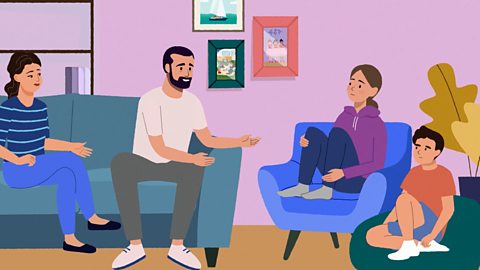
Seren's story. video
Seren's parents have separated. Seren's father is moving away with his partner and having a baby with her. How will she cope with all of this?
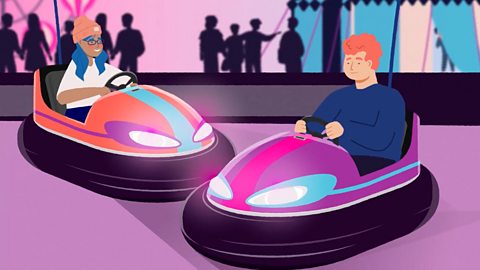
Tomos's story. video
Tomos has fallen in love for the first time. He’s head over heels for Sara, but he’s starting to feel like he doesn’t see much of his friends anymore. How can he find a better balance in his life – without ruining his relationship with Sara?
Alys's story. video
Alys is feeling sad and lonely as her best friend has become close friends with another girl. How will Alys cope with this? What can she do to make herself feel better?