Philip Newsome drives us through the scenic route of how love at first sight for the Macau Grand Prix transcended into a lifelong dedication to guard its legacy.
The first time Philip Newsome attended the Macau Grand Prix was in 1985, yet the English gentleman recalls it like the race cars just zoomed by on the fast lanes last year. It was November, the weather was fabulous, the corners were tight, and the Guia circuit was simply amazing.

He has only missed two grands prix in the past 33 years.
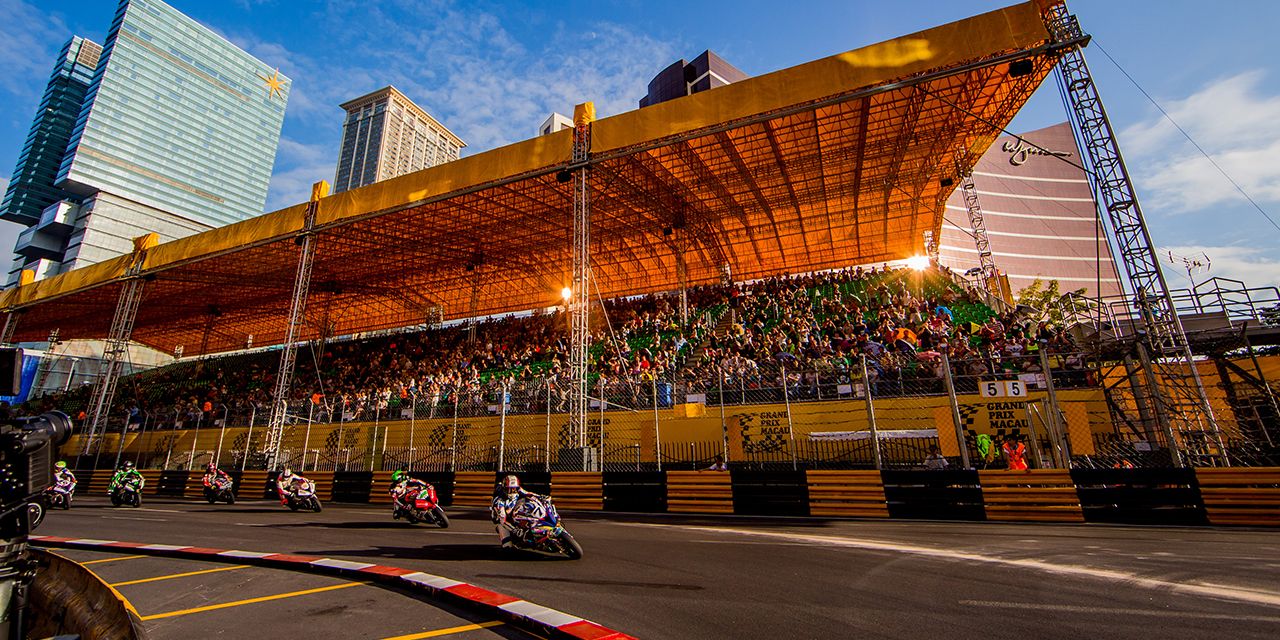
What got Newsome hooked was the unique allure of the Macau Grand Prix, which cannot be replicated anywhere else thanks to the city’s petite size compared to other racing cities, with the perfect balance of twists, turns and long fast drags.
“I think if anyone were to propose the Macau Grand Prix today it would never happen,” said Newsome, who moved to Hong Kong in 1986 for a teaching post at the University of Hong Kong’s Faculty of Dentistry and has been to races all around the world, including the 100th Indianapolis 500.
“The circuit is very tight and as Macao has built up around it, it has become even more challenging. It is the perfect antidote to the sometimes anodyne tracks we see hosting Formula One events these days. Drivers love it and often rate it as their favourite circuit to race on.”
Held on the third weekend of November every year, the grand prix, launched in 1954, is famed for being the only street circuit which stages both car and motorcycle races. The hero event is the Macau Formula Three Grand Prix, which boasts a glamorous list of past international winners including the late Ayrton Senna and Michael Schumacher.
Newsome first paid serious attention to the Macau Grand Prix in 1983, when Senna was crowned winner of the inaugural Formula Three race. He credits the Brazilian Formula One legend for putting Macao on the map in the arena of racing. “I think Senna had made a huge impact on many people. For many he is simply the greatest racing driver of all time. He also had an air of mystery about him, a sense that he transcended the sport, which only a handful of sportsmen had,” Newsome said.

The retired professor’s love of automobiles can be traced back to his dad, who had an enviable collection of cars, mainly Fords, which the family drove from England to other European countries for camping holidays. “These were huge adventures for me. In fact I still have one of my dad’s cars, a blue 1966 Ford Zodiac. She is rather a grande dame these days and only comes out on nice days, but still gets a lot of attention wherever I take her”, he said.
After a few years of loyally following the Macau Grand Prix, Newsome saw the window of opportunity to write his first book about the race, named Colour and Noise and published in 1992. “Very little had been published about the event and I thought it was such a compelling subject. I was fortunate that many of the people who had been involved in the early years of the event were still alive at that time. As the race was only 40 years old at that point I had space to explore the event in great detail.”
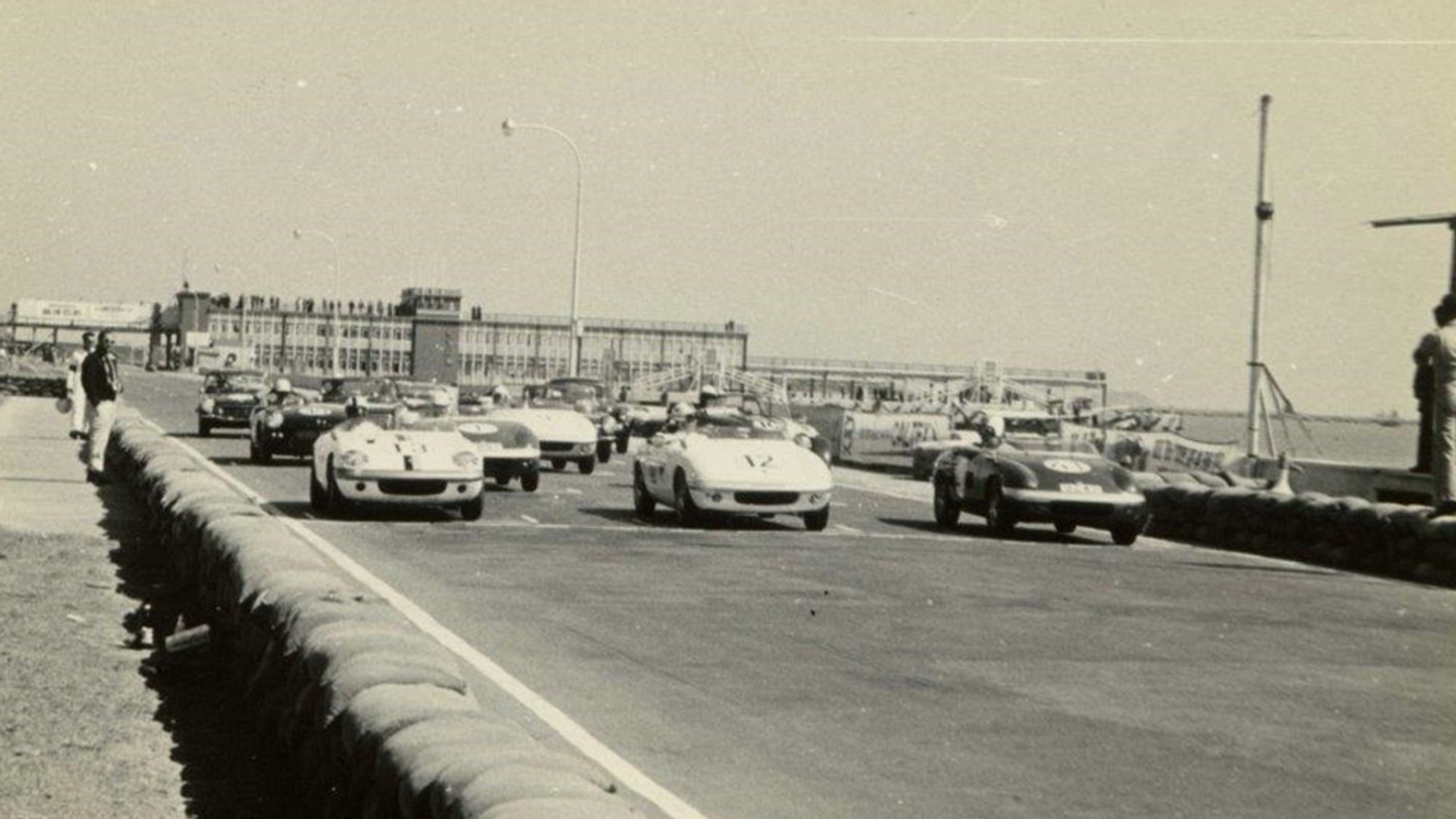
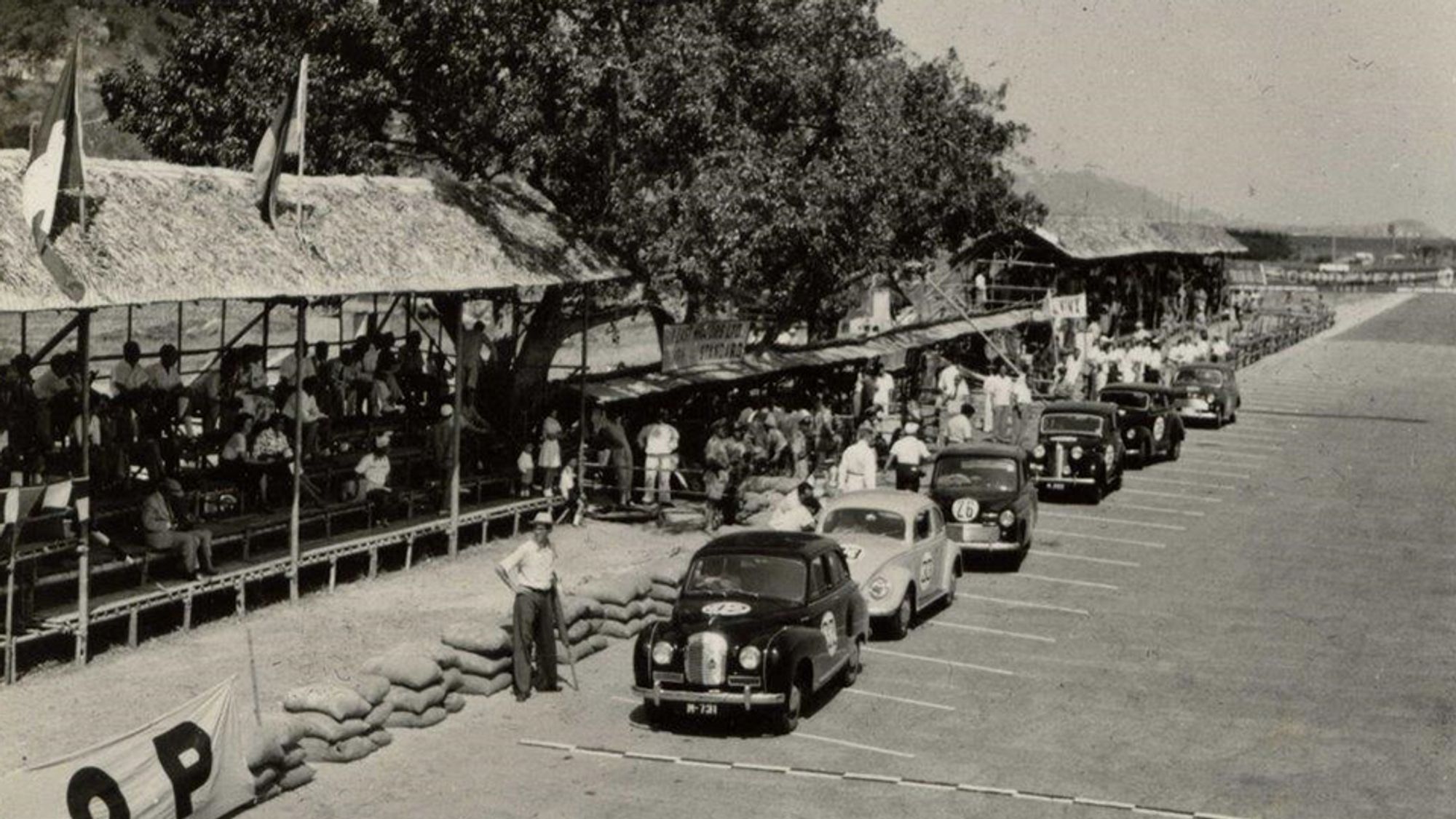
It has always been the human angle that presents the greatest attraction for Newsome, rather than the technicalities of a race car. “These early races were populated by a fascinating group of people, ordinary people doing extraordinary things. Many of them had served in South East Asia during the war, there were businessmen, engineers, pilots, doctors and lawyers - a whole cross section of society who dared to have a passion for motorsport.”
A notable ‘ordinary’ racer featured in Colour and Noise was Grant Wolfkill, an American news cameraman captured by the Pathet Lao when his helicopter was shot down in Laos in 1962, and released after being kept prisoner in the jungle for over a year. To Wolfkill, the Guia circuit represented much more than the thrill of speed and the glamour of being a racer – it was his roadmap to salvation. In his autobiography, Reported to be Alive, Wolfkill recounted how he thought of driving around the route as a way of keeping his sanity intact when he was held captive.
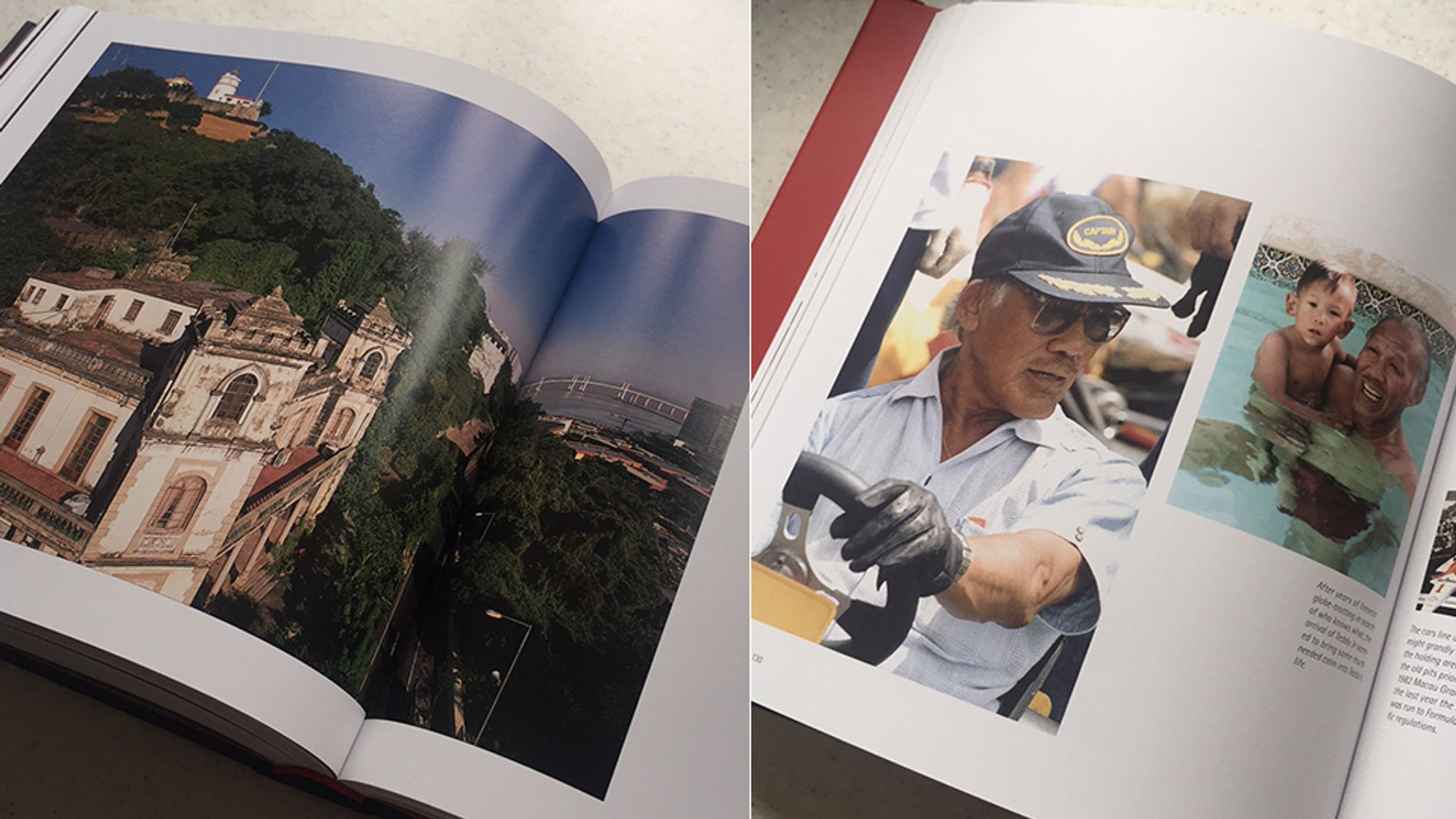
Newsome went on to pen a few more books documenting the history of racing in Macao, including the recent The Macau Grand Prix at 60: A Diamond Celebration, and Teddy Yip’s biography From Macau to the World and back. Yip, whom he described as a larger-than-life character, was the owner of the revered Theodore Racing, a major team at the Macau Grand Prix, and was instrumental in the Formula Three race’s 1983 launch.
What propelled Newsome to write a book about Yip was the belief that his story was one that would strike a chord with a multitude of motorsport fans. “Teddy Yip’s story parallels the growth of the grand prix and of Macao itself. His motor racing adventures spread far beyond Macao and encompassed Formula One and American Indycars among many other areas of the sport. His heart was always firmly rooted in the city though.”
Over the years Newsome has amassed a remarkable memorabilia collection of the Macau Grand Prix, including a copy of Reported to be Alive signed by Grant Wolfkill. “My collection comprises programmes, newspapers, plus of course thousands of photographs. It has reached a point where storage is becoming something of an issue. Many of the things I collect were thrown away by most people at the time, they are fragile and I feel honoured to be able to curate them for future generations.”
Looking ahead to the future trajectories the Macau Grand Prix could take, Newsome said: “I think the grand prix will continue to develop in line with the growth of the city itself. Maybe there will be some rule changes down the line. I don’t see electric cars racing in the grand prix just yet, although I believe this may well happen one day.”

“Personally I think a huge part of the event’s appeal is the sound of high-revving engines reverberating through the concrete canyons of the city. I hope that it will always be run on the traditional Guia circuit. I think it would lose an awful lot if it were to be moved, for example, onto the wide avenue of Cotai.”
As for those attending the Macau Grand Prix for the first time, Newsome has these pearls of advice to share. “I think some knowledge of the event’s history would be nice, but obviously I would say that, wouldn’t I! Finding a good spot to watch the event is important. I always think that Lisboa Bend is a wonderful spot, it is where most indents occur and where most overtaking places are located at. I think the main thing is to go with the flow, soak up the atmosphere and just enjoy it.”